
Lucknow, Varanasi shine in cleanliness survey
President Droupadi Murmu gave away the Swachh Survekshan 2025-26 awards. Navi Mumbai was judged India’s cleanest city, followed by Surat and Vijayawada, while Indore, the cleanest city for the past eight years, did not figure among this year’s toppers. Uttar Pradesh did well: Lucknow came third among cities with over 10 lakh people, after Greater Visakhapatnam and Jabalpur, and Varanasi was the third cleanest riverfront town, after Rewa and Bilaspur. Over 4,751 cities took part. Read it to revise Swachh Bharat Mission and the Solid Waste Management Rules.
- Cleanest city
- Navi Mumbai, followed by Surat and Vijayawada
- Million-plus cities
- Lucknow third, after Greater Visakhapatnam and Jabalpur
- Riverfront towns
- Varanasi third, after Rewa and Bilaspur
- Participation and progress
- 4,751 cities; waste processing 16% in 2014 to 80%; door-to-door collection 44% to over 96%
Swachh Survekshan 2025-26: what happened?
For the first time in years the top of the cleanliness table has a new name, and two Uttar Pradesh cities are on the podium in their categories.
- President Droupadi Murmu gave away the Swachh Survekshan 2025-26 awards. Navi Mumbai was judged India’s cleanest city, followed by Surat and Vijayawada.
- Indore, the cleanest city for the past eight years, did not figure among this year’s toppers.
- Uttar Pradesh did well. Lucknow came third among cities with over 10 lakh people, after Greater Visakhapatnam and Jabalpur. Varanasi was the third cleanest riverfront town, after Rewa and Bilaspur.
- Over 4,751 cities took part. The Urban Affairs Minister said waste processing in cities has risen from 16% in 2014 to 80%, and door-to-door collection from 44% to over 96%.
What is Swachh Survekshan, and which rules govern city waste?
Swachh Survekshan is the Union’s annual survey of urban cleanliness, run under the Swachh Bharat Mission (Urban) by the Ministry of Housing and Urban Affairs. It ranks cities on collection, processing, information and citizen feedback, and the President gives the awards.
The Solid Waste Management Rules, 2016, require door-to-door collection, segregation at source, processing and scientific disposal. Urban local bodies, created and strengthened by the 74th Amendment, are the front-line agencies.
A rise in processing from 16% to 80% and in door-to-door collection from 44% to over 96% since 2014 is the official measure of how far the mission has come. Rankings, though, can change when the survey’s yardstick or a city’s performance shifts, as Indore’s absence from this year’s toppers shows.
Riverfront ranks matter in a State that holds the Ganga at Varanasi. Cleaning a ghat is both a sanitation task and a public-health and heritage task.
Who stood where in 2025-26
| Category | Top three |
|---|---|
| Clean cities, overall | Navi Mumbai, Surat, Vijayawada |
| Cities with over 10 lakh people | Greater Visakhapatnam, Jabalpur, Lucknow |
| Riverfront towns | Rewa, Bilaspur, Varanasi |
| Cities surveyed | Over 4,751 |
Which mission and laws apply?
- Swachh Bharat Mission (Urban) and the annual Swachh Survekshan.
- Solid Waste Management Rules, 2016: collection, segregation and processing.
- 74th Amendment and urban local bodies, which must run the system.
- Ministry of Housing and Urban Affairs, which designs the survey; awards given by the President.
Why does Swachh Survekshan and Uttar Pradesh’s cities matter?
| Angle | What to note |
|---|---|
| Governance | A national survey makes city sanitation a comparable, public score. |
| Environment | Processing and door-to-door collection decide whether waste reaches a dump or a plant. |
| State focus | Lucknow and Varanasi’s ranks are a direct test of urban local bodies in Uttar Pradesh. |
| Prelims | Navi Mumbai first, Lucknow third among million-plus cities, Varanasi third riverfront town, 2016 Rules. |
What are the problems with Swachh Survekshan and Uttar Pradesh’s cities?
- A rank is not the same as clean air or clean drains on every street, every day.
- Indore’s drop from the top shows how sensitive the table is to method and to sustained work.
- Processing at 80% still leaves a fifth of city waste outside the formal chain.
- Riverfront awards can hide upstream pollution that a city cannot solve alone.
What should be done next on Swachh Survekshan and Uttar Pradesh’s cities?
- Lock in door-to-door collection and source segregation, not only a once-a-year survey score.
- Raise processing above 80% and close gaps in smaller municipalities.
- Use Lucknow and Varanasi’s ranks to spread practice to other cities in the State.
- Link riverfront cleanliness to basin-wide pollution control, not only to ghat sweeping.
What can Prelims ask on Swachh Survekshan and Uttar Pradesh’s cities?
Prelims probability: Medium. The Solid Waste Management Rules were asked in 2019, and the State exam asked Swachh Bharat in 2024. Fresh survey results with easy facts: Navi Mumbai first, Lucknow third among big cities, Varanasi third riverfront town.
- Swachh Survekshan 2025-26: Navi Mumbai cleanest, then Surat and Vijayawada.
- Lucknow third among cities with over 10 lakh people; Varanasi third riverfront town.
- Indore, top for eight years, is not among this year’s toppers.
- 4,751 cities took part; waste processing 16% to 80% since 2014; door-to-door collection 44% to over 96%.
- Solid Waste Management Rules, 2016, and Swachh Bharat Mission (Urban).
How to write about Swachh Survekshan and Uttar Pradesh’s cities in Mains
Practice question (15 marks, 250 words): Swachh Survekshan 2025-26 has a new cleanest city, and Lucknow and Varanasi have placed on the podium in their categories. Discuss the role of national surveys, urban local bodies and the Solid Waste Management Rules in making Indian cities cleaner.
- Intro: Navi Mumbai first; Lucknow and Varanasi on the board.
- How Swachh Survekshan and Swachh Bharat Mission work.
- 2016 Rules, the 74th Amendment and official progress figures.
- Limits of a rank, and Indore’s absence from the toppers.
- Way forward: segregation, processing and riverfront cleanliness.
Ready lines for your answer
- A cleanliness rank is a snapshot; door-to-door collection is the daily test.
- A riverfront award still depends on what arrives from upstream.
Quotable data pointNavi Mumbai 1st; Lucknow 3rd among million-plus; Varanasi 3rd riverfront; processing 16% to 80%.
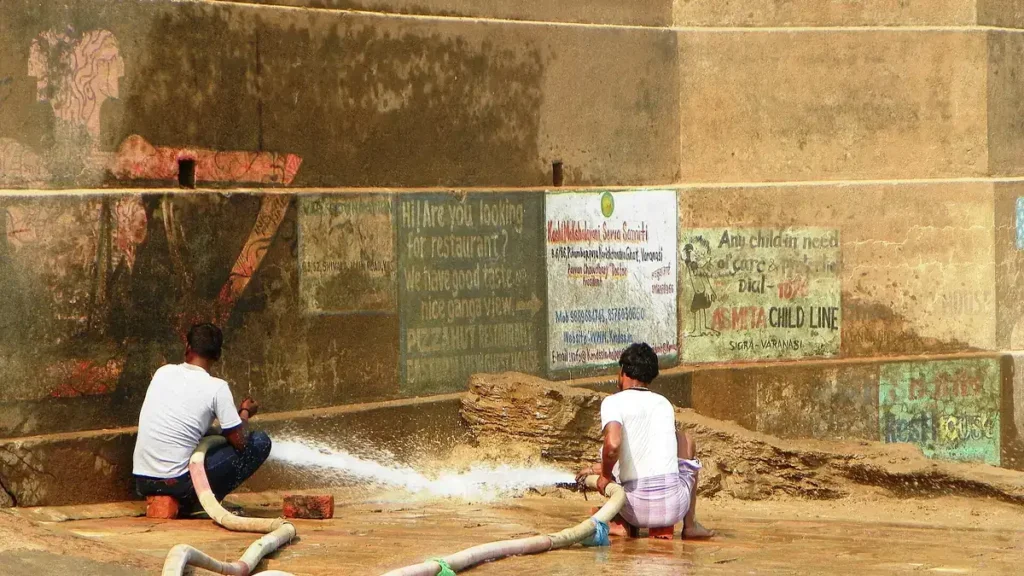
Photo: juggadery, CC BY-SA 2.0, via Wikimedia Commons
Exam angle
Prelims: Navi Mumbai first, Lucknow third in million-plus, Varanasi third riverfront, 2016 Rules. · Mains GS-II: urban governance and sanitation.
Practice MCQs
Original practice questions (not PYQs).
In Swachh Survekshan 2025-26, which city came third among cities with a population of over 10 lakh?
Answer (c) & explanation
Greater Visakhapatnam was first, Jabalpur second and Lucknow third in the 10 lakh-plus category. Navi Mumbai was the cleanest city overall.
Consider the following statements:
1. Swachh Bharat Mission was launched on 2 October 2014.
2. Under the Solid Waste Management Rules, 2016, waste generators must segregate waste at source.
3. Swachh Survekshan is a cleanliness ranking of cities that began in 2016.
How many of the above statements are correct?
Answer (c) & explanation
All three are correct.
Questions students ask about this
Which city was judged the cleanest?
Navi Mumbai, followed by Surat and Vijayawada, in Swachh Survekshan 2025-26. Awards were given by President Droupadi Murmu.
How did Uttar Pradesh’s big cities fare?
Lucknow came third among cities with over 10 lakh people, after Greater Visakhapatnam and Jabalpur. Varanasi was the third cleanest riverfront town, after Rewa and Bilaspur.
What happened to Indore?
Indore had been ranked the cleanest city for the past eight years, but it did not figure among this year’s toppers.
How many cities took part, and what has improved since 2014?
Over 4,751 cities. Official figures say waste processing rose from 16% to 80%, and door-to-door collection from 44% to over 96%.
Which rules govern city waste?
The Solid Waste Management Rules, 2016, under the Swachh Bharat Mission (Urban).