
Air passenger traffic falls 2.9% as fares rise
Fewer people flew in India from April to September. Air passenger traffic fell 2.9%: domestic travel dropped 1.9% and international travel fell a sharper 7.1%. The war in West Asia pushed up jet fuel prices and closed some air routes. In Delhi, jet fuel rose from about ₹91 a litre in February to ₹138.50 in November. Airlines grounded some planes and cut flights. Take-offs and landings fell 3.5%, and there were 5% fewer seats in July to September. Fares jumped. In October, airfares were 43% higher than a year ago. Their 13.36% rise in one month was the biggest among all 358 items in the Consumer Price Index basket. Read it to revise civil aviation, fuel costs and inflation.
- Traffic change (Apr–Sep)
- Down 2.9% overall; domestic −1.9%; international −7.1%
- Jet fuel in Delhi
- From about ₹91 a litre in February to ₹138.50 in November
- Capacity
- Take-offs and landings down 3.5%; 5% fewer seats in July–September
- Airfares in October
- 43% higher than a year ago; 13.36% rise in one month
Why did fewer people fly, and why did fares jump?
A ticket that used to be a weekend treat has become a larger line in the household budget — and, for a month, the fastest-rising item in the entire inflation basket.
- Fewer people flew in India from April to September. Air passenger traffic fell 2.9%: domestic travel dropped 1.9% and international travel fell a sharper 7.1%.
- The war in West Asia pushed up jet fuel prices and closed some air routes. In Delhi, jet fuel rose from about ₹91 a litre in February to ₹138.50 in November.
- Airlines grounded some planes and cut flights. Take-offs and landings fell 3.5%, and there were 5% fewer seats in July to September.
- Fares jumped. In October, airfares were 43% higher than a year ago. Their 13.36% rise in one month was the biggest among all 358 items in the Consumer Price Index basket.
Who runs India’s airports, and what shapes the price of a ticket?
The Airports Authority of India is the statutory body that manages most public airports and provides air traffic services. Private operators run some large airports under concession agreements.
The price of a ticket is driven by jet fuel (a large share of an airline’s cost), the number of seats on offer, and how full the plane is — the load factor. Yield is the revenue earned per passenger per kilometre.
The regional connectivity scheme of 2016, often called UDAN (Ude Desh ka Aam Nagrik), subsidises flights on thinner regional routes so that smaller cities stay on the air map.
When fuel spikes and airlines cut flights, two things happen together: fewer people travel, and those who still need to fly pay more. That is the pattern in this six-month period.
How the six months look
| Indicator | Change |
|---|---|
| Overall passenger traffic (Apr–Sep) | Down 2.9% |
| Domestic / international | Down 1.9% / down 7.1% |
| Take-offs and landings | Down 3.5% |
| Seats in July–September | 5% fewer |
| Airfares in October | Up 43% year-on-year; up 13.36% in one month |
Which bodies and schemes matter?
- Airports Authority of India: statutory body for public airports and air traffic services.
- Regional connectivity scheme, 2016 (UDAN): subsidised flights to regional airports.
- Consumer Price Index: airfares are one of 358 items; in October they had the sharpest one-month rise.
- Directorate General of Civil Aviation: safety and airworthiness regulation of airlines and aircraft.
Why does the fall in air traffic matter?
| Angle | What to note |
|---|---|
| Economy | Aviation is a high-cost, fuel-sensitive sector; a fare spike feeds into inflation and business travel. |
| Infrastructure | Fewer flights and seats show how quickly capacity can shrink when fuel and routes are disrupted. |
| International relations | A war in West Asia raised jet fuel prices and closed some air routes, linking foreign conflict to Indian fares. |
| Prelims | Airports Authority of India, load factor, the 2016 regional connectivity scheme, and the 358-item CPI basket. |
What are the problems with the fall in air traffic?
- A 43% jump in fares hits ordinary domestic travellers harder than business passengers who can pass the cost on.
- Cutting flights to save fuel can weaken regional routes that the 2016 scheme was meant to keep alive.
- India remains exposed to imported oil, so a conflict far away can move the price of a Delhi–Mumbai ticket within weeks.
- If high fares last, some travellers will shift to rail, but that does not help those who need to fly for work or family.
What should be done next on the fall in air traffic?
- A clearer, regularly published picture of fare and fuel trends would help travellers and policymakers see the squeeze early.
- Protecting regional connectivity, including the 2016 scheme, should be part of any response to a fuel shock.
- Diversifying fuel supplies and improving airline fuel efficiency would reduce the pass-through from a distant war.
- Airport and airline charges should stay predictable so that a fuel spike is not compounded by sudden fee rises.
What can Prelims ask on the fall in air traffic?
Prelims probability: Medium. Airports were asked in 2024, and price rises in airfares are fresh. Testable facts: the Airports Authority of India, load factor and the 2016 regional connectivity scheme.
- Airports Authority of India: statutory body for public airports and air traffic services.
- Load factor: how full a flight is; yield: revenue per passenger per kilometre.
- Regional connectivity scheme, 2016, often called UDAN.
- April–September traffic: down 2.9% overall; international down 7.1%.
- October airfares: 43% higher than a year ago; 13.36% was the biggest one-month rise among 358 CPI items.
How to write about the fall in air traffic in Mains
Practice question (15 marks, 250 words): Air passenger traffic in India has fallen even as airfares have risen sharply. Examine the reasons and discuss the implications for inflation and regional connectivity.
- Open with the 2.9% fall in April–September and the 43% year-on-year rise in October fares.
- Link the West Asia war to jet fuel in Delhi (₹91 to ₹138.50) and to fewer flights and seats.
- Explain load factor, yield and the role of the Airports Authority of India.
- Discuss the 2016 regional connectivity scheme and the risk that thin routes are cut first.
- Close with the inflation angle: airfares as the fastest-rising item in the 358-item CPI basket, and what a durable response would look like.
Ready lines for your answer
- When fuel spikes, airlines cut seats first and raise fares next.
- A ticket can become the fastest-rising item in the inflation basket long before the war that caused it ends.
Quotable data pointApr–Sep traffic −2.9% (domestic −1.9%, international −7.1%); Delhi jet fuel ₹91 (Feb) to ₹138.50 (Nov); seats −5% in Jul–Sep; October fares +43% year-on-year, +13.36% in one month, sharpest of 358 CPI items.
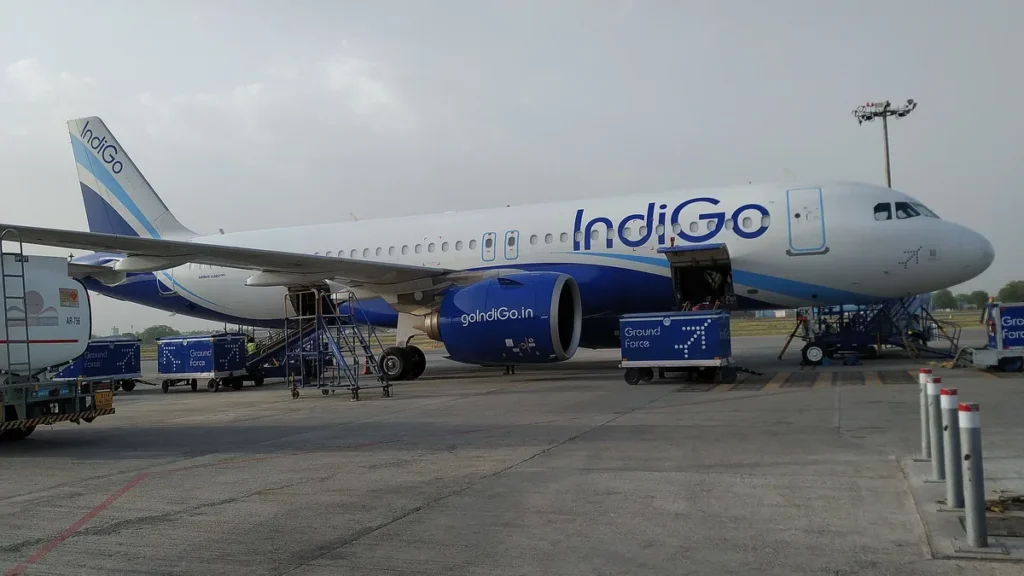
Photo: Ravi Dwivedi, CC BY-SA 4.0, via Wikimedia Commons
Exam angle
Prelims: Airports Authority of India, load factor, 2016 regional connectivity scheme. · Mains GS-III: infrastructure, inflation and energy prices.
Practice MCQs
Original practice questions (not PYQs).
Which body publishes the monthly passenger traffic data covering arrivals and departures at airports in India?
Answer (c) & explanation
The Hindu notes that the passenger figures are from the Airports Authority of India's monthly traffic data.
Consider the following statements:
1. In April to September 2026, domestic air traffic fell more sharply than international traffic.
2. In October 2026, airfares saw the biggest month-on-month price rise among the items in the Consumer Price Index basket.
3. 'Load factor' means the revenue earned per passenger for every kilometre flown.
How many of the above statements are correct?
Answer (a) & explanation
Only statement 2 is correct. International traffic fell 7.1%, more than domestic (1.9%). Load factor is the share of seats filled; revenue per passenger-kilometre is called yield.
Questions students ask about this
By how much did air passenger traffic fall?
By 2.9% in April to September: domestic travel dropped 1.9% and international travel fell 7.1%.
Why did jet fuel become more expensive?
The war in West Asia pushed up prices and closed some air routes. In Delhi, jet fuel rose from about ₹91 a litre in February to ₹138.50 in November.
How much did airfares rise?
In October they were 43% higher than a year ago. The 13.36% rise in one month was the biggest among all 358 items in the Consumer Price Index basket.
What is the Airports Authority of India?
The statutory body that manages most public airports and provides air traffic services.
What is the 2016 regional connectivity scheme?
A scheme, often called UDAN, that subsidises flights on thinner regional routes so that smaller cities stay connected.