
UP cancels five seed-seller licences after 2,858 surprise checks
On 16 November 2026 the Uttar Pradesh government said a statewide surprise inspection campaign, aimed at checking the sale of fake and substandard seeds before rabi sowing, had led to major enforcement action. Five seed sellers had their licences cancelled with immediate effect, sale was banned at five establishments, and 188 sellers were issued show-cause notices. The official press note, issued from Lucknow the same day, says raids were carried out at 2,858 places across the State and that 1,865 seed samples were taken for quality testing. Warnings were also issued to 26 people. The campaign followed directions issued on 27 October 2026 to all Commissioners and District Magistrates to inspect seed shops and seed businesses, so that farmers could get high-quality seed at the prescribed price. The official note says the strict campaign against poor-quality seeds will continue. Read it to revise seed regulation, rabi sowing and how a State inspects the seed trade.
- What was done
- Statewide surprise inspections of seed sellers, with an eye on rabi sowing
- Enforcement
- Five licences cancelled with immediate effect; sale banned at five establishments; 188 show-cause notices; 26 warnings
- Scale
- Raids at 2,858 places; 1,865 seed samples taken for quality testing
- When the order went out
- Directions to all Commissioners and District Magistrates on 27 October 2026
What action has Uttar Pradesh taken against seed sellers?
Rabi sowing needs a reliable bag of seed. Uttar Pradesh says it has just raided thousands of shops to make sure that bag is not fake, and it has already cancelled five licences.
- On 16 November 2026 the official Uttar Pradesh press note, issued from Lucknow, said a statewide surprise inspection campaign had led to major action against seed sellers. The aim was to check the sale of fake and substandard seeds with an eye on rabi sowing.
- Five seed sellers had their licences cancelled with immediate effect. Sale was banned at five establishments. 188 sellers were issued show-cause notices, and warnings were issued to 26 people.
- Raids were carried out at 2,858 places across the State, and 1,865 seed samples were taken for quality testing.
- The campaign followed directions issued on 27 October 2026 to all Commissioners and District Magistrates to inspect seed shops and seed businesses, so that farmers could get high-quality seed at the prescribed price. The official note says the strict campaign against poor-quality seeds will continue.
Why does seed quality matter at the start of the rabi season?
Rabi crops — including wheat, mustard and other winter crops — are sown in the months after the monsoon. A farmer who buys a bag of seed in October or November is making a decision that will show up only at harvest. Fake or substandard seed can mean a poor germination rate, a mixed crop, or a variety that does not match what was written on the bag.
Seed sale in India is regulated under the Seeds Act, 1966, the Seeds Rules, 1968, and the Seeds (Control) Order, 1983. Sellers need a licence, and inspectors can sample seed, test it, and suspend or cancel a licence if the rules are broken. The official press note does not name the statute in each sentence, but these are the laws under which a State runs such a campaign.
The 27 October direction to Commissioners and District Magistrates is a classic State-administration move: the same machinery that runs a district is told to walk into seed shops, not only to leave the job to a specialist inspector. The 2,858 raids and 1,865 samples are the scale of that drive as reported on 16 November.
A cancelled licence, a sale ban, a show-cause notice and a warning are four different steps. Cancellation and a sale ban take effect at once. A show-cause notice is a chance to reply before a harder penalty. A warning is the lightest of the four. The official note records all four, and says the campaign will continue.
The 16 November 2026 seed-inspection figures
| Item | Official figure |
|---|---|
| Places raided | 2,858 across the State |
| Samples taken for quality testing | 1,865 |
| Licences cancelled | 5, with immediate effect |
| Sale banned | 5 establishments |
| Show-cause notices / warnings | 188 notices; 26 warnings |
Which laws and offices apply?
- Seeds Act, 1966, and the Seeds Rules, 1968: the parent law and rules on seed quality, labelling and inspection.
- Seeds (Control) Order, 1983: the licensing of seed dealers and the power to restrict sale and cancel a licence.
- The State agriculture administration, acting through Commissioners and District Magistrates as directed on 27 October 2026, carried out the surprise inspections.
- A show-cause notice is a standard legal step: the seller is told of the alleged irregularity and given a chance to reply before a further order is made.
Why does the Uttar Pradesh seed-seller inspections matter?
| Angle | What to note |
|---|---|
| Agriculture | Seed is the first input of the rabi season; a fake bag in November becomes a failed field in April. |
| Prelims | 2,858 raids, 1,865 samples, five licences cancelled, five sale bans, 188 show-cause notices, 26 warnings, and the Seeds Act, 1966. |
| Governance | A written direction to all Commissioners and District Magistrates turned a specialist inspection into a statewide administrative campaign. |
| Farmer protection | The official aim, as stated in the press note, is high-quality seed at the prescribed price, not only a count of raids. |
What are the problems with the Uttar Pradesh seed-seller inspections?
- Samples still have to be tested; a raid and a sample are not, by themselves, a completed finding of substandard seed in every case.
- Five cancelled licences in 2,858 raids may be a start, but the official note does not say how many shops will be revisited, or when the test results will be published.
- A show-cause notice is only as strong as the follow-up; if 188 notices do not end in a clear order, the signal to the trade will fade.
- Farmers still need a practical way to check whether a bag is licensed and genuine, at the time of purchase, not only after a statewide drive.
What should be done next on the Uttar Pradesh seed-seller inspections?
- The State should publish, in due course, the results of the 1,865 quality tests, and the final orders on the 188 show-cause notices, so that the campaign can be judged on outcomes, not only on raid counts.
- A simple public list of licensed sellers, and of licences just cancelled, would help farmers avoid a shop that has already been shut.
- The direction of 27 October should be treated as the start of a season-long watch, as the official note itself says the campaign will continue.
- Awareness among farmers — what a licensed bag should show, and where to complain — will matter as much as the next round of raids.
What can Prelims ask on the Uttar Pradesh seed-seller inspections?
Prelims probability: Medium. Seed quality, rabi sowing and the Seeds Act are often asked. Testable facts: the 16 November press note, 2,858 surprise raids, 1,865 samples, five licences cancelled, sale banned at five establishments, 188 show-cause notices and 26 warnings, after directions issued on 27 October 2026.
- Uttar Pradesh reported a statewide surprise seed-inspection campaign in an official press note from Lucknow on 16 November 2026.
- Raids were carried out at 2,858 places, and 1,865 seed samples were taken for quality testing.
- Five licences were cancelled with immediate effect, sale was banned at five establishments, 188 show-cause notices were issued, and 26 people were warned.
- The campaign followed directions to all Commissioners and District Magistrates on 27 October 2026, ahead of rabi sowing.
- Seed sale is regulated under the Seeds Act, 1966, and the Seeds (Control) Order, 1983.
How to write about the Uttar Pradesh seed-seller inspections in Mains
Practice question (15 marks, 250 words): Uttar Pradesh has reported a statewide campaign against fake and substandard seed before the rabi season. Discuss why seed quality is regulated and what this drive tells us about State enforcement.
- Open with the official 16 November figures: 2,858 raids, 1,865 samples, five licences cancelled, five sale bans, 188 show-cause notices and 26 warnings.
- Explain why rabi sowing makes seed quality urgent, and what fake or substandard seed does to a crop.
- State the legal frame: Seeds Act, 1966, and the Seeds (Control) Order, 1983.
- Note the 27 October direction to Commissioners and District Magistrates as an administrative choice.
- Close with the need to publish test results and follow through on notices if the campaign is to protect farmers in practice.
Ready lines for your answer
- A fake bag of seed is a season lost, not only a bad purchase.
- A raid count matters when the test results and the follow-up orders are also published.
Quotable data pointDIPR UP, Lucknow, 16 November 2026: 2,858 surprise raids, 1,865 samples, five licences cancelled with immediate effect, sale banned at five establishments, 188 show-cause notices, 26 warnings; directions to Commissioners and District Magistrates on 27 October 2026.
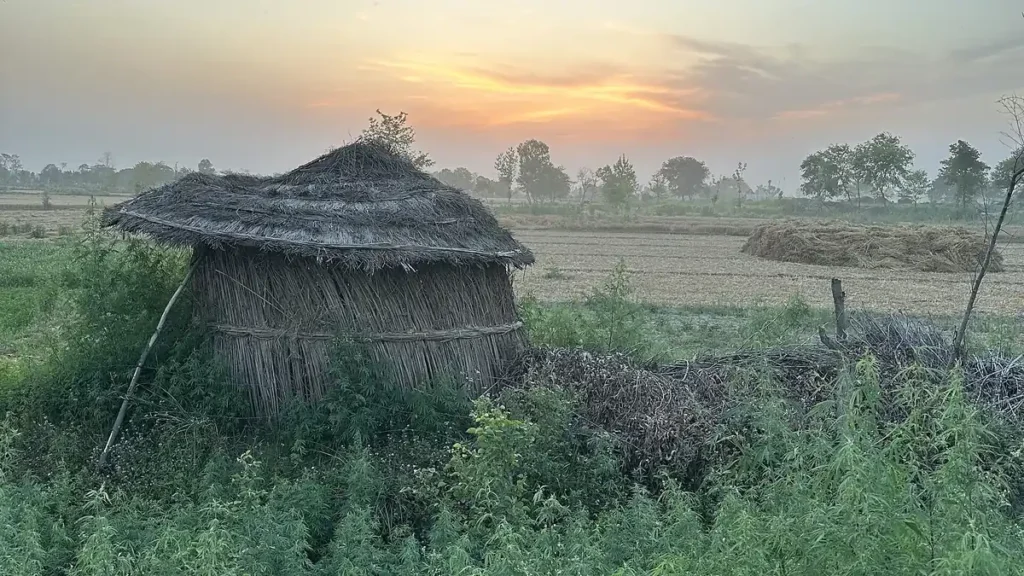
Photo: Whispyhistory, CC BY-SA 4.0, via Wikimedia Commons
Exam angle
Prelims: 2,858 raids, 1,865 samples, five licences cancelled, 188 show-cause notices, and the Seeds Act, 1966. · Mains GS-III: seed quality, farmer protection and the regulation of agricultural inputs.
Practice MCQs
Original practice questions (not PYQs).
According to the official Uttar Pradesh press note of 16 November 2026, surprise seed-inspection raids were carried out at how many places?
Answer (b) & explanation
The official DIPR UP press note issued from Lucknow on 16 November 2026 says raids were carried out at 2,858 places across the State, and that 1,865 seed samples were taken for quality testing.
Which of the following enforcement figures is correctly matched with the official Uttar Pradesh seed-inspection press note of 16 November 2026?
Answer (c) & explanation
The official note says five seed sellers’ licences were cancelled with immediate effect, sale was banned at five establishments, 188 sellers were issued show-cause notices, and warnings were issued to 26 people.
Questions students ask about this
How many places were raided, and how many samples were taken?
The official press note says 2,858 places were raided and 1,865 seed samples were taken for quality testing.
What enforcement was reported?
Five licences were cancelled with immediate effect, sale was banned at five establishments, 188 show-cause notices were issued, and 26 people were warned.
Why was the campaign run now?
It was aimed at checking fake and substandard seed with an eye on rabi sowing, after directions issued on 27 October 2026.
Who was told to inspect the shops?
All Commissioners and District Magistrates, by a government direction dated 27 October 2026.
Which law regulates the seed trade?
The Seeds Act, 1966, read with the Seeds Rules, 1968, and the Seeds (Control) Order, 1983.