
India–Japan carbon credit deal gets its rule book
Environment Minister Bhupender Yadav spoke on Tuesday about India’s carbon credit deal with Japan. He was at the 31st United Nations climate summit, the Conference of the Parties, in Antalya, Türkiye. The deal is called the Joint Crediting Mechanism. It aims to bring finance and clean technology to low-carbon projects in India. Verified emission cuts from these projects earn carbon credits. India and Japan signed it on 7 August 2025 under Article 6.2 of the Paris Agreement, which lets countries transfer emission cuts to each other. The joint committee adopted the rules on 8 June 2026. An operational manual for project approval and credit issue came out on 30 September 2026. Next, the two sides will invite independent checking agencies and project proposals. They also plan to put the whole project cycle online. Mr. Yadav said success should be judged by finance raised, technology shared and local skills built, not only by emission cuts. Read it to revise carbon markets, Article 6.2, and Nationally Determined Contributions.
- The deal
- The India–Japan Joint Crediting Mechanism, signed on 7 August 2025 under Article 6.2 of the Paris Agreement
- The new rule book
- Rules of implementation adopted on 8 June 2026; an operational manual issued on 30 September 2026
- Where it was discussed
- By Environment Minister Bhupender Yadav at the 31st Conference of the Parties in Antalya, Türkiye
- How success should be judged
- By finance raised, technology shared and local skills built, not only by emission cuts
What has India announced about its carbon credit deal with Japan?
A climate deal is only a signature until someone writes the rule book. India and Japan have now done that, and the environment minister took the manual to the global climate summit in Antalya.
- Environment Minister Bhupender Yadav spoke on Tuesday about India’s carbon credit deal with Japan. He was at the 31st United Nations climate summit, the Conference of the Parties, in Antalya, Türkiye.
- The deal is called the Joint Crediting Mechanism. It aims to bring finance and clean technology to low-carbon projects in India. Verified emission cuts from these projects earn carbon credits.
- India and Japan signed it on 7 August 2025 under Article 6.2 of the Paris Agreement, which lets countries transfer emission cuts to each other. The joint committee adopted the rules on 8 June 2026. An operational manual for project approval and credit issue came out on 30 September 2026.
- Next, the two sides will invite independent checking agencies and project proposals. They also plan to put the whole project cycle online. Mr. Yadav said success should be judged by finance raised, technology shared and local skills built, not only by emission cuts.
What is a Joint Crediting Mechanism, and what does Article 6.2 allow?
A carbon credit is a tradable unit that represents a verified cut in greenhouse-gas emissions. Under the Paris Agreement, Article 6 is the chapter that allows countries to cooperate in meeting their climate targets. Article 6.2 lets two or more countries transfer mitigation outcomes to each other through a bilateral arrangement, rather than only through a single global market.
The India–Japan Joint Crediting Mechanism is such a bilateral deal. It was signed on 7 August 2025. Japanese finance and clean technology are meant to support low-carbon projects in India. If the emission cuts are verified, credits can be issued and, under the agreed rules, used towards climate targets. The minister also placed the mechanism in the context of India’s Nationally Determined Contribution and its long-term low-emission strategy.
A signature is not an operating system. That is why the dates after August 2025 matter. The joint committee adopted the rules of implementation on 8 June 2026. The operational manual of 30 September 2026 sets out how a project is submitted, checked, registered and issued with credits. The next practical steps are to invite independent checking agencies, also called third-party entities, and to receive project proposals, with the whole cycle planned to go online.
The older Clean Development Mechanism, under the Kyoto Protocol, was the previous generation of this idea: a project in a developing country earned credits that a developed country could use. Article 6.2 is the Paris-era successor, built on bilateral deals rather than only a Kyoto-style central board. Mr. Yadav’s test of success — finance, technology and local skills, not only a tonne-count — is a warning against a market that issues paper credits without building real capacity in India.
The India–Japan Joint Crediting Mechanism, step by step
| Item | What to note |
|---|---|
| Legal hook | Article 6.2 of the Paris Agreement, which allows countries to transfer emission cuts to each other |
| The deal | Memorandum of Cooperation signed on 7 August 2025 |
| Rules of implementation | Adopted by the joint committee on 8 June 2026 |
| Operational manual | Issued on 30 September 2026, covering project approval and credit issue |
| Next steps | Invite independent checking agencies and project proposals; put the project cycle online |
Which agreements and bodies apply?
- The Paris Agreement, Article 6.2: countries may cooperate through internationally transferred mitigation outcomes under a bilateral arrangement.
- The India–Japan Joint Crediting Mechanism, signed on 7 August 2025, is the bilateral instrument for this cooperation.
- A joint committee of the two countries adopted the rules of implementation on 8 June 2026 and is the body that steers the mechanism.
- The United Nations Framework Convention on Climate Change and the annual Conference of the Parties, this year in Antalya, are the wider forum in which such deals are discussed.
Why does the India–Japan Joint Crediting Mechanism matter?
| Angle | What to note |
|---|---|
| Climate policy | A bilateral carbon-credit deal with a rule book is a live example of Article 6.2, not only a summit slogan. |
| Prelims | Article 6.2, the 7 August 2025 signing, rules on 8 June 2026, the manual on 30 September 2026, and the summit city, Antalya. |
| Bilateral ties | The mechanism is also an India–Japan economic and technology partnership, not only an environmental footnote. |
| Quality of credits | The minister’s own test — finance, technology and skills, not only emission cuts — is the right way to judge the deal. |
What are the problems with the India–Japan Joint Crediting Mechanism?
- A carbon credit is only as good as the verification. Weak checking can produce credits that do not represent a real, additional cut.
- If too many credits are transferred abroad, India has to make sure that its own Nationally Determined Contribution is not short-changed.
- An online project cycle will help transparency only if the documents are actually public and the checking agencies are independent.
- Summit speeches can outrun the pipeline: the manual is out, but projects still have to be proposed, checked and built.
What should be done next on the India–Japan Joint Crediting Mechanism?
- The two sides should now invite independent checking agencies and project ideas, as the minister said, and put the project cycle online in a form that the public can follow.
- India should publish a clear list of the kinds of projects that will be allowed, aligned with national climate and development priorities.
- Domestic skill in validation and verification should be built, so that India is not only a host of projects but also a judge of their quality.
- Readers should remember the three dates — 7 August 2025, 8 June 2026 and 30 September 2026 — and the Article, 6.2, that sits behind them.
What can Prelims ask on the India–Japan Joint Crediting Mechanism?
Prelims probability: High. Article 6 was asked in 2025 and carbon credits in 2011. The rule book and manual dates are new. Testable facts: Article 6.2, the 2025 India–Japan deal, the summit city Antalya.
- The Joint Crediting Mechanism is a bilateral India–Japan carbon-credit deal under Article 6.2 of the Paris Agreement, signed on 7 August 2025.
- The joint committee adopted the rules on 8 June 2026; an operational manual came out on 30 September 2026.
- Environment Minister Bhupender Yadav discussed the deal at the 31st Conference of the Parties in Antalya, Türkiye.
- The next steps are to invite independent checking agencies and project proposals, and to put the project cycle online.
- Success, the minister said, should be judged by finance raised, technology shared and local skills built, not only by emission cuts.
How to write about the India–Japan Joint Crediting Mechanism in Mains
Practice question (15 marks, 250 words): India and Japan have operationalised a Joint Crediting Mechanism under Article 6.2 of the Paris Agreement. Explain how the mechanism is meant to work and the tests by which its success should be judged.
- Open with the deal: signed on 7 August 2025 under Article 6.2, discussed by the minister at the Antalya climate summit.
- Explain a carbon credit, and how Article 6.2 allows countries to transfer verified emission cuts to each other.
- Give the operational dates: rules on 8 June 2026, manual on 30 September 2026, and the next steps on checking agencies and an online cycle.
- Discuss the risk of weak credits, and the need to protect India’s own climate target.
- Close with the minister’s test: finance, technology and local skills, not only a tonne-count.
Ready lines for your answer
- A climate signature is a start; a manual is what lets a project actually apply.
- A credit that does not rest on a real cut is only a piece of paper.
Quotable data pointIndia–Japan Joint Crediting Mechanism under Article 6.2, signed 7 August 2025; rules adopted 8 June 2026; operational manual issued 30 September 2026; discussed by the Union environment minister at COP31, Antalya, 17 November 2026.
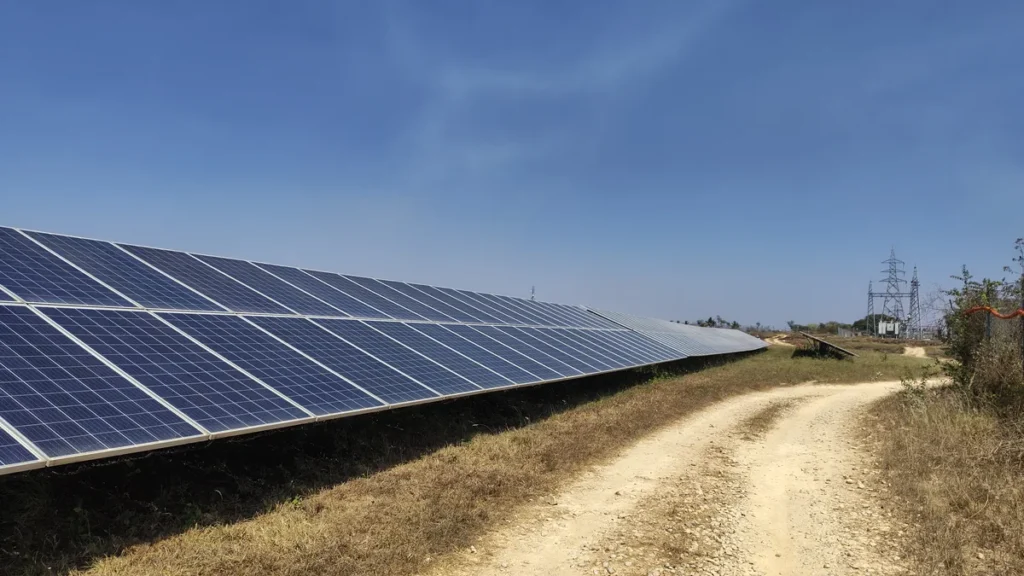
Photo: Manjunatha G, WELL Labs, CC BY-SA 4.0, via Wikimedia Commons
Exam angle
Prelims: Article 6.2, the 2025 India–Japan signing, the June 2026 rules, the September 2026 manual, and Antalya as the summit city. · Mains GS-III: carbon markets, internationally transferred mitigation outcomes, and climate finance.
Practice MCQs
Original practice questions (not PYQs).
The India–Japan Joint Crediting Mechanism has been established under
Answer (d) & explanation
India and Japan signed a Memorandum of Cooperation on 7 August 2025 establishing the mechanism under Article 6.2 of the Paris Agreement. Article 12 of the Kyoto Protocol set up the Clean Development Mechanism.
Consider the following statements:
1. The concept of carbon credit originated from the Kyoto Protocol.
2. Carbon credits are traded at a price fixed from time to time by the United Nations Environment Programme.
3. The 31st Conference of the Parties to the climate convention is being held in Antalya, Türkiye.
How many of the above statements are correct?
Answer (b) & explanation
Statements 1 and 3 are correct. Carbon credit prices are set by the market, not fixed by the United Nations Environment Programme.
Questions students ask about this
What is the Joint Crediting Mechanism?
It is a bilateral India–Japan deal, signed on 7 August 2025, under which verified emission cuts from low-carbon projects in India can earn carbon credits.
Which part of the Paris Agreement does it use?
Article 6.2, which lets countries transfer emission cuts to each other through a bilateral arrangement.
When were the rules and the manual issued?
The joint committee adopted the rules on 8 June 2026. The operational manual came out on 30 September 2026.
Where did the minister speak about it?
At the 31st United Nations climate summit, the Conference of the Parties, in Antalya, Türkiye.
How did the minister say success should be judged?
By finance raised, technology shared and local skills built, not only by emission cuts.