
Every third transgender voter dropped in roll revision
The special intensive revision of voter lists has sharply cut the number of transgender voters. A data analysis of States and Union Territories where the revision is done or under way shows this. Transgender electors fell by 31.4%, from 45,610 to 31,300. That is lower than even the 2019 Lok Sabha figure. Delhi saw the steepest fall, nearly 64% in its draft rolls. Tamil Nadu was an exception, with a fall of only 10%. This undoes ten years of progress. Transgender turnout rose from 7.8% in the 2014 Lok Sabha election to 27% in 2024. Even before the revision, enrolment was far below the community’s size. Census 2011 counted about 4.84 lakh transgender persons. Getting a voter card as a transgender person is now harder too. An amendment to the Transgender Persons (Protection of Rights) Act ended self-identification and requires medical validation. Read it to revise the 2014 National Legal Services Authority judgment, the 2019 Act, Article 326 and inclusive elections.
- The fall
- Transgender electors down 31.4%, from 45,610 to 31,300, below even the 2019 Lok Sabha figure
- Where it was sharpest
- Delhi down nearly 64% in its draft rolls; Tamil Nadu down only 10%
- Earlier progress
- Transgender turnout rose from 7.8% in the 2014 Lok Sabha election to 27% in 2024
- The deeper gap
- Census 2011 counted about 4.84 lakh transgender persons; a 2026 amendment ended self-identification and requires medical validation for identity
UPSC has already asked about this. Read the story with these questions in mind.
- Mains 2026 · GS2Right to privacy relating to self-identity is very dear to every human being and well protected under Article 21 of the Constitution. In this…See model answer →
- Mains 2026 · GS2Is the right to vote a fundamental right? Discuss the position of the Election Commission of India while undertaking the revision of electoral rolls.…See model answer →
What has the special intensive revision done to transgender electors?
A voter list is supposed to be a door into the election, not a filter that quietly removes a small community. The latest revision has pushed transgender enrolment back by years.
- The special intensive revision of voter lists has sharply cut the number of transgender voters. A data analysis of States and Union Territories where the revision is done or under way shows this.
- Transgender electors fell by 31.4%, from 45,610 to 31,300. That is lower than even the 2019 Lok Sabha figure. Delhi saw the steepest fall, nearly 64% in its draft rolls. Tamil Nadu was an exception, with a fall of only 10%.
- This undoes ten years of progress. Transgender turnout rose from 7.8% in the 2014 Lok Sabha election to 27% in 2024.
- Even before the revision, enrolment was far below the community’s size. Census 2011 counted about 4.84 lakh transgender persons. Getting a voter card as a transgender person is now harder too. An amendment to the Transgender Persons (Protection of Rights) Act ended self-identification and requires medical validation.
What rights and laws protect transgender persons as voters?
The Supreme Court’s National Legal Services Authority judgment of 2014 recognised transgender persons as a third gender and anchored their rights in equality, dignity and the freedom to determine gender identity. That judgment is the starting point for any later statute or form.
The Transgender Persons (Protection of Rights) Act, 2019 was the first national law on the subject. A 2026 amendment has now ended self-identification and requires medical validation. That change sits beside the voter-list revision, and it makes a new or corrected elector card harder to obtain. The two processes are legally separate, but a person who must first prove identity to a medical standard may also struggle to stay on the roll.
Article 326 of the Constitution makes adult suffrage the basis of elections to the Lok Sabha and the State Assemblies. The right to vote is exercised through enrolment on the electoral roll. A special intensive revision is meant to clean the list, not to shrink a already under-counted community. Census 2011’s figure of about 4.84 lakh transgender persons makes the old enrolment of 45,610 look small, and the new figure of 31,300 smaller still.
Turnout had been improving: from 7.8% in the 2014 Lok Sabha election to 27% in 2024. That is still a low share, but it was progress. A 31.4% cut in the roll, and a nearly 64% fall in Delhi’s draft list, undo a large part of that gain. Tamil Nadu’s 10% fall shows that the drop is not automatic everywhere, which is why the variation across States is itself a fact worth studying.
Transgender electors, before and after the revision
| Item | What to note |
|---|---|
| Electors after the revision | 31,300, down 31.4% from 45,610; lower than the 2019 Lok Sabha figure |
| Delhi draft rolls | A fall of nearly 64% |
| Tamil Nadu | A fall of only 10% |
| Turnout over ten years | From 7.8% in the 2014 Lok Sabha election to 27% in 2024 |
| Community size, Census 2011 | About 4.84 lakh transgender persons |
Which judgments, laws and Articles apply?
- National Legal Services Authority v. Union of India, 2014: the Supreme Court recognised transgender persons as a third gender and protected their dignity and equality.
- The Transgender Persons (Protection of Rights) Act, 2019, as amended in 2026: the amendment ended self-identification and requires medical validation.
- Article 326: elections to the Lok Sabha and the State Assemblies are on the basis of adult suffrage, which is exercised through the electoral roll.
- The Representation of the People Act, 1950, and the Election Commission’s roll-revision instructions govern how names are added or deleted during a special intensive revision.
Why does the fall in transgender electors during roll revision matter?
| Angle | What to note |
|---|---|
| Social justice | A 31.4% fall, to a number below even 2019, is a direct test of how inclusive the electoral roll is. |
| Prelims | The 2014 judgment, the 2019 Act and its 2026 amendment, Article 326, and the 45,610-to-31,300 drop. |
| Federal variation | Delhi’s nearly 64% fall and Tamil Nadu’s 10% fall show that the same revision can land very differently. |
| Rights and documents | Ending self-identification and requiring medical validation makes a voter card harder to obtain, on top of the deletions. |
What are the problems with the fall in transgender electors during roll revision?
- A special intensive revision can delete people who moved, who lack papers, or whose names do not match older records — burdens that fall more heavily on a small, often mobile community.
- Enrolment was already far below the Census 2011 count of about 4.84 lakh; the revision has widened that gap, not closed it.
- A medical-validation rule can become a barrier at the exact moment when a deleted voter is trying to get back on the list.
- Without a public, community-wise audit of deletions, it is hard to tell how many names were genuine duplicates and how many were wrongful cuts.
What should be done next on the fall in transgender electors during roll revision?
- The Election Commission and the States should publish a clear account of transgender additions, deletions and restorations, and run a special enrolment drive before the next poll.
- Booth-level officers need simple, respectful procedures so that a person is not dropped only because documents or names do not match an older form.
- The 2026 medical-validation rule should not be allowed to become a silent disqualification from the roll.
- Civil society and legal-aid groups, including those recognised after the 2014 judgment, should be involved in checking the draft lists where the fall has been steepest, including Delhi.
What can Prelims ask on the fall in transgender electors during roll revision?
Prelims probability: Medium. Free legal aid for transgender persons was asked in 2020 and the right to vote in 2017. The data are fresh and link to a 2026 Mains theme. Testable facts: the 2014 judgment, the 2019 Act, Article 326.
- Transgender electors fell 31.4%, from 45,610 to 31,300, during the special intensive revision, to a figure lower than in 2019.
- Delhi’s draft rolls show a fall of nearly 64%; Tamil Nadu’s fall was only 10%.
- Transgender turnout had risen from 7.8% in the 2014 Lok Sabha election to 27% in 2024.
- Census 2011 counted about 4.84 lakh transgender persons.
- The National Legal Services Authority judgment of 2014, the 2019 Act, a 2026 amendment ending self-identification, and Article 326 are the core legal hooks.
How to write about the fall in transgender electors during roll revision in Mains
Practice question (15 marks, 250 words): A data analysis shows that every third transgender elector was deleted from the rolls during the special intensive revision. Discuss the barriers transgender persons face in exercising their right to vote, and the legal framework meant to protect them.
- Open with the figures: a 31.4% fall from 45,610 to 31,300, Delhi down nearly 64%, Tamil Nadu down 10%.
- Place the fall against earlier progress in turnout, from 7.8% in 2014 to 27% in 2024, and against the Census 2011 count of about 4.84 lakh.
- Set out the legal framework: the 2014 National Legal Services Authority judgment, the 2019 Act, the 2026 amendment, and Article 326.
- Explain how a special intensive revision, and a medical-validation rule, can become barriers in practice.
- Close with what an inclusive roll would require: a public audit of deletions, a special enrolment drive, and procedures that do not punish a lack of older papers.
Ready lines for your answer
- A clean roll is a public good; a smaller roll is not, if a whole community has been thinned out.
- The right to vote begins with a name that stays on the list.
Quotable data pointSpecial intensive revision: transgender electors down 31.4%, from 45,610 to 31,300 (below the 2019 figure); Delhi draft rolls down nearly 64%; Tamil Nadu down 10%; turnout had risen from 7.8% in 2014 to 27% in 2024; Census 2011 counted about 4.84 lakh transgender persons.
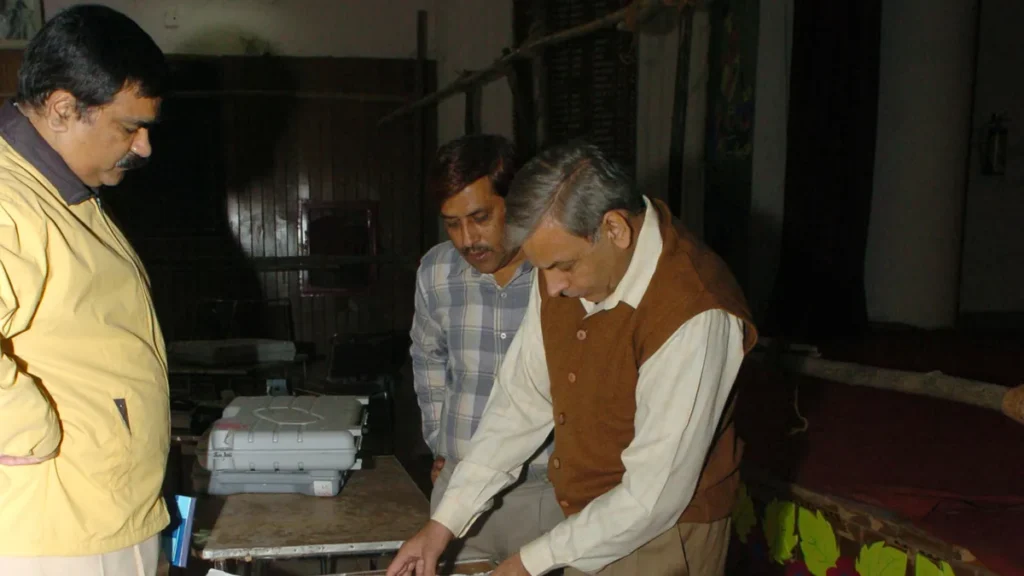
Photo: Election Commission of India, GODL-India, via Wikimedia Commons
Exam angle
Prelims: the 2014 National Legal Services Authority judgment, the 2019 Act and its 2026 amendment, and Article 326. · Mains GS-II: inclusive elections, social justice and the barriers transgender persons face on the roll.
Practice MCQs
Original practice questions (not PYQs).
The 2014 Supreme Court judgment that recognised the right to a self-perceived gender identity and the 'third gender' is
Answer (a) & explanation
The National Legal Services Authority (NALSA) judgment of 2014 recognised the third gender and self-perceived gender identity.
Consider the following statements:
1. Transgender electors in the States analysed fell by 31.4% during the special intensive revision.
2. Delhi saw the smallest fall in transgender electors among the major States.
3. Census 2011 counted about 48 lakh transgender persons in India.
How many of the above statements are correct?
Answer (a) & explanation
Only statement 1 is correct. Delhi saw the steepest fall (nearly 64%); Census 2011 counted about 4.84 lakh transgender persons.
Questions students ask about this
By how much did the number of transgender electors fall?
By 31.4%, from 45,610 to 31,300, which is lower than even the 2019 Lok Sabha figure.
Which State or Union Territory saw the steepest fall?
Delhi, with a fall of nearly 64% in its draft rolls. Tamil Nadu was an exception, with a fall of only 10%.
Had turnout been improving before this?
Yes. Transgender turnout rose from 7.8% in the 2014 Lok Sabha election to 27% in 2024.
What did Census 2011 say about the community’s size?
It counted about 4.84 lakh transgender persons, far higher than the number on the electoral roll.
What did the 2026 amendment change?
An amendment to the Transgender Persons (Protection of Rights) Act ended self-identification and requires medical validation.