
COP31 talks fail as countries reject a deal without a fossil-fuel phase-out
A standoff on a fossil-fuel phase-out prevented countries at COP31, the United Nations climate talks in Antalya, Türkiye, from agreeing a consensus text on future climate action on Sunday, 22 November 2026, even though the conference ran a record 48 hours into overtime. The European Union led objections to COP31 President Murat Kurum’s consensus cover text, which had no explicit language about moving away from fossil fuels. The European Union’s stance was reportedly supported by about 130 countries. Ireland’s Climate Minister Darragh O’Brien, speaking for the European Union, said the draft “Antalya Pact” fell well short and that the bloc would not accept a COP that “greenwashes fossil fuel”. Panama also formally objected. On the other side, India, China and Saudi Arabia were among the countries uncomfortable with explicit fossil-fuel language and more comfortable with how the cover text was framed, while also expressing misgivings about the lack of clarity on adaptation finance. India’s Environment Minister, named in The Hindu report as Bhupendra Yadav, said India’s voice had shaped the draft especially on food security, livelihoods and cultural practices in action on methane, and stressed that “climate ambition must go hand in hand with means of implementation”. Amandeep Garg, speaking for the Like Minded Developing Countries, said the group was willing to move forward despite discomfort with some elements, and expressed concern that equity and common but differentiated responsibility were not adequately reflected.
- Outcome
- COP31 in Antalya ended on 22 November 2026 without a consensus cover decision, after about 48 hours of overtime
- Objection
- The European Union, reportedly supported by about 130 countries, rejected a text with no explicit fossil-fuel phase-out language
- India’s side
- India was among the countries willing to move forward with the proposed cover text, and is part of the Like Minded Developing Countries
- Presidency
- COP31 President Murat Kurum had put forward the consensus cover text, sometimes referred to as the Antalya Pact
Why did COP31 end without a cover decision?
Climate talks need every party to agree. In Antalya, a cover text with no explicit promise to move away from fossil fuels was unacceptable to the European Union and many others, while India and some other developing countries were prepared to live with it. The result was no pact.
- COP31, the United Nations climate talks in Antalya, Türkiye, failed to reach a consensus agreement on Sunday, 22 November 2026, despite running a record 48 hours into overtime, The Hindu reported.
- The European Union led objections to COP31 President Murat Kurum’s consensus cover text, which had no explicit language about moving away from fossil fuels. The European Union’s stance was reportedly supported by about 130 countries.
- Ireland’s Climate Minister Darragh O’Brien, speaking for the European Union, said the draft cover decision, or Antalya Pact, fell well short, and that the bloc would not endorse a decision that “greenwashes fossil fuel”.
- Panama also formally objected. Its chief climate negotiator, Ana Aguilar, called the text a setback, saying it repeated earlier commitments, leaned too much on technologies such as carbon capture, and weakened language agreed in previous decisions.
- India, China and Saudi Arabia were among the countries against explicit fossil-fuel language and more comfortable with the cover text as framed, while also raising the lack of clarity on adaptation finance.
- India’s Environment Minister said India’s voice had shaped the draft on food security, livelihoods and cultural practices in methane action, and that “climate ambition must go hand in hand with means of implementation”. Amandeep Garg, speaking for the Like Minded Developing Countries, said the group was willing to move forward, but was concerned that equity and common but differentiated responsibility were not adequately reflected.
What is a cover text, and why does consensus make failure possible?
A cover text is an overarching political decision that frames the outcome of a climate conference, rather than settling any single agenda item. It is usually finalised last. Like every formal COP outcome, it needs the consensus of all parties. The Hindu report notes that this consensus rule means no country or bloc has a formal veto, but every clause must still be agreed by all of the 190-plus parties.
The split in Antalya was not only about one paragraph. The European Union and many climate-vulnerable countries wanted explicit language on moving away from fossil fuels and a tighter link to the 1.5 degrees C goal. India and other members of the Like Minded Developing Countries have argued that they still need fossil fuels for some time, that energy transitions must be nationally determined and backed by finance and technology, and that developed countries’ historical responsibility should be clearly reflected.
This outcome is different from an earlier stage of the same summit in which a draft was reported to have dropped fossil-fuel phase-out language. What happened on 22 November is that the talks closed without a consensus cover decision at all.
The inability of a presidency to pass a consensus text is widely read as a diplomatic failure, even though other technical work at a COP can still have been done. The cover decision itself did not go through.
Where the main parties stood on the cover text
| Side | Position reported on 22 November |
|---|---|
| European Union, with about 130 countries | Rejected the text for lack of explicit fossil-fuel phase-out language |
| Panama | Formally objected; called the text a rollback from earlier deals |
| India, China, Saudi Arabia, and the Like Minded Developing Countries | Uncomfortable with explicit fossil-fuel language; India was willing to move forward with the draft, while raising equity, responsibility and adaptation finance |
Which climate rules sit behind this standoff?
- COP meetings take place under the United Nations Framework Convention on Climate Change. Formal outcomes are adopted by consensus of the parties.
- The Paris Agreement is the main 2015 pact under that convention. Debates on fossil fuels, the 1.5 degrees C goal, and finance are arguments about how that pact is to be carried out.
- Common but differentiated responsibilities is the principle, cited here by the Like Minded Developing Countries, that developed and developing countries do not have identical obligations.
- A cover decision is a political framing text for the conference as a whole, not a substitute for every individual agenda item.
Why does the failure of COP31 to agree a cover decision matter?
| Angle | What to note |
|---|---|
| Prelims | COP31 in Antalya ended without a consensus cover text on 22 November 2026 after about 48 hours of overtime; the European Union objected, with about 130 countries. |
| GS-III: climate | The split was over explicit fossil-fuel phase-out language versus nationally determined, finance-backed transitions. |
| GS-II: negotiations | Consensus means one unresolved political paragraph can stop a cover decision, even after record overtime. |
| State angle | The global standoff is context for national energy and climate policy that States then have to carry out. |
What are the problems with the failure of COP31 to agree a cover decision?
- Ending without a cover decision is not the same as saying that every technical track at the conference produced nothing. The political framing text is what failed.
- “About 130 countries” is the figure reported for support to the European Union’s stance; it is not a formal recorded vote.
- India’s willingness to move forward with the draft does not mean India wrote the entire text, or that concerns on adaptation finance were resolved.
What should be done next on the failure of COP31 to agree a cover decision?
- Keep the facts exact: Antalya, 22 November 2026, 48 hours of overtime, Murat Kurum, the European Union’s objection, and India’s place with the Like Minded Developing Countries.
- Revise consensus, the Paris Agreement, and common but differentiated responsibilities.
- Do not confuse this failure with the earlier report that a draft had dropped phase-out language; the news on 22 November is that no cover pact was adopted.
- Watch what parties do next; this report does not itself announce a new mandate or a delayed deal.
What can Prelims ask on the failure of COP31 to agree a cover decision?
Prelims probability: High. The failure of a COP to pass a consensus cover text, the split on fossil-fuel language, the European Union’s objection, India’s position with the Like Minded Developing Countries, and the 48 hours of overtime are all testable.
- COP31 in Antalya, Türkiye, ended on 22 November 2026 without a consensus cover decision, after about 48 hours of overtime.
- The European Union rejected President Murat Kurum’s cover text for lack of explicit fossil-fuel phase-out language, a stance reportedly supported by about 130 countries.
- Panama also formally objected to the draft, sometimes referred to as the Antalya Pact.
- India, China and Saudi Arabia were among the countries against explicit fossil-fuel language; India was willing to move forward with the proposed text.
- The Like Minded Developing Countries raised equity, common but differentiated responsibility, and historical responsibility for emissions.
How to write about the failure of COP31 to agree a cover decision in Mains
Practice question (15 marks, 250 words): COP31 ended without a consensus cover decision after a split on fossil-fuel language. Discuss why consensus makes such an outcome possible, and how India’s position differs from that of the European Union.
- Open with the Antalya meeting ending on 22 November 2026, after about 48 hours of overtime, without a cover pact.
- Explain what a cover decision is, and that COP outcomes need consensus of all parties.
- Set out the European Union’s objection, the support reported from about 130 countries, and Panama’s formal objection.
- Explain India’s position: willingness to move forward with the draft, concern about means of implementation, and the Like Minded Developing Countries’ emphasis on equity and historical responsibility.
- Close with the implication: without a political frame, the conference leaves an unresolved argument about fossil fuels and finance.
Ready lines for your answer
- Consensus can protect a party from being outvoted; it can also leave a conference with no political decision at all.
- India’s climate position in this report is not a rejection of action; it is a condition that ambition come with finance, technology and a just, nationally determined transition.
Quotable data pointThe Hindu, 22 November 2026: COP31 in Antalya ended without a consensus cover text after about 48 hours of overtime; the European Union, reportedly with about 130 countries, rejected the draft.
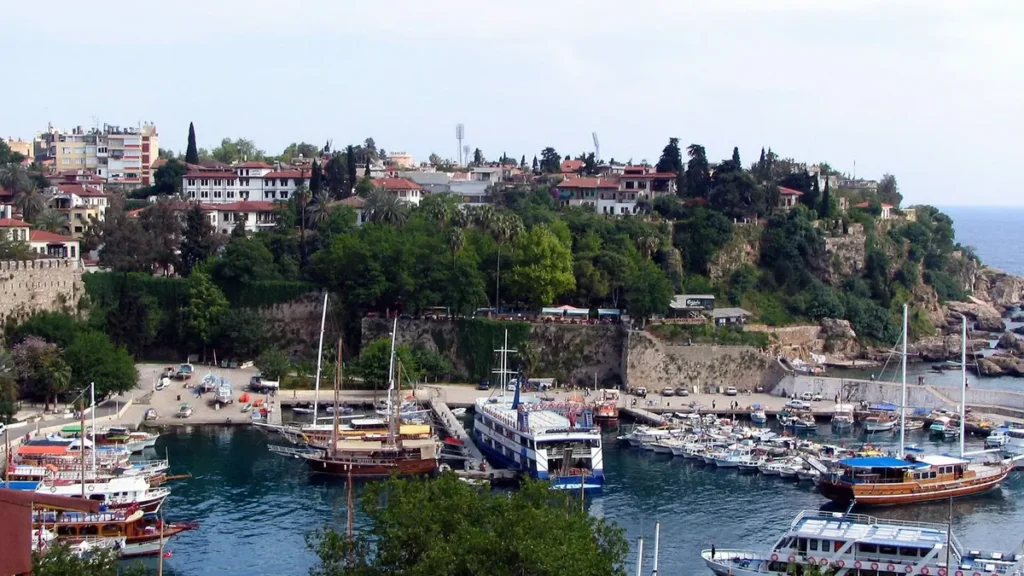
Photo: Winstonza, CC BY-SA 3.0, via Wikimedia Commons
Exam angle
Prelims: Antalya, 22 November 2026, 48 hours of overtime, about 130 countries with the European Union, and the Like Minded Developing Countries. · Mains GS-III: why a consensus rule can produce no deal, and how equity and finance shape India’s climate position.
Practice MCQs
Original practice questions (not PYQs).
COP31, which ended without a consensus cover decision on 22 November 2026, was held in
Answer (b) & explanation
The United Nations climate talks were held in Antalya, Türkiye, and ended on 22 November 2026 without a consensus cover text, after about 48 hours of overtime.
Consider the following statements:
1. The European Union rejected the cover text for lack of explicit fossil-fuel phase-out language, a stance reportedly supported by about 130 countries.
2. India formally joined the European Union and Panama in objecting to the cover text.
3. Amandeep Garg, speaking for the Like Minded Developing Countries, raised concern that equity and common but differentiated responsibility were not adequately reflected.
How many of the above statements are correct?
Answer (b) & explanation
Statements 1 and 3 are correct. India was among the countries willing to move forward with the proposed cover text, while raising concerns on means of implementation, equity and finance. It was not among the formal objectors named with the European Union and Panama.
Questions students ask about this
Did COP31 adopt a final cover decision?
No. The talks in Antalya ended on 22 November 2026 without a consensus cover text.
Why did the European Union object?
Because the draft had no explicit language about moving away from fossil fuels. Ireland’s climate minister, speaking for the bloc, said it would not accept a COP that “greenwashes fossil fuel”.
How long did the talks run over time?
A record 48 hours into overtime, according to The Hindu.
Where did India stand?
India was among the countries willing to move forward with the proposed cover text, while stressing that climate ambition must go with means of implementation, and raising equity and finance concerns through the Like Minded Developing Countries.
Who was the COP31 President?
Murat Kurum.