
India and China hold 10-day Corps Commander talks on the Arunachal LAC
India and China have concluded a second round of Corps Commander-level talks aimed at easing tensions along the Line of Actual Control in Arunachal Pradesh and at putting in place measures to prevent friction between troops before the onset of harsh winter, The Hindu reported. Sources in the Ministry of Defence confirmed that the discussions began on 8 November 2026, a day after Deepavali, and continued for nearly 10 days, with a short break in between. The talks were described as cordial, though it remains unclear whether the measures discussed will be implemented on the ground before winter sets in fully. Lieutenant-General Girish Kalia, General Officer Commanding of the Army’s III Corps, also known as the Spear Corps and headquartered at Rangapahar near Dimapur in Nagaland, led the Indian delegation. His Chinese counterpart and other military officers took part, and an official from the Ministry of External Affairs was also present. The talks focused on engagement protocols, preventing face-offs and misunderstandings, maintaining open communication channels and reducing tensions in the eastern sector. The second round follows the first Corps Commander-level meeting, held on 6 and 7 September 2026 at the Wacha-Damai Border Personnel Meeting point in the Kibithoo sector. Wacha is India’s easternmost border personnel meeting point. That first meeting was convened after reports of tensions in the Taksing area of Upper Subansiri district.
- Second round
- Began on 8 November 2026 and lasted nearly 10 days, with a short break
- Indian lead
- Lieutenant-General Girish Kalia, General Officer Commanding, III Corps (Spear Corps), headquartered at Rangapahar near Dimapur, Nagaland
- Aim
- Engagement protocols, preventing face-offs, open communication, and reducing tension in the eastern sector before winter
- First round
- 6–7 September 2026 at the Wacha-Damai Border Personnel Meeting point in the Kibithoo sector, after reports of a face-off at Taksing in Upper Subansiri
What did the second Corps Commander-level round try to do?
Winter on the Arunachal frontier makes movement and supply harder. India and China have just finished a second, nearly 10-day military dialogue about how their troops should engage, so that a patrol does not become a face-off.
- India and China have concluded a second round of Corps Commander-level talks on the Line of Actual Control in Arunachal Pradesh, aimed at easing tensions and preventing friction before the onset of harsh winter, The Hindu reported.
- Ministry of Defence sources said the discussions began on 8 November 2026, a day after Deepavali, and continued for nearly 10 days, with a short break. The talks were described as cordial, though it is unclear whether the measures discussed will be in place before winter sets in fully.
- Lieutenant-General Girish Kalia, General Officer Commanding of the Army’s III Corps (the Spear Corps), led the Indian side. The formation is headquartered at Rangapahar near Dimapur in Nagaland. A Ministry of External Affairs official was also present.
- The talks focused on engagement protocols, preventing face-offs and misunderstandings, keeping communication channels open, and reducing tensions in the eastern sector. Both countries have deployed substantial numbers of troops in the region.
- The first Corps Commander-level meeting was held on 6 and 7 September 2026 at the Wacha-Damai Border Personnel Meeting point in the Kibithoo sector, after reports of a face-off in the Taksing area of Upper Subansiri district. Wacha is India’s easternmost border personnel meeting point.
How does this military dialogue sit with recent diplomacy?
The report places the military talks against a wider attempt to stabilise the relationship. In August 2026, National Security Adviser Ajit Doval and Chinese Foreign Minister Wang Yi, the Special Representatives for boundary negotiations, held talks in Beijing. That is a political-diplomatic track, not a substitute for what corps commanders decide on protocols along the Line of Actual Control.
In October 2026, Indo-Tibetan Border Police Director-General Shatrujeet Kapur, days before his retirement, said Indian and Chinese troops had faced off at multiple locations in Arunachal Pradesh. The first corps-level meeting in September had already been convened after reports from Taksing. The second round, in November, is therefore a follow-up in a season when winter will make logistics harder, not a claim that the boundary itself has been settled.
The Hindu report was published late on 22 November 2026 and was a leading item in the next morning’s news. This brief treats it as the 23 November current-affairs story of a dialogue that had just concluded.
The two Corps Commander-level rounds in 2026
| Round | What is known from the report |
|---|---|
| First, 6–7 September 2026 | Wacha-Damai Border Personnel Meeting point, Kibithoo sector, after reports of a face-off at Taksing, Upper Subansiri |
| Second, from 8 November 2026 | Nearly 10 days, with a short break; led on the Indian side by Lieutenant-General Girish Kalia of III Corps |
| Aim of the second round | Engagement protocols, preventing face-offs, open communication, easing tension before winter |
| Still unclear | Whether the measures discussed will be implemented before winter sets in fully |
Which frontier and which talks are in play?
- The frontier in question is the Line of Actual Control in Arunachal Pradesh, in the eastern sector.
- The dialogue is a Corps Commander-level military engagement, not a Special Representatives’ negotiation of the boundary itself.
- The Indian formation named is the Army’s III Corps (Spear Corps), headquartered at Rangapahar near Dimapur in Nagaland.
- The first such meeting in this sequence was at the Wacha-Damai Border Personnel Meeting point in the Kibithoo sector. Wacha is India’s easternmost such point.
- In August 2026 the Special Representatives — India’s National Security Adviser and China’s Foreign Minister — held talks in Beijing.
Why does the second Corps Commander-level talks on the Arunachal LAC matter?
| Angle | What to note |
|---|---|
| Prelims | Second round from 8 November 2026, nearly 10 days; III Corps at Rangapahar; first round 6–7 September at Wacha-Damai, Kibithoo, after Taksing. |
| GS-II: China | Military protocols and communication channels are being discussed separately from a political settlement of the boundary. |
| GS-III: security | Winter on the Arunachal Line of Actual Control makes sustainment and movement harder, which is why the timing of the talks matters. |
| State angle | The geography is the eastern Himalaya; the examination value is the sequence of talks and the places named. |
What are the problems with the second Corps Commander-level talks on the Arunachal LAC?
- The talks were described as cordial, but the report says it is unclear whether the measures will be implemented before winter.
- A Corps Commander-level dialogue is not a boundary settlement, and it should not be written as one.
- The October remark by the Indo-Tibetan Border Police chief about multiple face-offs is a reported assessment, not a new official count in this story.
What should be done next on the second Corps Commander-level talks on the Arunachal LAC?
- Keep the dates, the nearly 10-day length, the formation, the headquarters, and the Wacha-Damai first-round details exact.
- Distinguish military protocols from Special Representatives’ talks in Beijing in August 2026.
- Do not invent an agreed protocol list that the report does not provide.
- Watch whether any of the measures discussed are actually put into the field before winter deepens.
What can Prelims ask on the second Corps Commander-level talks on the Arunachal LAC?
Prelims probability: High. The second round, the start date of 8 November 2026, nearly 10 days, Lieutenant-General Girish Kalia and III Corps at Rangapahar, and the first meeting on 6–7 September at Wacha-Damai in the Kibithoo sector are all testable.
- The second Corps Commander-level talks began on 8 November 2026 and lasted nearly 10 days, with a short break.
- Lieutenant-General Girish Kalia, General Officer Commanding of III Corps (Spear Corps), headquartered at Rangapahar near Dimapur in Nagaland, led the Indian delegation.
- The talks focused on engagement protocols, preventing face-offs, open communication and reducing tensions in the eastern sector of the Line of Actual Control in Arunachal Pradesh.
- The first such meeting was on 6–7 September 2026 at the Wacha-Damai Border Personnel Meeting point in the Kibithoo sector, after reports of a face-off at Taksing in Upper Subansiri district.
- Wacha is India’s easternmost border personnel meeting point. A Ministry of External Affairs official was also present at the second round.
How to write about the second Corps Commander-level talks on the Arunachal LAC in Mains
Practice question (15 marks, 250 words): India and China have concluded a second, nearly 10-day Corps Commander-level dialogue on the Arunachal frontier. Discuss the aims of these talks and why they are not the same as a settlement of the boundary.
- Open with the second round, the 8 November 2026 start, and the nearly 10-day length.
- Name the Indian lead, III Corps and its headquarters, and the focus on protocols, face-offs and communication before winter.
- Recall the first round at Wacha-Damai on 6–7 September, after reports from Taksing.
- Place the Special Representatives’ talks of August 2026 on a separate political track.
- Close with the limit: cordial talks are not the same as measures already in force, or a settled boundary.
Ready lines for your answer
- Military protocols can reduce the chance of a patrol becoming a face-off; they do not, by themselves, settle a boundary.
- Winter changes the logistics of the frontier, which is why the timing of this second round matters.
Quotable data pointThe Hindu, published 22 November 2026: second Corps Commander-level talks began 8 November 2026 and lasted nearly 10 days; first round 6–7 September 2026 at Wacha-Damai, Kibithoo.
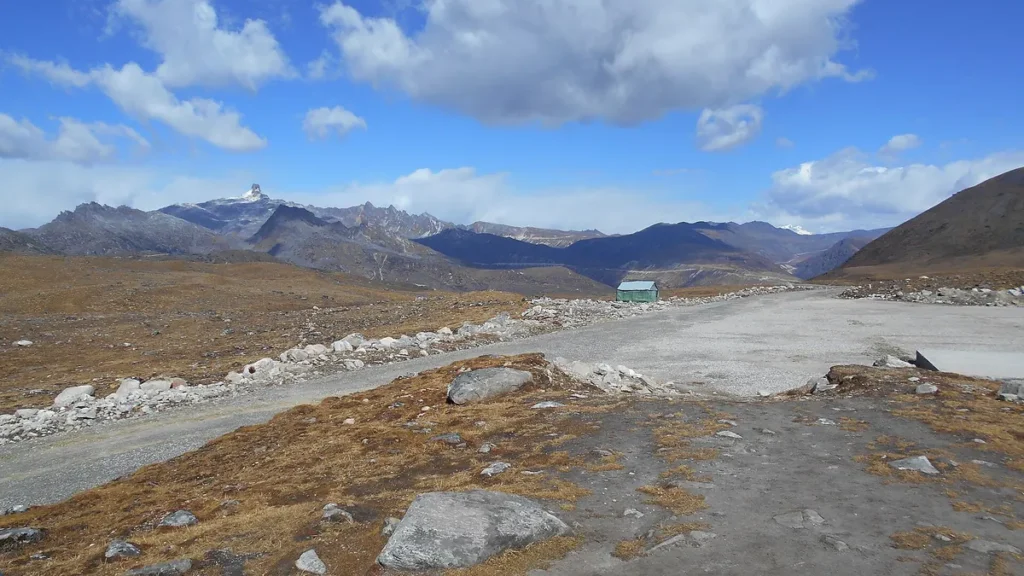
Photo: Itrajib, CC BY-SA 4.0, via Wikimedia Commons
Exam angle
Prelims: 8 November start, nearly 10 days, Girish Kalia and III Corps at Rangapahar, 6–7 September at Wacha-Damai, Taksing in Upper Subansiri. · Mains GS-II: managing a disputed frontier through military protocols while Special Representatives handle the political track.
Practice MCQs
Original practice questions (not PYQs).
The second India–China Corps Commander-level talks on the Arunachal Line of Actual Control began on
Answer (b) & explanation
The second round began on 8 November 2026, a day after Deepavali, and lasted nearly 10 days. The first round had been on 6–7 September 2026.
Consider the following statements:
1. The Indian delegation was led by Lieutenant-General Girish Kalia, General Officer Commanding of III Corps, also known as the Spear Corps.
2. III Corps is headquartered at Rangapahar near Dimapur in Nagaland.
3. The first Corps Commander-level meeting was held at the Wacha-Damai Border Personnel Meeting point in the Kibithoo sector.
How many of the above statements are correct?
Answer (c) & explanation
All three statements are correct, as reported by The Hindu.
Questions students ask about this
When did the second round begin, and how long did it last?
It began on 8 November 2026 and continued for nearly 10 days, with a short break.
Who led the Indian delegation?
Lieutenant-General Girish Kalia, General Officer Commanding of III Corps, also called the Spear Corps, headquartered at Rangapahar near Dimapur in Nagaland.
Where was the first Corps Commander-level meeting held?
On 6–7 September 2026, at the Wacha-Damai Border Personnel Meeting point in the Kibithoo sector.
Why was the first meeting convened?
After reports of tensions in the Taksing area of Upper Subansiri district, where troops had reportedly come face to face.
Have the measures already been put into force?
The report says it remains unclear whether the measures discussed will be implemented before winter sets in fully.