
India administers over 1 crore HPV vaccine doses in less than nine months
Prime Minister Narendra Modi on 23 November 2026 lauded the achievement of administering over 1 crore doses of the human papillomavirus (HPV) vaccine in less than nine months under the National HPV Vaccination Campaign, the Press Information Bureau reported. The campaign was launched by the Prime Minister in February 2026 and provides free, safe and voluntary single-dose HPV vaccination, with parental consent, to 14-year-old girls at designated government health facilities. In less than nine months, over 1 crore doses have been administered, achieving nearly 87% coverage of the annual target cohort of approximately 1.2 crore girls. Six States — Gujarat, Uttar Pradesh, Andhra Pradesh, Mizoram, Madhya Pradesh and Bihar — have achieved 100% coverage of their identified target populations, and 12 States have crossed 80% coverage. In numbers of girls vaccinated, Uttar Pradesh leads with over 29.33 lakh, followed by Bihar with over 13.70 lakh and Gujarat with over 7.75 lakh. The World Health Organization’s South-East Asia Region congratulated India on administering over 10 million doses to 14-year-old girls. The U-WIN platform is used for real-time monitoring, beneficiary tracking, slot booking and digital vaccination certificates. Sessions are held under the supervision of trained medical officers, with links to 24×7 centres for any rare adverse event following immunisation.
- Scale
- Over 1 crore doses in less than nine months; nearly 87% of an annual target cohort of about 1.2 crore 14-year-old girls
- Design
- Launched in February 2026; free, safe, voluntary single dose, with parental consent, at designated government health facilities
- 100% of identified target
- Gujarat, Uttar Pradesh, Andhra Pradesh, Mizoram, Madhya Pradesh and Bihar
- Largest counts
- Uttar Pradesh over 29.33 lakh girls, Bihar over 13.70 lakh, Gujarat over 7.75 lakh
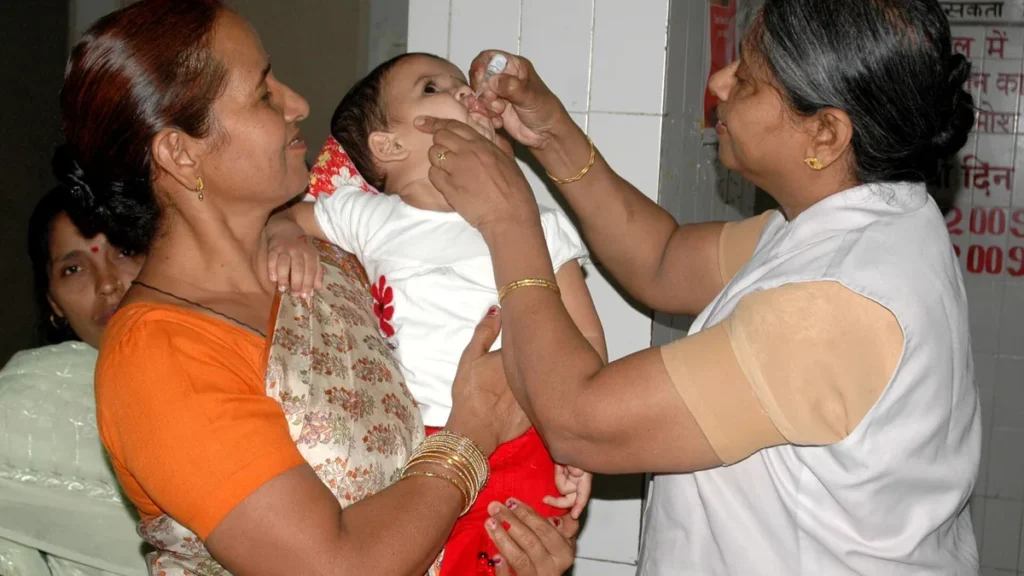
What has the National HPV Vaccination Campaign achieved?
Cervical cancer is a disease that a vaccine can help prevent. In less than nine months, a national campaign has given more than 1 crore single doses to 14-year-old girls, with the parents’ consent, and Uttar Pradesh is the State with the largest number vaccinated.
- The Prime Minister on 23 November 2026 lauded the administration of over 1 crore doses of the human papillomavirus (HPV) vaccine in less than nine months under the National HPV Vaccination Campaign.
- The campaign was launched in February 2026. It provides a free, safe and voluntary single dose, with parental consent, to 14-year-old girls at designated government health facilities.
- Coverage has reached nearly 87% of the annual target cohort of about 1.2 crore girls. Six States — Gujarat, Uttar Pradesh, Andhra Pradesh, Mizoram, Madhya Pradesh and Bihar — have achieved 100% of their identified target populations, and 12 States have crossed 80%.
- In numbers, Uttar Pradesh leads with over 29.33 lakh girls, followed by Bihar with over 13.70 lakh and Gujarat with over 7.75 lakh. The World Health Organization’s South-East Asia Region congratulated India on administering over 10 million doses to 14-year-old girls.
- The U-WIN platform supports real-time monitoring, beneficiary tracking, slot booking and digital certificates. Sessions are supervised by trained medical officers and linked to 24×7 centres for any rare adverse event following immunisation.
Why is an HPV vaccine being offered to 14-year-old girls?
The official note presents HPV vaccination as a preventive step against HPV infections that can cause cervical cancer. The campaign is run by the Ministry of Health and Family Welfare with State and Union Territory governments, district administrations and healthcare teams. Teachers, Accredited Social Health Activists and Auxiliary Nurse Midwives have been used to speak to parents.
The design is specific: it is a single dose, it is free at designated government facilities, it is voluntary, and it requires parental consent. It is aimed at 14-year-old girls, not at the whole female population. Those four features — single dose, free, voluntary, parental consent — are the points to revise, not a claim that every girl in every age group is already covered.
State coverage of “100% of the identified target” is not the same as 100% of every 14-year-old in that State, if the identified target is a defined cohort. The official note uses the phrase “identified target populations” for the six States, and “annual target cohort of approximately 1.2 crore girls” for the national figure. Both should be kept in that wording.
Parents can visit a designated government facility or use U-WIN to book a slot and download a certificate. The ministry says it will keep working with States to close coverage gaps.
Coverage named in the official note
| Measure | Figure |
|---|---|
| Doses in less than nine months | Over 1 crore |
| Share of annual target cohort | Nearly 87% of about 1.2 crore 14-year-old girls |
| States at 100% of identified target | Gujarat, Uttar Pradesh, Andhra Pradesh, Mizoram, Madhya Pradesh, Bihar |
| Largest number of girls vaccinated | Uttar Pradesh over 29.33 lakh; Bihar over 13.70 lakh; Gujarat over 7.75 lakh |
Which programme and tools are being used?
- The National HPV Vaccination Campaign was launched in February 2026 and is implemented by the Ministry of Health and Family Welfare with State and Union Territory governments.
- It offers a free, voluntary, single-dose vaccine to 14-year-old girls, with parental consent, at designated government health facilities.
- The U-WIN platform is used for monitoring, tracking, slot booking and digital certificates.
- Vaccination sessions are linked to 24×7 centres for the management of any rare adverse event following immunisation.
Why does the National HPV Vaccination Campaign passing 1 crore doses matter?
| Angle | What to note |
|---|---|
| Prelims | Over 1 crore doses; nearly 87% of about 1.2 crore; single dose; 14-year-old girls; six named States at 100% of identified target. |
| GS-II: health | A national preventive campaign against cervical cancer is being delivered through State systems, frontline workers and U-WIN. |
| GS-II: federalism | Coverage is uneven: six States are at 100% of their identified target, while other named States are still below that line. |
| State angle | Uttar Pradesh leads in the number of girls vaccinated and is listed among the six States at 100% of the identified target. |
What are the problems with the National HPV Vaccination Campaign passing 1 crore doses?
- “100% of the identified target” is the official phrase. It should not be rewritten as 100% of every 14-year-old in those States unless the note says so, which it does not.
- A voluntary campaign with parental consent will still leave some eligible girls out, which is why the ministry says coverage gaps remain to be closed.
- The official note used here does not name a vaccine brand or manufacturer, so none is added.
What should be done next on the National HPV Vaccination Campaign passing 1 crore doses?
- Keep the design exact: February 2026, free, voluntary, single dose, parental consent, 14-year-old girls.
- Remember over 1 crore doses, nearly 87% of about 1.2 crore, the six States, and the 29.33 lakh, 13.70 lakh and 7.75 lakh counts.
- Use U-WIN as the digital tracking and booking tool.
- Do not invent a brand name, a two-dose schedule, or a claim that boys are included.
What can Prelims ask on the National HPV Vaccination Campaign passing 1 crore doses?
Prelims probability: High. The February 2026 launch, a free, safe, voluntary single dose with parental consent for 14-year-old girls, over 1 crore doses, nearly 87% of about 1.2 crore, six States at 100% of their identified target, and the State’s lead of over 29.33 lakh are all direct questions.
- The National HPV Vaccination Campaign was launched in February 2026 and offers a free, safe, voluntary single dose, with parental consent, to 14-year-old girls.
- Over 1 crore doses have been administered in less than nine months, covering nearly 87% of an annual target cohort of about 1.2 crore girls.
- Six States — Gujarat, Uttar Pradesh, Andhra Pradesh, Mizoram, Madhya Pradesh and Bihar — have achieved 100% coverage of their identified target populations.
- Uttar Pradesh leads in numbers with over 29.33 lakh girls vaccinated, followed by Bihar with over 13.70 lakh and Gujarat with over 7.75 lakh.
- The U-WIN platform is used for monitoring, slot booking and digital certificates.
How to write about the National HPV Vaccination Campaign passing 1 crore doses in Mains
Practice question (15 marks, 250 words): India has administered over 1 crore HPV vaccine doses in less than nine months. Discuss the design of the National HPV Vaccination Campaign and the limits of a coverage milestone.
- Open with the 23 November 2026 announcement and the February 2026 launch.
- Explain the design: free, voluntary, single dose, parental consent, 14-year-old girls, designated government facilities.
- Give the coverage figures: over 1 crore doses, nearly 87% of about 1.2 crore, six States at 100% of identified target, and Uttar Pradesh’s lead in numbers.
- Add U-WIN, frontline workers, and the safety protocol for rare adverse events.
- Close with the limit: a milestone is not the same as every eligible girl covered, and “identified target” should be quoted as such.
Ready lines for your answer
- A vaccine campaign can be both a coverage drive and a consent-based, voluntary programme.
- Uttar Pradesh’s lead in numbers makes this a national health story with a direct State fact.
Quotable data pointPress Information Bureau, 23 November 2026: over 1 crore HPV doses in less than nine months; nearly 87% of about 1.2 crore; Uttar Pradesh over 29.33 lakh girls.
Photo: Ministry of Health and Family Welfare, GODL-India, via Wikimedia Commons
Exam angle
Prelims: February 2026 launch, single dose with parental consent, over 1 crore doses, nearly 87% of about 1.2 crore, six States at 100% of identified target, Uttar Pradesh over 29.33 lakh. · Mains GS-II: preventive health, Centre–State delivery, and why consent and safety protocols sit next to a coverage target.
Practice MCQs
Original practice questions (not PYQs).
The National HPV Vaccination Campaign launched in February 2026 offers which of the following to 14-year-old girls at designated government facilities?
Answer (b) & explanation
The campaign provides a free, safe and voluntary single-dose HPV vaccination, with parental consent, to 14-year-old girls at designated government health facilities.
Consider the following statements:
1. Over 1 crore HPV vaccine doses have been administered in less than nine months, covering nearly 87% of an annual target cohort of about 1.2 crore 14-year-old girls.
2. Six States, including Gujarat, Uttar Pradesh, Andhra Pradesh, Mizoram, Madhya Pradesh and Bihar, have achieved 100% coverage of their identified target populations.
3. Gujarat has vaccinated the largest number of girls, ahead of Uttar Pradesh and Bihar.
How many of the above statements are correct?
Answer (b) & explanation
Statements 1 and 2 are correct. Uttar Pradesh leads in the number of girls vaccinated, with over 29.33 lakh, not Gujarat. Gujarat is third in that count, with over 7.75 lakh, and is among the six States at 100% of the identified target.
Questions students ask about this
When was the campaign launched, and who is it for?
In February 2026, for 14-year-old girls, as a free, voluntary single dose with parental consent.
How many doses have been given?
Over 1 crore in less than nine months, or nearly 87% of an annual target cohort of about 1.2 crore girls.
Which States have reached 100% of their identified target?
Gujarat, Uttar Pradesh, Andhra Pradesh, Mizoram, Madhya Pradesh and Bihar.
Which State has vaccinated the most girls?
Uttar Pradesh, with over 29.33 lakh, followed by Bihar with over 13.70 lakh and Gujarat with over 7.75 lakh.
What is U-WIN used for here?
Real-time monitoring, beneficiary tracking, booking vaccination slots and downloading digital certificates.