
Delhi Sultanate (1206-1526): Five Dynasties, Iqta System, Market Reforms, Mongols and Culture (UPSC Notes + PYQs)
UPSC has already asked about this. Read the story with these questions in mind.
- Prelims 2019Consider the following statements: In the revenue administration of Delhi Sultanate, the in-charge of revenue collection was known as ‘Amil’. …Solve it below ↓
- Prelims 2021Consider the following statements: It was during the reign of Iltutmish that Chengiz Khan reached the Indus in pursuit of the fugitive Khwarezm prince.…Solve it below ↓
Background: from Ghur to Delhi
In the late twelfth century, the Ghurid ruler Muhammad of Ghur pushed into north India. He was defeated by Prithviraj Chauhan in the first battle of Tarain in 1191, but won the second in 1192, opening the Ganga plain. His general Qutbuddin Aibak held Delhi and, after Muhammad’s death in 1206, became its independent ruler. For the next 320 years, five dynasties ruled from Delhi, until Babur defeated Ibrahim Lodi at Panipat in 1526. The Sultanate changed north India deeply: it introduced new forms of administration and revenue, new crafts and technologies, Persian as a language of government, and a distinctive Indo-Islamic architecture, while also facing repeated Mongol invasions from the north-west.
Dynasties at a glance
| Dynasty | Years | Rulers to remember |
|---|---|---|
| Mamluk (Slave) | 1206-1290 | Qutbuddin Aibak, Iltutmish, Razia, Balban |
| Khalji | 1290-1320 | Jalaluddin, Alauddin |
| Tughlaq | 1320-1414 | Ghiyasuddin, Muhammad bin Tughlaq, Firuz Shah |
| Sayyid | 1414-1451 | Khizr Khan |
| Lodi | 1451-1526 | Bahlul, Sikandar (founded Agra, 1504), Ibrahim |
- 1206Mamluk (Slave) dynasty: Aibak
- 1290Khalji dynasty: Jalaluddin
- 1320Tughlaq dynasty: Ghiyasuddin
- 1414Sayyid dynasty: Khizr Khan
- 1451Lodi dynasty: Bahlul Lodi
- 1526Panipat: Babur ends the Sultanate
Building the state
- Iltutmish: got recognition from the Abbasid Caliph (1229), organised the iqta system and the silver tanka and copper jital. The Turkan-i-Chahalgani (the Forty) were his nobles.
- Balban: theory of kingship (zil-i-ilahi, shadow of God), sijda and paibos, broke the Forty.
- Chengiz Khan reached the Indus in Iltutmish’s reign but turned back.
Alauddin Khalji
He beat back repeated Mongol attacks and expanded to the Deccan through Malik Kafur. To pay a large standing army he fixed prices of grain, cloth and horses, created separate markets under a shahna-i-mandi, and collected land revenue at half the produce in cash, measured directly (masahat). Barani’s account is the main source, and he wrote with a clear bias.
- WazirFinance (Diwan-i-Wizarat)
- Ariz-i-MumalikArmy (Diwan-i-Arz)
- Dabir-i-MumalikRoyal correspondence (Diwan-i-Insha)
- Sadr-us-SudurReligious affairs (Diwan-i-Risalat)
- MuqtiHolder of an iqta
Muhammad bin Tughlaq and Firuz Shah
Muhammad bin Tughlaq shifted the capital to Daulatabad (1327), issued bronze token currency, raised taxes in the Doab during famine, and planned a Khurasan expedition. Each idea had logic; execution failed. Ibn Battuta served as his qazi. Firuz Shah went the other way: canals, new towns (Hisar, Firozabad), jizya on Brahmins, hereditary iqtas, and a slave department. Timur sacked Delhi in 1398.
Revenue and market reforms
| Ruler | Measure | Purpose |
|---|---|---|
| Iltutmish | Iqta system; silver tanka and copper jital | Pay officers; standard currency |
| Balban | Sijda and paibos; theory of kingship | Raise the dignity of the throne |
| Alauddin Khalji | Land revenue at half the produce on measurement; price control; market officers (shahna-i-mandi) | Pay a large army cheaply to resist Mongols |
| Muhammad bin Tughlaq | Token currency; shift of capital to Daulatabad; Diwan-i-Kohi for agriculture | Ambitious reforms; most failed |
| Firuz Shah Tughlaq | Canals; jizya on Brahmins; hereditary iqtas | Agriculture and religious legitimacy |
Culture
Qutb Minar (begun by Aibak, completed by Iltutmish), Alai Darwaza with the first true arch and dome, Tughlaqabad’s sloping walls, and Lodi garden tombs. Amir Khusrau wrote in Persian and Hindavi; the Chishti and Suhrawardi Sufi orders spread; the Bhakti movement grew alongside.
Technology in the Sultanate period
The Sultanate period saw several technologies spread across north India. The Persian wheel (araghatta with gearing) made irrigation from wells easier. The spinning wheel and the carder’s bow raised textile output. Paper, already known, became widely used for government records and books. True arches and domes built with lime mortar changed architecture, as seen in the Alai Darwaza. In warfare, the stirrup, better horse breeds and, later, gunpowder altered the balance. Sericulture and new crops spread as well. These changes encouraged towns, crafts and long-distance trade and created new artisan groups, while the demand for cash revenue drew peasants more into markets.
Architecture of the Sultanate
| Monument | Builder | Feature |
|---|---|---|
| Quwwat-ul-Islam mosque | Qutbuddin Aibak | Earliest mosque in Delhi; corbelled arches |
| Qutb Minar | Aibak, completed by Iltutmish | Five-storey tower; Firuz Shah repaired top |
| Alai Darwaza | Alauddin Khalji | First true arch and dome in India |
| Tughlaqabad | Ghiyasuddin Tughlaq | Fortified city with sloping walls |
| Lodi Garden tombs | Lodi rulers | Octagonal tombs and double domes |
These buildings blended Persian and Central Asian forms with Indian craftsmanship, laying the base for Mughal architecture.
Why the Sultanate declined
Several causes combined. Succession had no fixed rule, so each death brought conflict among nobles and princes. Muhammad bin Tughlaq’s failed experiments drained the treasury and alienated nobles, while Firuz Shah’s hereditary iqtas weakened central control. Timur’s invasion in 1398 sacked Delhi and broke the empire into regional kingdoms such as Gujarat, Malwa, Jaunpur, Bengal and the Bahmani kingdom in the Deccan. The Sayyids and Lodis ruled a much smaller state, and Ibrahim Lodi’s quarrels with Afghan nobles led Daulat Khan Lodi to invite Babur.
Mongol threat
The Mongols raided north India repeatedly from the 1220s to the early 1300s. Balban fortified the north-west frontier, and Alauddin Khalji’s large standing army, paid in cash and supplied through controlled markets, defeated several Mongol invasions, including the siege of Delhi in 1303. Defending the frontier shaped Sultanate finance and military policy. It also explains Alauddin’s need for cheap grain and horses, the branding of horses (dagh) and descriptive rolls of soldiers (huliya).
Delhi Sultanate: UPSC angle
For UPSC CSE
Prelims: who did what (iqta, market control, token currency), terms (kharaj, khams, jizya, muqti), monuments and travellers. Mains GS-I: nature of the Sultanate state, Indo-Islamic architecture.
Delhi Sultanate UPSC PYQs (Prelims)
Questions UPSC has actually asked, from the official papers. Pick an option to check yourself.
Mr 'X' has three children. The birthday of the first child falls on the 5th Monday of April, that of the second one falls on the 5th Thursday of November. On which day is the birthday of his third child, which falls on 20th December?
The amil collected revenue at the local level under the Sultanate. The iqta came from West Asian Islamic practice and was brought in by Iltutmish, so it is not indigenous. The Mir Bakhshi, head of the military pay office, is a Mughal post. The Sultanate’s army office was the Diwan-i-Arz. Answer as per the official UPSC key · Battle IAS PYQ bankAnswer (b) & why
Consider the following statements :
– 1. It was during the reign of Iltutmish that Chengiz Khan reached the Indus in pursuit of the fugitive Khwarezm prince.
– 2. It was during the reign of Muhammad bin Tughluq that Taimur occupied Multan and crossed the Indus.
– 3. It was during the reign of Deva Raya II of Vijayanagara Empire that Vasco da Gama reached the coast of Kerala.
Which of the statements given above is/are correct?
Chingiz Khan reached the Indus in 1221, under Iltutmish, chasing Jalal-ud-din Mangbarni. Timur invaded in 1398, in the reign of Nasir-ud-din Mahmud Tughluq, not Muhammad bin Tughluq (died 1351). Vasco da Gama reached Calicut in 1498, long after Deva Raya II (died 1446). Answer as per the official UPSC key · Battle IAS PYQ bankAnswer (a) & why
24 men and 12 women can do a piece of work in 30 days. In how many days can 12 men and 24 women do the same piece of work?
The Mongols first came to the Indus in 1221, under Iltutmish, when Chingiz Khan chased Jalal-ud-din Mangbarni. Under Ala-ud-din, Targhi camped outside Delhi and besieged it (1303). The key treats 3 as wrong: Tarmashirin’s raid of 1327 reached near Delhi but went back without taking territory. Answer as per the official UPSC key · Battle IAS PYQ bankAnswer (d) & why
Mains PYQs on this topic
Questions from the official UPSC Mains papers (2023-2026 in the Battle IAS Mains bank), newest first. Each links to a model answer.
- UPSC Mains 2023 · GS Paper I · Q12 · 15 marks
What were the major technological changes introduced during the Sultanate period? How did those technological changes influence the Indian society?
Quick quiz
Market control regulations are associated with
Separate markets and fixed prices.Answer (b)
The city of Agra was founded by
1504.Answer (b)
Token currency in bronze was introduced by
It failed due to forgery.Answer (c)
FAQs
What was an iqta?
A territorial assignment whose revenue a holder (muqti or iqtadar) collected in return for military and administrative service.
Who was the first woman ruler of Delhi?
Razia Sultan (1236-40).
Which traveller described Muhammad bin Tughlaq’s court?
Ibn Battuta of Morocco, in his Rihla.
When and how did the Sultanate end?
At the First Battle of Panipat, 1526, when Babur defeated Ibrahim Lodi.
Who built the Alai Darwaza?
Alauddin Khalji, in 1311; it has the first true dome and arch in India.
Which Sultan created the Diwan-i-Kohi?
Muhammad bin Tughlaq, to extend cultivation.
Who founded the city of Agra?
Sikandar Lodi, in 1504.
Spotted an error? Tell us. We correct within 48 hours.
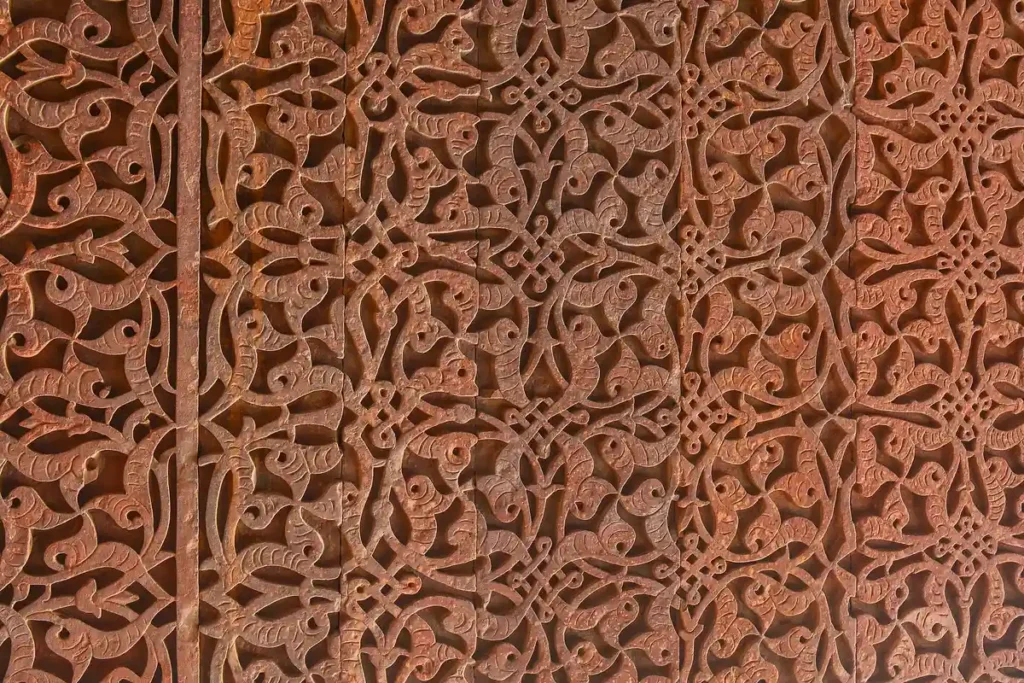
Image: Syed Sajidul Islam, Wikimedia Commons, CC BY-SA 4.0
How to use this in Mains
If asked: UPSC Mains 2023, GS-I: What were the major technological changes introduced during the Sultanate period? How did those technological changes influence the Indian society?
Quote: “The Sultanate period saw several technologies spread across north India.”
Use it: Use as the lead-in to the technology answer.
In the news

Pollen study links Harappan decline to weak monsoon (5100–4000 BP)
A pollen study by the Birbal Sahni Institute of Palaeosciences links the shrinking of the Harappan Civilization to a weak Indian Summer Monsoon between about 5100 and 4000 years before present, the Science Ministry said on 29 July 2026. Sediments from Deoria Tal in the Garhwal Himalaya show an abrupt dry spell, the "4.2 ka event".
29 Jul 2026
Sarnath inscribed as India’s 45th UNESCO World Heritage Site
On 25 July 2026 the 48th World Heritage Committee in Busan inscribed the "Ancient Buddhist Site of Sarnath" on the UNESCO World Heritage List. It is India's 45th property. The serial site in Varanasi covers Chaukhandi Stupa and the Archaeological Remains of Sarnath, where the Buddha gave his first sermon.
25 Jul 2026
Rakhigarhi skeletal remains handed to Anthropological Survey of India
ASI handed human skeletal remains from Rakhigarhi, Haryana, to the Anthropological Survey of India under a new MoU, the Culture Ministry said on 22 June 2026. The 2025-26 dig at Mound No. 7 found eight burials; three complete skeletons plus fragments went to AnSI's Kolkata repository. Planned work includes aDNA, isotopes and palaeopathology with partner labs.
22 Jun 2026
Relics of the Buddha’s chief disciples enshrined for exposition in Mongolia
The holy relics of Arhat Sariputra and Arhat Mahamoggallana, the Buddha's two chief disciples, were ceremonially enshrined at Gandantegchenling Monastery in Ulaanbaatar on Buddha Purnima (Vesak) 2026. Brought from India for a ten-day exposition from 31 May to 10 June 2026, they arrived on a special IAF IL-76 aircraft and had travelled abroad only once before, to Thailand in 2024.
31 May 2026