
Jet Streams: Subtropical Westerly and Tropical Easterly Jets, Rossby Waves and their Role in Indian Weather (UPSC Notes + PYQs)

UPSC has already asked about this. Read the story with these questions in mind.
How they form
Strong temperature contrasts between air masses create steep pressure gradients aloft; the Earth’s rotation (Coriolis force) turns the flow into west-to-east bands. They occur in both hemispheres, which a 2020 Prelims question tested.
Types relevant to India
- Subtropical westerly jet (STWJ): around 30°N in winter, splits around the Tibetan plateau; the southern branch sits over north India and brings western disturbances that give winter rain in Punjab and snow in the Himalayas, valuable for rabi wheat.
- Tropical easterly jet (TEJ): forms in summer over peninsular India at about 15°N when the Tibetan plateau heats the upper air.
- Polar front jet: mid-latitudes, steers mid-latitude cyclones.
The monsoon link
In early June, the westerly jet jumps north of the Himalayas. The easterly jet then establishes itself over the peninsula, and the monsoon bursts. A late shift of the westerly jet delays onset. When the jet returns south in October, the monsoon retreats.
Rossby waves and extreme weather
Jets meander in large loops called Rossby waves. When the loops stall, heat waves or floods can persist; the 2010 Russian heat wave and Pakistan floods were linked to such a blocking pattern. A warming Arctic may be weakening the polar jet.
Jet Streams: UPSC angle
For UPSC CSE
Prelims: location, direction, both hemispheres, link to monsoon and western disturbances. Mains GS-I: mechanism of Indian monsoon; extreme weather.
Jet Streams UPSC PYQs (Prelims)
Questions UPSC has actually asked, from the official papers. Pick an option to check yourself.
Consider the following statements :
– 1. Jet streams occur in the Northern Hemisphere only.
– 2. Only some cyclones develop an eye.
– 3. The temperature inside the eye of a cyclone is nearly 10°C lesser than that of the surroundings.
Which of the statements given above is/are correct ?
Jet streams blow in both hemispheres. Only mature, strong tropical cyclones develop a clear eye, and temperate cyclones have none. Sinking air makes the eye warmer than its surroundings, by as much as 10 °C, not colder. Answer as per the official UPSC key · Battle IAS PYQ bankAnswer (c) & why
Mains PYQs on this topic
No UPSC Mains question from 2023-2026 is directly on this topic. Older papers (2013-2022) will be added as the Mains bank grows.
Quick quiz
Jet streams occur
UPSC 2020.Answer (b)
The tropical easterly jet over India appears in
It is linked to Tibetan heating.Answer (b)
Western disturbances are brought to north India by the
In winter.Answer (b)
FAQs
At what height do jet streams blow?
In the upper troposphere, roughly 9-14 km above the surface.
What are western disturbances?
Low-pressure systems from the Mediterranean region carried east by the westerly jet, bringing winter rain and snow to north India.
How do jet streams affect flights?
Eastbound flights save time riding the westerlies; westbound flights avoid them.
What is a Rossby wave?
A large meander in the jet stream.
Spotted an error? Tell us. We correct within 48 hours.
Image: https://commons.wikimedia.org/wiki/File:Jet_Stream_Convergence.jpg
How to use this in Mains
If asked: Explain the role of jet streams in the Indian monsoon. (GS-I)
Quote: “In early June, the westerly jet jumps north of the Himalayas.”
Use it: The key mechanism point in your body.
In the news
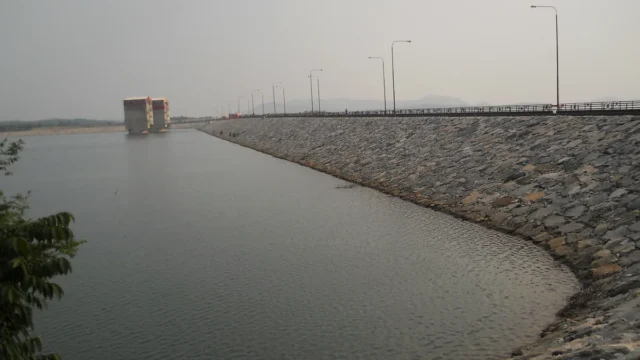
Pumped storage hydropower: India’s roadmap for 100 GW of ‘water batteries’ by 2035-36
A PIB backgrounder of 19 October 2026 explains how pumped storage projects (PSPs) will store solar and wind power for India’s grid. India runs 7.43 GW of pumped storage today, is building 15.87 GW more and has an assessed potential of 345.38 GW. A roadmap aims to add about 100 GW between 2025-26 and 2035-36.
19 Oct 2026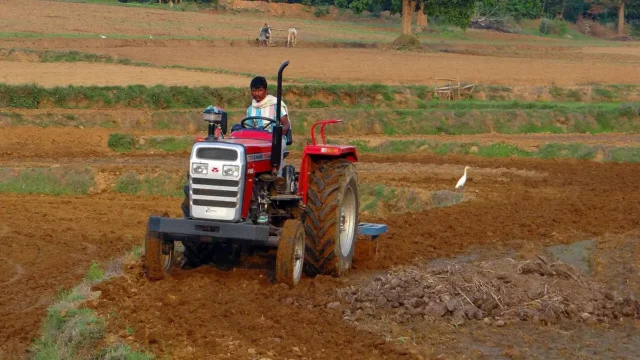
Khet Bachao Abhiyan: Centre reviews 22 October to 30 November farm campaign with States
On 17 October 2026 Union Agriculture Minister Shivraj Singh Chouhan reviewed preparations for the Khet Bachao Abhiyan with agriculture ministers of 11 States and UTs. The campaign runs from 22 October to 30 November 2026. About 4,150 teams of Krishi Vigyan Kendra and ATMA staff, with over 12,000 scientists and officials, plan around 1.5 lakh meetings with farmers on soil health, crop residue, balanced fertiliser use and key schemes.
17 Oct 2026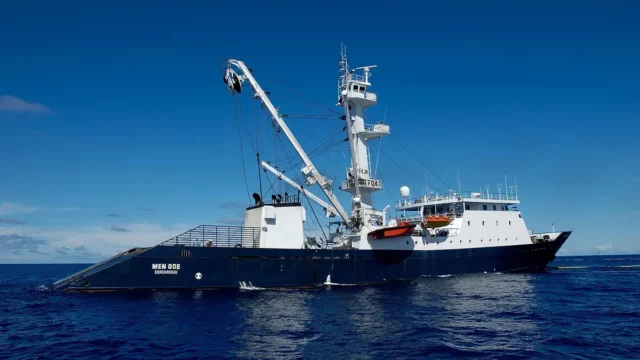
India to accede to the Southern Indian Ocean Fisheries Agreement (SIOFA)
On 14 October 2026 the Centre approved India's accession to the Southern Indian Ocean Fisheries Agreement. India, a Cooperating Non-Contracting Party since 2022, will become a full Contracting Party. Indian vessels can then fish squids, toothfish, alfonsino and other non-migratory stocks in the SIOFA area and join its scientific and compliance bodies.
14 Oct 2026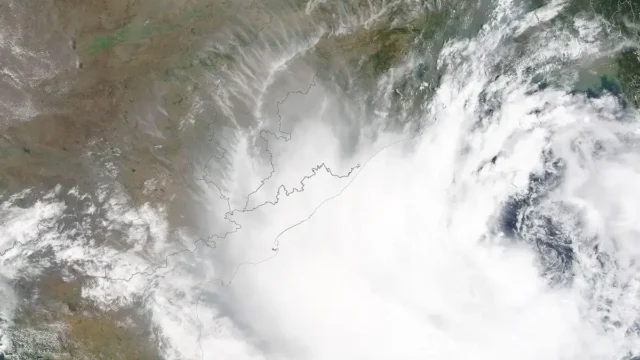
IMD launches a map-based Decision Support System for cyclone and marine warnings
On 12 October 2026 the India Meteorological Department dedicated a Cyclone Warning and Marine Weather Services Decision Support System to the nation. The WebGIS platform shows cyclone track, intensity, winds, rainfall, storm surge and district-wise warnings on one map for disaster managers and the public.
13 Oct 2026