
UPSC Mains 2013 GS Paper 3 Q24: model answer
Article 244 of the Indian Constitution relates to administration of scheduled areas and tribal areas. Analyse the impact of non-implementation of the provisions of the Fifth schedule on the growth of Left Wing extremism.
What the question wants
Analyse how failing to implement the Fifth Schedule's tribal protections helped Left Wing Extremism grow.
How to structure it
Provision, failure, consequence.
- Article 244 and Fifth Schedule features
- Gaps in implementation
- How they fed LWE
- Remedy
How to think it through
Fifth Schedule: Governor's powers to modify laws, regulate land transfer, moneylending; Tribes Advisory Council; Governor's annual report. Non-implementation: Governors passive, TACs dormant, land alienation, mining leases (Samatha 1997), PESA 1996 diluted by states, FRA delayed, displacement without rehab. Result: alienation, Maoists posed as protectors of jal-jangal-zameen; Dandakaranya. Bandopadhyay Committee 2008 (Planning Commission expert group). Niyamgiri 2013.
Model answer
The Planning Commission's expert group of 2008, led by D. Bandyopadhyay, wrote that the Maoist movement had grown in the very areas where the Constitution had promised tribals the most protection. That promise sits in Article 244 and the Fifth Schedule.
What the Fifth Schedule promises
- The Governor can stop or modify any law in a Scheduled Area and make regulations on land transfer and moneylending.
- A Tribes Advisory Council must advise on tribal welfare.
- The Governor sends an annual report to the President.
- PESA, 1996 later gave gram sabhas control over minor forest produce, land acquisition and local resources.
How non-implementation fed extremism
- Governors rarely used their powers; TACs met seldom.
- Land alienation to moneylenders and outsiders continued.
- Mining and dams displaced tribals without fair rehabilitation; the Supreme Court in Samatha (1997) had to step in.
- States diluted PESA rules, so gram sabhas stayed powerless.
- Forest rights stayed unrecognised until the FRA, 2006, and even then claims were rejected widely.
- Into this gap, Maoists posed as defenders of 'jal, jangal, zameen'.
The remedy
- Active Governors and regular reports.
- PESA rules in letter and spirit, as the Niyamgiri gram sabhas showed in 2013.
- Settle forest rights and enforce land-transfer bans, with fair compensation and a share in mining royalty through District Mineral Foundations.
Where the Constitution was absent, the Maoist filled the vacuum.
Draw: A chain: constitutional promise → non-implementation → alienation → Maoist entry.
Keywords, cases and data to drop in
Article 244(1), Fifth Schedule, Governor's regulations, Tribes Advisory Council, PESA 1996, Samatha 1997, FRA 2006, Bandyopadhyay Committee 2008, Niyamgiri 2013, land alienation, jal-jangalzameen.
Where most answers lose marks
- Describing the Fifth Schedule only, without linking each failure to the growth of LWE.
Related Mains PYQs
- Naxalism is a social, economic and developmental issue manifesting as a violent internal security threat. In this context, discuss the emerging issues… UPSC 2022 · GS-III
- What are the determinants of left-wing extremism in Eastern part of India? What strategy should Government of India, civil administration and security… UPSC 2020 · GS-III
- Left Wing Extremism (LWE) is showing a downward trend, but still affects many parts of the country. Briefly explain the Government of… UPSC 2018 · GS-III
- The North-East region of India has been infested with insurgency for a very long time. Analyze the major reasons for the survival… UPSC 2017 · GS-III
Fresh examples from current affairs
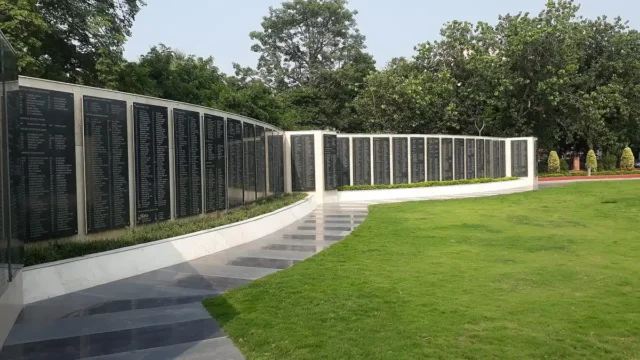
Police Commemoration Day 2026: Shah pays tribute, sets drug-free India target of 2029
On Police Commemoration Day, 21 October 2026, Union Home Minister Amit Shah paid tribute at the National Police Memorial in New Delhi to police personnel who died on duty. He recalled that India was declared free of Naxalism on 31 March 2026, asked all forces to work for a ‘Nasha Mukt Bharat’ by 31 December 2029, and flagged off a nationwide ‘Fight Against Drugs’ motorcycle rally.
UPSC angle: Prelims: Hot Springs, National Police Memorial, State List entries, NDPS Act. · Mains GS-III: police reforms and narcotics.
21 Oct 2026
Dallirajhara–Rowghat rail line completed: iron ore link to Bhilai through Bastar
Indian Railways completed the last section, Taroki-Rowghat (17.5 km), of the 95 km Dallirajhara-Rowghat new line in south Chhattisgarh, with the CRS inspection and speed trial done (PIB, 23 September 2026). The single-line electrified broad-gauge line will carry iron ore to Bhilai Steel Plant and link remote areas to Raipur.
UPSC angle: Mains: Infrastructure as a tool against LWE.
23 Sep 2026
Backgrounder: India “effectively free” of Left Wing Extremism
India became effectively free of Left Wing Extremism on 31 March 2026, with no district still LWE-affected, a PIB backgrounder said on 1 August 2026. Affected districts fell from 126 in 2014 to zero. Incidents dropped from 870 in 2014 to 33 in 2026. It credits security operations, roads and towers, surrender policy and tribal welfare.
UPSC angle: Mains: Ending LWE: security vs development.
1 Aug 2026
MHA: 37 “Legacy & Thrust” districts no longer LWE-affected
No district in India is now classified as affected by Left Wing Extremism, the Home Ministry told Rajya Sabha on 29 July 2026. Affected districts fell from 126 to 90 in April 2018, 70 in 2021, 38 in 2024, eight in December 2025 and zero by March-April 2026. Thirty-seven Legacy and Thrust districts still get security and development support.
UPSC angle: Prelims: Seventh Schedule: police.
29 Jul 2026Learn the concept
Question text as printed in the official UPSC Civil Services (Main) question paper. The model answer is original Battle IAS work; use it to learn structure, not to memorise.
Want every PYQ in one place? See the Battle IAS PYQ Book.