
UPSC Mains 2018 GS Paper 3 Q10: model answer
Left Wing Extremism (LWE) is showing a downward trend, but still affects many parts of the country. Briefly explain the Government of India’s approach to counter the challenges posed by LWE.
What the question wants
Briefly explain how the Government of India has tackled Left Wing Extremism, given that it is declining but still present.
How to structure it
Trend and approach.
- Decline in numbers
- The 2015 policy
- Security pillar
- Development pillar
- Rights and governance
How to think it through
National Policy and Action Plan 2015: multi-pronged (security, development, rights of local communities, perception management). SAMADHAN 2017 (Smart leadership, Aggressive strategy, Motivation, Actionable intelligence, Dashboard KPIs, Harnessing technology, Action plan for each theatre, No access to financing). Schemes: SRE, SIS, Special Central Assistance, RRP roads, mobile towers, Eklavya schools, ITIs, banks/post offices, Aspirational Districts. Surrender policy. Now (2026 update) MHA says no district LWE-affected.
Model answer
When this question was set in 2018, Maoist violence had already fallen sharply from its 2010 peak. By 8 April 2026, the Home Ministry told nine states that no district remained in the 'LWE-affected' category; 37 became 'Legacy and Thrust' districts and one, West Singhbhum, a 'District of Concern'. The approach behind this was multi-pronged.
The 2015 National Policy and Action Plan
- Security: CAPF deployment, new fortified police stations, and the SAMADHAN doctrine (2017) of smart leadership,
actionable intelligence and denying finance.
- Development: roads under the Road Requirement Plan, mobile towers, banks, post offices and Eklavya schools.
- Rights: forest rights titles and PESA.
- Perception management: outreach and surrender policies.
Schemes
- Security Related Expenditure and Special Infrastructure schemes.
- Special Central Assistance to the worst-hit districts.
- Aspirational Districts programme.
- Skill and loans through ITIs, skill centres and SHGs for local youth.
Results and the unfinished task
- Top leaders were neutralised or surrendered; the core of Abujhmarh was opened up.
- The task now is to keep services running so the 38 watch-list districts do not slide back.
Force opened the door; services kept it open.
Draw: A four-pillar temple: security, development, rights, perception, with the 2015 policy as the roof.
Keywords, cases and data to drop in
National Policy and Action Plan 2015, SAMADHAN 2017, SRE, SIS, SCA, Road Requirement Plan, mobile towers, Eklavya schools, FRA, surrender policy, MHA 8 April 2026, Legacy and Thrust districts.
Where most answers lose marks
- Writing only about security operations; the question asks for the overall approach.
Related Mains PYQs
- Separatist movements have been one of the major factors contributing to militancy and instability in Jammu & Kashmir (J & K). Bring… UPSC 2026 · GS-III
- Discuss counterfeit currency and money laundering as major sources of terror funding in India. State the actions being taken at International level… UPSC 2026 · GS-III
- Why is maritime security vital to protect India’s sea trade ? Discuss maritime and coastal security challenges and the way forward. UPSC 2025 · GS-III
- Terrorism is a global scourge. How has it manifested in India ? Elaborate with contemporary examples. What are the counter measures adopted… UPSC 2025 · GS-III
Fresh examples from current affairs
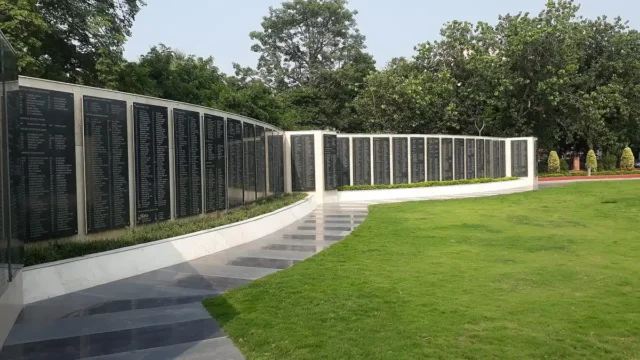
Police Commemoration Day 2026: Shah pays tribute, sets drug-free India target of 2029
On Police Commemoration Day, 21 October 2026, Union Home Minister Amit Shah paid tribute at the National Police Memorial in New Delhi to police personnel who died on duty. He recalled that India was declared free of Naxalism on 31 March 2026, asked all forces to work for a ‘Nasha Mukt Bharat’ by 31 December 2029, and flagged off a nationwide ‘Fight Against Drugs’ motorcycle rally.
UPSC angle: Prelims: Hot Springs, National Police Memorial, State List entries, NDPS Act. · Mains GS-III: police reforms and narcotics.
21 Oct 2026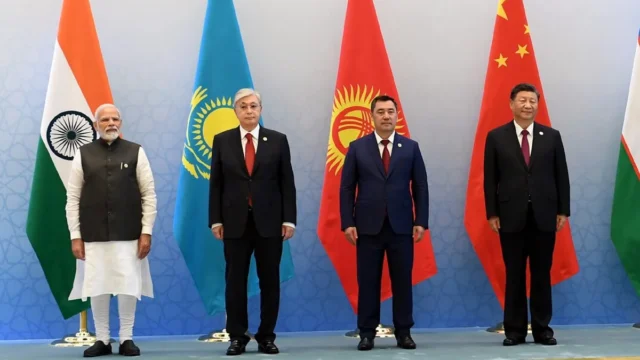
SCO Heads of Government meet in Dushanbe: Rajnath calls for dismantling the terror ecosystem
Defence Minister Rajnath Singh represented India at the 25th meeting of the SCO Council of Heads of Government in Dushanbe, Tajikistan, on 20 October 2026. With Pakistan’s Deputy Prime Minister in the room, he said there can be no justification and no double standards on terrorism. The meeting adopted the SCO budget for 2027 and a 2026–30 action plan for trade and economic cooperation.
UPSC angle: Prelims: SCO bodies and locations, new centres, INSTC. · Mains GS-II: SCO’s value for India; GS-III: terror financing.
21 Oct 2026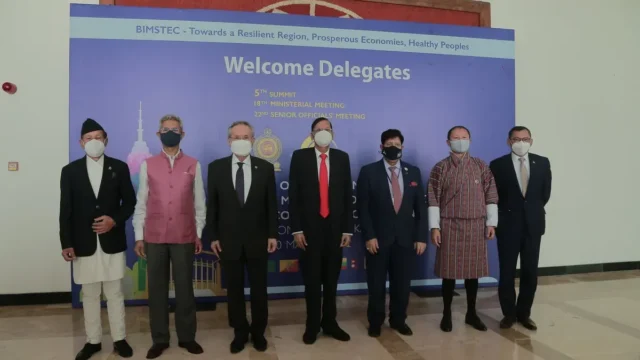
First BIMSTEC Home Ministers Meeting adopts Delhi Declaration on security
India hosted the first BIMSTEC Home Ministers Meeting in New Delhi on 13 October 2026. The seven member States adopted the Delhi Declaration, condemning terrorism including cross-border terrorism, and called for full use of the BIMSTEC anti-terror and mutual legal assistance conventions. A Disaster Management Centre is planned in Jamnagar, Gujarat.
UPSC angle: Prelims: members, HMM, conventions and dates, Jamnagar centre. · Mains GS-II: regional groupings; India's neighbourhood and security cooperation.
13 Oct 2026
Dallirajhara–Rowghat rail line completed: iron ore link to Bhilai through Bastar
Indian Railways completed the last section, Taroki-Rowghat (17.5 km), of the 95 km Dallirajhara-Rowghat new line in south Chhattisgarh, with the CRS inspection and speed trial done (PIB, 23 September 2026). The single-line electrified broad-gauge line will carry iron ore to Bhilai Steel Plant and link remote areas to Raipur.
UPSC angle: Mains: Infrastructure as a tool against LWE.
23 Sep 2026Learn the concept
Question text as printed in the official UPSC Civil Services (Main) question paper. The model answer is original Battle IAS work; use it to learn structure, not to memorise.
Want every PYQ in one place? See the Battle IAS PYQ Book.