
UPSC Mains 2014 GS Paper 3 Q9: model answer
Foreign Direct Investment (FDI) in the defence sector is now set to be liberalized. What influence is this expected to have on Indian defence and economy in the short and long run?
What the question wants
Explain how liberalising FDI in defence would affect Indian defence and the economy in the short and long run.
How to structure it
Short run, long run, two sides.
- The policy change
- Short-run effects
- Long-run effects
- Concerns
- Conditions for success
How to think it through
2014: cap raised from 26% to 49% (automatic route later); 2020: 74% automatic, 100% government route. India was the world's largest arms importer. Short run: JVs, offsets, some capital, technology screening. Long run: indigenous base, exports (BrahMos, Tejas), jobs, MSME suppliers, lower import bill. Concerns: security, technology denial, control. Today: defence exports ₹23,622 crore in 2024–25.
Model answer
In 2014 India was the world's largest arms importer, and about two-thirds of its equipment came from abroad. Raising the FDI cap in defence from 26% to 49% that year, and to 74% under the automatic route in 2020, was meant to make more of it at home.
Short-run influence
- Joint ventures with foreign makers, such as Tata–Airbus for the C-295 aircraft.
- Capital inflows and a modest drop in import bills.
- Offsets absorbed into local production.
- Foreign firms test the market before committing technology.
Long-run influence
- Indigenous industrial base: design and production move to India.
- Exports: defence exports reached ₹23,622 crore in 2024–25, led by BrahMos and components.
- Jobs and MSMEs in supply chains, especially in the UP and Tamil Nadu defence corridors.
- Spin-offs to civilian aviation, electronics and materials.
- Strategic autonomy: less dependence during wars and sanctions.
- Lower import bill and less foreign exchange spent on spares for decades.
Concerns
- Foreign firms may keep critical technology abroad.
- Security vetting of foreign owners.
- Small domestic orders make large plants unviable without exports.
- Fragmented testing and certification slows new products.
- Monopsony: one buyer, the government, means slow orders.
What it needs
- Predictable procurement under DAP 2020, positive indigenisation lists, testing facilities and R&D partnerships.
FDI can bring the factory; only steady orders and India's own research can bring the know-how.
Draw: A timeline: 26% → 49% → 74%, with exports rising alongside.
Keywords, cases and data to drop in
FDI 26% to 49% (2014) to 74% automatic (2020), largest arms importer, Tata–Airbus C-295, offsets, defence corridors, DAP 2020, positive indigenisation lists, defence exports ₹23,622 crore.
Where most answers lose marks
- Not separating short and long run, which the question asks for explicitly.
Related Mains PYQs
- Why is Public Private Partnership (PPP) required in infrastructural projects? Examine the role of PPP model in the redevelopment of Railway Stations… UPSC 2022 · GS-III
- Explain the meaning of investment in an economy in terms of capital formation. Discuss the factors to be considered while designing a… UPSC 2020 · GS-III
- Examine the development of Airports in India through joint ventures under Public-Private Partnership (PPP) model. What are the challenges faced by the… UPSC 2017 · GS-III
- Explain how Private Public Partnership arrangements, in long gestation infrastructure projects, can transfer unsustainable liabilities to the future. What arrangements need to… UPSC 2014 · GS-III
Fresh examples from current affairs
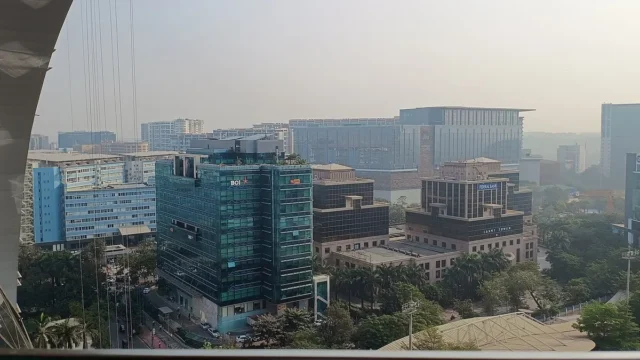
Net FDI positive for third straight month: $3.3 billion in August 2026, says RBI Bulletin
Net foreign direct investment into India was $3.3 billion in August 2026, the third positive month in a row, according to the RBI’s October Bulletin reported by The Hindu on 24 October. Gross inflows were $11.1 billion, almost 68% higher than a year earlier, while outflows rose to $7.7 billion, mainly because foreign firms took profits home. It is a clear turnaround from five months of negative net FDI between August and December 2025.
UPSC angle: Prelims: gross vs net FDI, FDI vs FPI, capital account. · Mains GS-III: investment models, external sector stability.
24 Oct 2026
Cabinet clears ₹3,590.73-crore 4-laning of Muzaffarpur–Sitamarhi–Sonbarsa NH-22
On 19 August 2026 the CCEA approved upgrading the Muzaffarpur-Sitamarhi-Sonbarsa section of NH-22 in Bihar to four lanes. The 82.578 km project will be built on Hybrid Annuity Mode at ₹3,590.73 crore. It links the India-Nepal border at Sonbarsa with Muzaffarpur on the East-West Corridor and is planned under PM GatiShakti principles.
UPSC angle: Prelims: HAM.
19 Aug 2026
Cabinet doubles Government commitment to NIIF to ₹60,000 crore
The Union Cabinet approved an additional Government commitment of ₹30,000 crore to the National Investment and Infrastructure Fund (NIIF), taking the total to ₹60,000 crore, the Finance Ministry said on 29 June 2026. The money will set up NIIF Infrastructure Fund II, with a target corpus of close to ₹30,000 crore, and back new fund strategies.
UPSC angle: Prelims: NIIF structure. · Mains: financing infrastructure.
29 Jun 2026
CCEA approves Rameshwar–Paradeep coastal highway in Odisha on HAM
The Cabinet Committee on Economic Affairs approved a new coastal highway from Rameshwar to Paradeep in Odisha on 3 June 2026. It has two packages totalling 160.18 km and a capital cost of ₹8,300.79 crore, built on the Hybrid Annuity Model. It passes through Khurda, Puri, Kendrapada and Jagatsinghpur and should cut travel time by about 2.5 hours.
UPSC angle: Prelims: HAM vs BOT vs EPC.
3 Jun 2026Learn the concept
Question text as printed in the official UPSC Civil Services (Main) question paper. The model answer is original Battle IAS work; use it to learn structure, not to memorise.
Want every PYQ in one place? See the Battle IAS PYQ Book.