
UPSC Mains 2017 GS Paper 3 Q19: model answer
Mob violence is emerging as a serious law and order problem in India. By giving suitable examples, analyze the causes and consequences of such violence.
What the question wants
Analyse with examples why mob violence is rising in India and what harm it causes.
How to structure it
Examples, causes, consequences, remedies.
- Examples
- Causes
- Consequences
- Remedies including Tehseen Poonawalla
How to think it through
Dadri 2015 (Akhlaq), Alwar 2017 (Pehlu Khan), Jharkhand child-lifting rumour lynchings 2017, Rainwala/Dhule 2018 WhatsApp rumours, Palghar 2020 sadhus, Bulandshahr 2018 inspector killed. Causes: rumours on WhatsApp, cow vigilantism, communal polarisation, weak policing, impunity, distrust of justice, unemployment, political patronage. Consequences: rule of law erodes, minorities fear, communal tension, investment image, police morale. Remedies: Tehseen Poonawalla 2018 SC guidelines (nodal officer, fast track, compensation), BNS 103(2), WhatsApp forward limits, police accountability.
Model answer
In Dhule, Maharashtra, in July 2018, five men from a nomadic community stepped off a bus and were beaten to death by villagers who had seen a WhatsApp rumour about childlifters. None of the victims had done anything. The mob needed only a rumour and a crowd.
Examples
- Dadri (2015): Mohammad Akhlaq killed over beef rumours.
- Alwar (2017): Pehlu Khan, a dairy farmer, attacked by cow vigilantes.
- Jharkhand (2017) and Dhule (2018): child-lifting rumours.
- Bulandshahr (2018): a police inspector killed by a mob.
- Palghar (2020): two sadhus and their driver lynched.
Causes
- Rumours and fake news spreading faster than facts.
- Vigilantism over cows, morality or 'outsiders'.
- Communal and caste polarisation.
- Impunity: slow trials and weak convictions.
- Distrust of police and courts, so crowds 'deliver justice'.
- Political patronage and glorification of accused persons.
- Idle, angry youth in a crowd feel no personal responsibility.
Consequences
- The rule of law is replaced by the rule of the mob.
- Fear among minorities and the poor.
- Communal riots that follow a single incident.
- Damage to India's image and investor confidence.
- Police morale falls when officers are attacked.
What must be done
- Enforce the Supreme Court's Tehseen Poonawalla (2018) guidelines: a nodal officer in each district, fast-track trials and victim compensation.
- Use the BNS, 2023, which punishes group murder on grounds of race, caste, community or belief under Section 103(2), with death as the maximum sentence.
- Platform action: WhatsApp's forward limits, quick takedowns and fact-check units.
- Community policing and peace committees.
- Political leaders must condemn, not garland, the accused.
A mob is brave because it is faceless; the law must give every member a face and a case.
Draw: A cycle: rumour → crowd → violence → impunity → next rumour, with the points where law breaks the cycle.
Keywords, cases and data to drop in
Dadri 2015, Alwar 2017, Dhule 2018, Bulandshahr 2018, Palghar 2020, rumours, vigilantism, impunity, Tehseen Poonawalla 2018, BNS 103(2), nodal officer, fast-track courts, forward limits.
Where most answers lose marks
- Listing causes without examples, when the question says 'by giving suitable examples'.
Related Mains PYQs
- Naxalism is a social, economic and developmental issue manifesting as a violent internal security threat. In this context, discuss the emerging issues… UPSC 2022 · GS-III
- What are the determinants of left-wing extremism in Eastern part of India? What strategy should Government of India, civil administration and security… UPSC 2020 · GS-III
- Left Wing Extremism (LWE) is showing a downward trend, but still affects many parts of the country. Briefly explain the Government of… UPSC 2018 · GS-III
- The North-East region of India has been infested with insurgency for a very long time. Analyze the major reasons for the survival… UPSC 2017 · GS-III
Fresh examples from current affairs
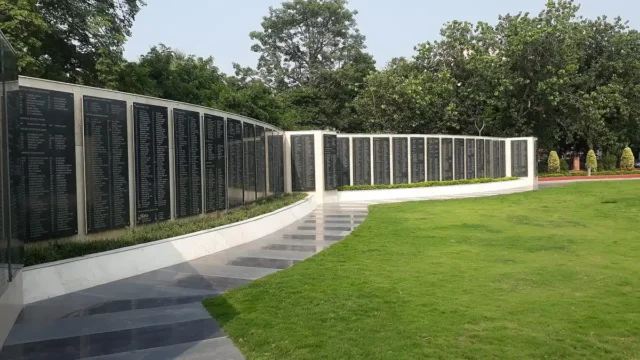
Police Commemoration Day 2026: Shah pays tribute, sets drug-free India target of 2029
On Police Commemoration Day, 21 October 2026, Union Home Minister Amit Shah paid tribute at the National Police Memorial in New Delhi to police personnel who died on duty. He recalled that India was declared free of Naxalism on 31 March 2026, asked all forces to work for a ‘Nasha Mukt Bharat’ by 31 December 2029, and flagged off a nationwide ‘Fight Against Drugs’ motorcycle rally.
UPSC angle: Prelims: Hot Springs, National Police Memorial, State List entries, NDPS Act. · Mains GS-III: police reforms and narcotics.
21 Oct 2026
Dallirajhara–Rowghat rail line completed: iron ore link to Bhilai through Bastar
Indian Railways completed the last section, Taroki-Rowghat (17.5 km), of the 95 km Dallirajhara-Rowghat new line in south Chhattisgarh, with the CRS inspection and speed trial done (PIB, 23 September 2026). The single-line electrified broad-gauge line will carry iron ore to Bhilai Steel Plant and link remote areas to Raipur.
UPSC angle: Mains: Infrastructure as a tool against LWE.
23 Sep 2026
Backgrounder: India “effectively free” of Left Wing Extremism
India became effectively free of Left Wing Extremism on 31 March 2026, with no district still LWE-affected, a PIB backgrounder said on 1 August 2026. Affected districts fell from 126 in 2014 to zero. Incidents dropped from 870 in 2014 to 33 in 2026. It credits security operations, roads and towers, surrender policy and tribal welfare.
UPSC angle: Mains: Ending LWE: security vs development.
1 Aug 2026
MHA: 37 “Legacy & Thrust” districts no longer LWE-affected
No district in India is now classified as affected by Left Wing Extremism, the Home Ministry told Rajya Sabha on 29 July 2026. Affected districts fell from 126 to 90 in April 2018, 70 in 2021, 38 in 2024, eight in December 2025 and zero by March-April 2026. Thirty-seven Legacy and Thrust districts still get security and development support.
UPSC angle: Prelims: Seventh Schedule: police.
29 Jul 2026Learn the concept
Question text as printed in the official UPSC Civil Services (Main) question paper. The model answer is original Battle IAS work; use it to learn structure, not to memorise.
Want every PYQ in one place? See the Battle IAS PYQ Book.