
UPSC Mains 2019 GS Paper 3 Q12: model answer
The public expenditure management is a challenge to the Government of India in the context of budget making during the post-liberalization period. Clarify it.
What the question wants
Explain why managing public expenditure has been a challenge in budget-making since liberalisation.
How to structure it
Meaning, then challenges, then reforms.
- Meaning
- Why it is hard
- Reforms so far
- What remains
How to think it through
Public expenditure management means controlling the total, allocating to priorities and getting value for money. After 1991, tax cuts and the end of deficit monetisation meant every rupee had to be found. Committed spending (interest, salaries, pensions, subsidies) leaves little for capital. Reforms: FRBM, the outcome budget, ending plan/non-plan, DBT, the capex push.
Model answer
In 2025–26 the Union government expected to spend about one rupee in four on interest alone. Add salaries, pensions and subsidies, and much of the Budget is committed before a new idea is funded. Public expenditure management has three tasks: keep total spending within fiscal limits, put money where it matters most, and get value for every rupee. Since 1991 each has become harder.
Why it is a challenge after liberalisation
- Revenue constraint: tariff and tax rates were cut to open the economy, so spending could no longer ride on easy duties.
- No monetisation: the 1997 agreement ended automatic ad hoc treasury bills; deficits must be borrowed at market rates.
- Committed expenditure: interest, pay commissions, pensions and subsidies crowd out capital spending.
- Subsidy creep: food, fertiliser and fuel bills jump with global prices.
- Fiscal rules: FRBM targets cap the deficit, but cuts tend to fall on capex, the easiest to postpone.
- Federal pressures: centrally sponsored schemes overlap with state subjects; Finance Commission devolution raised the states' share to 41%.
- Weak outcomes: money spent is tracked, results are not; unspent balances park in state accounts.
- Off-budget borrowing hides the true size of spending.
Reforms so far
- Outcome Budget (2005) and output-outcome framework.
- Plan/non-plan distinction ended (2017–18).
- DBT and PFMS to cut leakage and track funds; the Single Nodal Agency and 'justin-time' releases.
- Bringing off-budget items on budget (FCI dues, 2020–21).
- A sustained capex push: capital spending above 3% of GDP.
What remains
Rationalising schemes, an independent fiscal council, accrual accounting, and spending reviews like the UK's.
In a liberalised economy, the government cannot spend more freely, only more wisely.
Draw: A Budget rupee showing interest, transfers to states, subsidies, defence, salaries and capital.
Keywords, cases and data to drop in
public expenditure management, committed expenditure, ad hoc treasury bills (ended 1997), FRBM, outcome budget, PFMS, single nodal agency, off-budget borrowing, capex push, fiscal council.
Where most answers lose marks
- Defining PEM and stopping. 'Clarify' needs the post-1991 link to be explicit.
Related Mains PYQs
- Distinguish between Capital Budget and Revenue Budget. Explain the components of both these Budgets. UPSC 2021 · GS-III
- Explain the rationale behind the Goods and Services Tax (Compensation to States) Act of 2017. How has COVID-19 impacted the GST compensation… UPSC 2020 · GS-III
- Enumerate the indirect taxes which have been subsumed in the Goods and Services Tax (GST) in India. Also, comment on the revenue… UPSC 2019 · GS-III
- Comment on the important changes introduced in respect of the Long-term Capital Gains Tax (LCGT) and Dividend Distribution Tax (DDT) in the… UPSC 2018 · GS-III
Fresh examples from current affairs
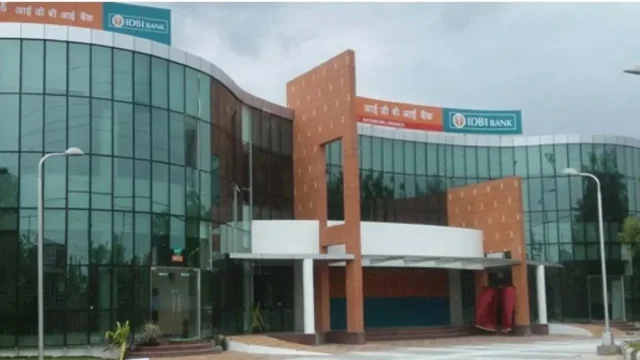
IDBI Bank strategic sale: Fairfax arm wins 60.72% stake for ₹52,878 crore
On 14 October 2026 the Cabinet Committee on Economic Affairs approved 10955230 Canada Inc., a Fairfax Financial Holdings entity, as strategic buyer of 60.72% of IDBI Bank for about Rs. 52,878 crore. The Government sells 30.48% and LIC 30.24%. The winning bid of Rs. 81 a share beat the Rs. 75.99 benchmark.
UPSC angle: Prelims: stake split, residual holdings, PCA dates, valuation methods. · Mains GS-III: disinvestment, bank privatisation, FDI in financial services.
14 Oct 2026
NLMC’s first end-to-end e-auction of RINL land: ₹366.33 crore on Day 1
On 13 October 2026 the National Land Monetization Corporation held Day 1 of its first end-to-end e-auction of surplus RINL land in Visakhapatnam. Buyers took 150 plots for ₹366.33 crore against a ₹312.48 crore reserve. Phase 2, covering 216 plots, is set for 30 October 2026.
UPSC angle: Prelims: NLMC, RINL, auction figures. · Mains GS-III: asset monetisation and CPSE reform.
13 Oct 2026
MoSPI drafts first guideline for States to estimate GSDP by the expenditure approach (base 2022-23)
The National Statistics Office has released a draft guideline for States and UTs to estimate Gross State Domestic Product from the expenditure side, with base year 2022-23. Today some States compile government consumption and capital formation, but none estimates private consumption. Comments are invited till 28 October 2026.
UPSC angle: Prelims: GDP measurement concepts. · Mains GS-III: national income accounting.
9 Oct 2026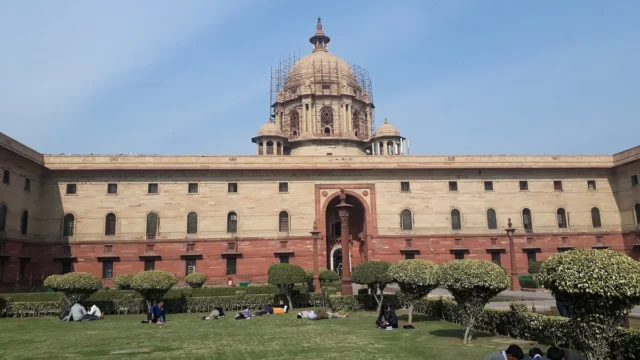
57th GST Council: arrest provisions to go, prosecution threshold raised to ₹5 crore
The 57th GST Council meeting on 8 October 2026 focused on process reform rather than rates. It recommended removing arrest powers under GST, raising the prosecution threshold from ₹1 crore to ₹5 crore, cutting the general penalty from ₹25,000 to ₹10,000, no notices below ₹10,000 tax, wider input tax credit and refunds, and limits on interception of goods in transit.
UPSC angle: Prelims: GST Council structure, Article 279A. · Mains GS-III: indirect tax reform; GS-II: fiscal federalism.
8 Oct 2026Learn the concept
Question text as printed in the official UPSC Civil Services (Main) question paper. The model answer is original Battle IAS work; use it to learn structure, not to memorise.
Want every PYQ in one place? See the Battle IAS PYQ Book.