
UPSC Mains 2023 GS1 Q16: model answer
Why did human development fail to keep pace with economic development in India?
What the question wants
Explain the gap between India's GDP growth and its HDI outcomes.
How to structure it
Intro: India among fastest-growing large economies but ranks low on HDI (134 of 193 in HDR 2023-24). Body: (1) Jobless growth led by services; (2) Low public spending on health and education; (3) Learning crisis (ASER); (4) Malnutrition and stunting (NFHS-5); (5) Inequality and regional gaps; (6) Gender gaps, low female labour participation; (7) Governance and delivery leakages. Conclusion: Kerala model; invest in people.
- 1(1) Jobless growth led by services
- 2(2) Low public spending on health and education
- 3(3) Learning crisis (ASER)
- 4(4) Malnutrition and stunting (NFHS-5)
- 5(5) Inequality and regional gaps
- 6(6) Gender gaps, low female labour participation
- 7(7) Governance and delivery leakages
Model answer
India has been among the fastest-growing large economies for decades, yet it ranked 134 of 193 countries in the UNDP Human Development Report 2023-24.
Reasons for the gap
- Pattern of growth: growth led by services and capital-intensive industry created few good jobs; nearly 45% still work in farming.
- Low public spending: public health spending has stayed around 1.5–2% of GDP, so households pay heavily out of pocket.
- Education quality: enrolment rose but ASER surveys show many children in Class 5 cannot read a Class 2 text.
- Nutrition: NFHS-5 found 35.5% of children under five stunted and over half of women anaemic.
- Inequality: the gains went mostly to the top; wealth concentration has risen.
- Gender gaps: low female labour participation, early marriage and safety concerns.
- Regional gaps: Kerala and Tamil Nadu do far better than Bihar or Uttar Pradesh.
- Delivery problems: leakages, absenteeism and weak local institutions.
- Informality: about 90% of workers lack social security.
Lessons
- Kerala shows that early investment in schooling and health raises well-being even at modest income.
- Recent steps such as Ayushman Bharat, Jal Jeevan Mission, NEP 2020 and Poshan Abhiyaan are in the right direction.
As Amartya Sen argued, growth must widen people's capabilities. Investing in health, learning and women's work is the way to turn GDP into human development.
Keywords, cases and data to drop in
HDI rank 134 jobless growth ASER NFHS-5 stunting Kerala model capabilities
Where most answers lose marks
- Only praising schemes.
- No data.
Fresh examples from current affairs
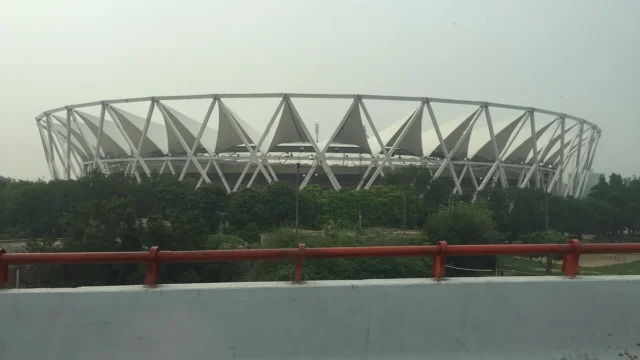
Revised scheme for National Sports Federations: ₹7,386.74 crore, Olympic Training Centres and up to ₹50 crore for events
The Ministry of Youth Affairs and Sports issued operational guidelines on 16 October 2026 for the revised Scheme of Assistance to National Sports Federations (NSFs). The scheme runs from 2026-27 to 2030-31, the 16th Finance Commission cycle, with an outlay of ₹7,386.74 crore. New parts include sport-specific Olympic Training Centres, up to ₹50 crore for hosting international events, and up to ₹50 crore for the National Games. All of this is tied to preparations for CWG 2030 and the 2036 Olympic bid.
UPSC angle: Prelims: scheme outlay, State List entry, TOPS. · Mains GS-II: sports governance and schemes.
16 Oct 2026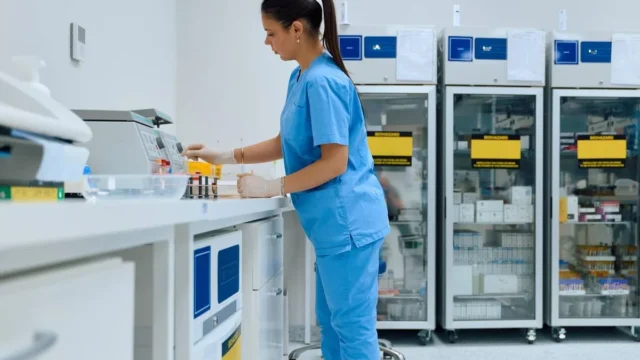
NCAHP notifies autonomous boards and digital registration for allied and healthcare professionals
The National Commission for Allied and Healthcare Professions has notified regulations for Autonomous Boards and a Central Assessment Committee, and for registering allied and healthcare professionals with unique IDs in State and Central Registers. It also notified a two-year competency-based Diploma in Medical Radiology and Imaging Technology with a six-month internship.
UPSC angle: Prelims: NCAHP Act year, D.MRIT. · Mains GS-II: health human resources.
7 Oct 2026
Literacy backgrounder: Education Ministry defines literacy; 95% counts as “full literacy”
A PIB backgrounder of 29 September 2026 says the Education Ministry has, for the first time, defined literacy as reading, writing and computing with comprehension, plus life skills like digital and financial literacy. A State or UT at 95 per cent counts as fully literate. PLFS 2025 puts India's literacy rate at 81.1 per cent.
UPSC angle: Prelims: 95% threshold; new definition components.
29 Sep 2026
PLFS August 2026: LFPR 55.6%, female LFPR 34.8%, unemployment 5.0%
The Periodic Labour Force Survey bulletin for August 2026, released on 15 September 2026, shows the labour force participation rate for people aged 15 and above rising to 55.6 per cent. Female participation was 34.8 per cent, up 1.1 points in a year. The unemployment rate held at 5.0 per cent, and rural unemployment fell to 4.1 per cent.
UPSC angle: Prelims: LFPR/WPR/UR definitions. · Mains: Causes of low female LFPR.
15 Sep 2026Learn the concept
Question text as printed in the official UPSC question paper: https://www.upsc.gov.in/sites/default/files/QP-CSM-23-GENERAL-STUDIES-PAPER-I-180923.pdf The model answer is original Battle IAS work; use it to learn structure, not to memorise.