
UPSC Mains 2023 GS2 Q18: model answer
Skill development programmes have succeeded in increasing human resources supply to various sectors. In the context of the statement analyse the linkages between education, skill and employment.
What the question wants
Assess skill programmes' success, and analyse how education, skill and jobs connect, with gaps.
How to structure it
Intro: Skill India (2015), PMKVY, NSDC. Body: (1) Successes: crores trained, ITIs, apprenticeships (NAPS), sector skill councils; (2) Linkages: education builds foundation, skills make it job-relevant, employment needs demand; (3) Gaps: weak foundational learning, vocational stigma, low placement rates, mismatch with industry, informal jobs, women; (4) Reforms: NEP 2020 vocational integration, NCVET, NSQF, apprenticeships, industry partnership. Conclusion: a seamless pipeline from school to work.
- 1(1) Successes: crores trained, ITIs, apprenticeships (NAPS), sector skill councils
- 2(2) Linkages: education builds foundation, skills make it job-relevant, employment needs demand
- 3(3) Gaps: weak foundational learning, vocational stigma, low placement rates, mismatch with industry, informal jobs, women
- 4(4) Reforms: NEP 2020 vocational integration, NCVET, NSQF, apprenticeships, industry partnership
Model answer
Since the launch of Skill India (2015), programmes like Pradhan Mantri Kaushal Vikas Yojana (PMKVY), ITIs and the National Apprenticeship Promotion Scheme have trained crores of people and supplied workers to construction, retail, healthcare, IT and logistics.
The linkage: a chain, not three silos
- Education to skill: foundational literacy and numeracy make further training possible. A youth who cannot read a manual cannot be trained well.
- Skill to employment: skills add value only if they match what employers need.
- Employment to education: labour market signals should shape courses, and workers need lifelong reskilling.
Where the chain breaks
- Weak foundation: ASER shows poor learning levels in schools.
- Mismatch: India Skills Reports find only about half of graduates employable.
- Low placement: PMKVY placement rates have been modest.
- Stigma: vocational training is seen as second-best.
- Job creation: most new jobs are informal and low-paid; skills cannot substitute for demand.
- Women: low participation despite training due to mobility and care burdens.
- Paradox: high unemployment among educated youth alongside industry complaints of skill shortages.
Reforms
- NEP 2020 aims to give at least 50% of learners exposure to vocational education by 2025.
- National Skills Qualifications Framework and NCVET for common standards.
- Apprenticeship-embedded degrees and industry-designed courses.
- Recognition of prior learning for informal workers.
- PM Vishwakarma for traditional artisans.
- Labour-intensive manufacturing to create demand.
Education, skill and employment must form one seamless pipeline. Only then will skilled supply turn into productive jobs.
Keywords, cases and data to drop in
Skill India PMKVY NSQF NEP 2020 employability
Where most answers lose marks
- Treating the three separately.
- No data on gaps.
Fresh examples from current affairs
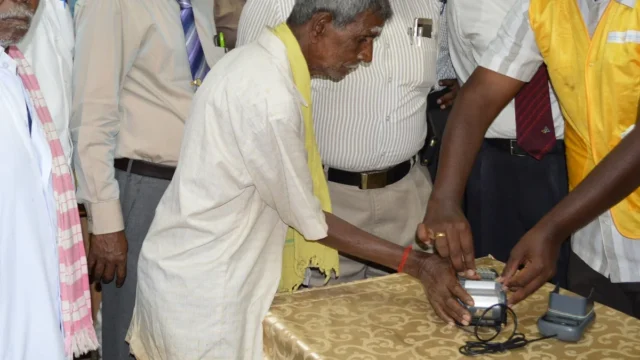
Financial inclusion saturation campaign in 2.70 lakh panchayats and ULBs from 21 October
The Department of Financial Services will run a nationwide campaign from 21 October to 31 December 2026 to saturate financial inclusion schemes in 2.70 lakh gram panchayats and urban local bodies. Bank camps will enrol people in PMJJBY, PMSBY and APY, open Jan Dhan accounts, finish re-KYC and nominations, and spread awareness on digital frauds and unclaimed deposits.
UPSC angle: Prelims: scheme parameters of PMJJBY, PMSBY, APY, PMJDY. · Mains GS-III: inclusive growth and financial inclusion.
20 Oct 2026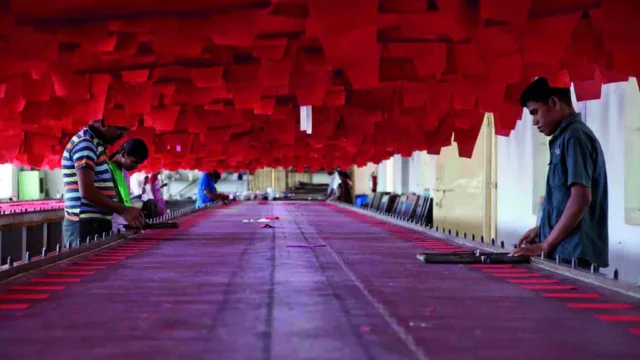
EPFO Amnesty Scheme 2026: deadline 28 December for PF Trust regularisation
EPFO is reminding establishments that the Amnesty Scheme, 2026 for retrospective regularisation of Provident Fund Trust exemption status closes on 28 December 2026. It covers trusts recognised under the Income Tax Act but without a formal exemption order under the EPF Act or the Code on Social Security.
UPSC angle: Prelims: Amnesty dates and legal sections. · Mains GS-III: social security and labour compliance.
13 Oct 2026
NCAHP notifies autonomous boards and digital registration for allied and healthcare professionals
The National Commission for Allied and Healthcare Professions has notified regulations for Autonomous Boards and a Central Assessment Committee, and for registering allied and healthcare professionals with unique IDs in State and Central Registers. It also notified a two-year competency-based Diploma in Medical Radiology and Imaging Technology with a six-month internship.
UPSC angle: Prelims: NCAHP Act year, D.MRIT. · Mains GS-II: health human resources.
7 Oct 2026
VB–G RAM G: 375 permissible rural works notified, 41% more than the previous scheme
The Rural Development Ministry has notified 375 permissible works under the VB-G RAM G Act, 2025, the law that replaced MGNREGA. That is 41% more than the 266 works earlier. Works fall under four pillars: water security (128), core rural infrastructure (111), livelihood infrastructure (98) and disaster preparedness (38), all planned through Gram Sabha-approved village plans.
UPSC angle: Prelims: Act name, 125 days, works count. · Mains GS-II: welfare schemes; GS-III: rural employment.
6 Oct 2026Learn the concept
Question text as printed in the official UPSC question paper: https://www.upsc.gov.in/sites/default/files/QP-CSM-23-GENERAL-STUDIES-PAPER-II-180923.pdf The model answer is original Battle IAS work; use it to learn structure, not to memorise.