
PLFS September 2026: unemployment steady at 5%; urban women’s participation highest since October 2025
Next story · 15 OctNITI Aayog’s Data Centre Evaluation Framework: five pillars to help States plan sustainable growth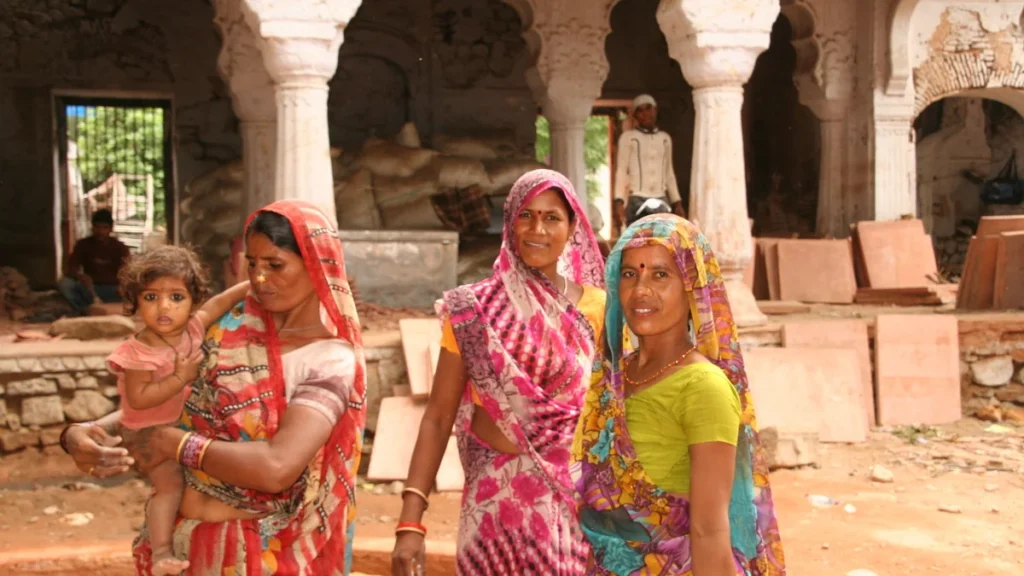
UPSC has already asked about this. Read the story with these questions in mind.
The Periodic Labour Force Survey (PLFS) Monthly Bulletin for September 2026, released by MoSPI on 15 October 2026, put the unemployment rate (UR) for people aged 15 and above at 5.0%, the same as in August and 0.2 points lower than a year earlier. The labour force participation rate (LFPR) was 55.5%. Urban female LFPR rose to 25.9%, its highest since October 2025, while rural female UR fell to 3.9%, the lowest of 2026.
- Unemployment rate
- 5.0%
- LFPR (15+)
- 55.5%
- Female LFPR
- 34.6%
- Persons surveyed
- 3,70,513
PLFS September 2026: what happened?
Every month the NSO knocks on lakhs of doors and asks one simple question: what did you do last week? Put together, the answers show how many people are working, how many are looking for work, and how many are not in the labour market at all.
- Overall LFPR was 55.5% in September 2026, against 55.6% in August and 55.3% a year earlier (MoSPI, 15 Oct 2026).
- Urban WPR reached 47.2%, its highest since October 2025, and rose for both men and women.
- Urban UR edged up from 6.8% to 6.9%. Urban female UR rose from 8.9% to 9.2%.
- This is the 18th monthly bulletin since monthly estimates began in April 2025.
How does the PLFS measure jobs?
- The PLFS is run by the National Statistics Office (NSO), MoSPI, and began in 2017.
- Since January 2025 the survey design gives monthly and quarterly all-India estimates.
- Monthly figures use the Current Weekly Status (CWS), that is, a person’s activity in the last 7 days.
- LFPR is the share of people working or seeking work. WPR is the share employed. UR is the share of the labour force without work.
What do the key numbers show?
| Indicator (15+, CWS) | Sep 2025 | Aug 2026 | Sep 2026 |
|---|---|---|---|
| LFPR | 55.3% | 55.6% | 55.5% |
| Female LFPR | 34.1% | 34.8% | 34.6% |
| WPR | 52.4% | 52.8% | 52.7% |
| Unemployment rate | 5.2% | 5.0% | 5.0% |
| Urban female LFPR | 26.1% | 25.4% | 25.9% |
Which institutions and laws apply?
- Collection of Statistics Act, 2008: the legal basis for official surveys.
- NSO (MoSPI) designs and runs the PLFS. The National Statistical Commission oversees statistical standards.
- Article 41 (DPSP): the State shall try to secure the right to work within its economic capacity.
- Article 39(d): equal pay for equal work for men and women.
What does the data not show?
- Urban women who want work still face a UR of 9.2%.
- Female LFPR of 34.6% is far below male levels; unpaid care work keeps many women out of the labour force.
- The CWS cannot tell us about the quality of jobs, wages or underemployment.
- Small month-to-month changes can be statistical noise, so look at trends over a year.
What should policy focus on?
- Expand childcare, safe transport and hostels so that urban women can take up jobs.
- Link skilling to local demand in manufacturing and services.
- Publish wage and informality data along with the headline rates.
- Use the monthly series to track the effect of schemes quickly.
What can Prelims ask on PLFS?
- PLFS: run by the NSO, MoSPI; monthly estimates since 2025.
- CWS: reference period of the last 7 days. UPS: reference period of the last 365 days.
- UR = unemployed ÷ labour force × 100.
- September 2026: UR 5.0%, LFPR 55.5%, WPR 52.7%.
How to write about women in the workforce in Mains
Practice question (10 marks, 150 words): Despite recent gains, women’s participation in India’s labour force remains low. Analyse the reasons and suggest measures. (GS-III)
- Intro: PLFS Sept 2026: female LFPR 34.6%; urban female LFPR 25.9%.
- Gains: rural female LFPR up 1.0 point over the year; rural female UR at 3.9%.
- Barriers: care work, safety, mobility, norms, lack of suitable jobs.
- Measures: childcare, transport, skilling, flexible work.
- Conclusion: more women at work is a growth strategy, not only a welfare goal.
Image: Women construction workers from Jhansi and Sagar. Ramesh Lalwani, Wikimedia Commons, CC BY 2.0
How to use this in Mains
If asked: Examine the trends in women’s labour force participation in India. (GS-III)
Quote: “Urban female LFPR recorded a notable month-on-month increase of 0.5 percentage points, rising from 25.4% to 25.9% and reaching its highest level since October, 2025.”
Use it: Quote it as your latest data point, then explain why the level is still low.
If asked: Is unemployment in India falling? Discuss with data. (GS-III)
Quote: “Compared with September, 2025, the overall UR declined by 0.2 percentage points and reached at 5.0% in September, 2026.”
Use it: Use it, then add the caveats on job quality and urban women.
Exam angle
Prelims: LFPR, WPR, UR, CWS vs UPS. · Mains GS-III: jobs, inclusive growth and women’s work.
Practice MCQs
Original practice questions (not PYQs).
In the Periodic Labour Force Survey, the ‘Current Weekly Status’ refers to a person’s activity status during
Answer (a) & explanation
CWS uses a reference period of the last 7 days before the survey.
Consider the following statements about the PLFS for September 2026:
1. The unemployment rate for persons aged 15 and above was 5.0%.
2. Urban unemployment was lower than rural unemployment.
Which of the statements given above is/are correct?
Answer (a) & explanation
Urban UR was 6.9%, higher than rural UR of 4.2%.
The Worker Population Ratio (WPR) is the
Answer (a) & explanation
WPR is the percentage of employed persons in the population.
Questions students ask about this
What was the unemployment rate in September 2026?
5.0% for persons aged 15 and above, by Current Weekly Status.
Who releases the PLFS?
The National Statistics Office, Ministry of Statistics and Programme Implementation.
What was notable about women’s data?
Urban female LFPR rose to 25.9%, the highest since October 2025, and rural female UR fell to 3.9%.
How many people were surveyed?
3,70,513 persons: 2,11,333 rural and 1,59,180 urban.
Keep studying
Go deeper
Official source: PIB/MoSPI, 15 Oct 2026: Press Note on Periodic Labour Force Survey (PLFS) Monthly Bulletin September 2026
facts from cited sources only; faculty review pending