
UPSC Mains 2023 GS3 Q12: model answer
Distinguish between ‘care economy’ and ‘monetized economy’. How can care economy be brought into monetized economy through women empowerment?
What the question wants
Define and contrast the two, then show how women's empowerment can monetise care work.
How to structure it
Intro: care economy invisible in GDP. Body: (1) Distinction: care economy (paid and unpaid care for children, elderly, sick, household work; mostly women; outside GDP if unpaid) vs monetised economy (market transactions counted in GDP); table; (2) Data: Time Use Survey 2019 women spend about 5 hours a day on unpaid care; (3) Ways to monetise through empowerment: skilling and certification of care workers, formal childcare (crèches, anganwadi-cum-creches), ASHA/anganwadi pay, SHGs and cooperatives for care services, social security, gig platforms, maternity benefits and paternity leave, valuing care in satellite accounts. Conclusion: recognise, reduce, redistribute, reward.
- 1(1) Distinction: care economy (paid and unpaid care for children, elderly, sick, household work; mostly women; outside GDP if unpaid) vs monetised economy (market transactions counted in GDP)
- 2Table
- 3(2) Data: Time Use Survey 2019 women spend about 5 hours a day on unpaid care
- 4(3) Ways to monetise through empowerment: skilling and certification of care workers, formal childcare (crèches, anganwadi-cum-creches), ASHA/anganwadi pay, SHGs and cooperatives for care services, social security, gig platforms, maternity benefits and paternity leave, valuing care in satellite accounts
Model answer
Care economy: all work that looks after people: raising children, caring for the elderly and sick, cooking and cleaning. Much of it is unpaid and done by women at home, so it is not counted in GDP.
- Looking after children, elderly, sick, home
- Largely unpaid
- Outside GDP
- Mostly women
- Market goods and services
- Paid
- Counted in GDP
- Male-dominated
Monetised economy: all goods and services exchanged for money in the market, and counted in GDP.
Key differences
- Payment: care work is largely unpaid; monetised work is paid.
- Visibility: care is missing from national accounts; monetised work is measured.
- Gender: care falls mostly on women; men dominate paid work.
- Protection: unpaid carers get no wages, pensions or social security.
India's Time Use Survey 2019 found women spend about 5 hours a day on unpaid domestic and care work against roughly 1.5 hours for men.
Bringing care into the monetised economy through women's empowerment
- Skill and certify care work: courses for nursing assistants, elder-care and childcare under Skill India, with recognised qualifications.
- Public childcare: anganwadi-cum-crèches under Mission Palna and workplace crèches under the Maternity Benefit (Amendment) Act, 2017 create paid care jobs and free women for other work.
- Fair pay for frontline carers: regular wages and social security for ASHA and anganwadi workers.
- Collectives: SHGs and cooperatives running care services, like Kerala's Kudumbashree.
- Platforms: gig platforms for home care, with social security under the Code on Social Security, 2020.
- Shared care: paternity leave and campaigns to share housework.
- Measurement: satellite accounts to value unpaid care in GDP.
The ILO's '5R' approach (recognise, reduce, redistribute, reward and represent) can turn invisible care into decent work and raise female labour force participation.
Keywords, cases and data to drop in
unpaid care work Time Use Survey 2019 Mission Palna Kudumbashree 5R framework
Where most answers lose marks
- Not distinguishing the two clearly.
- No women-centred measures.
Fresh examples from current affairs
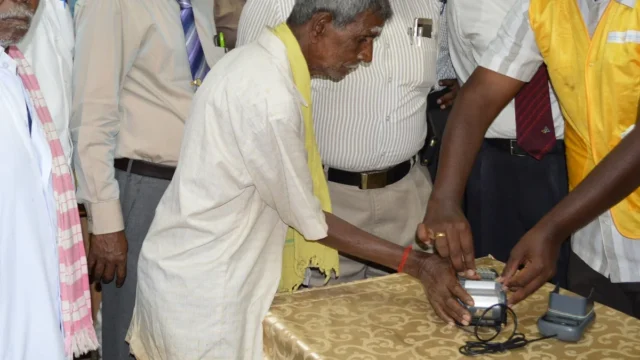
Financial inclusion saturation campaign in 2.70 lakh panchayats and ULBs from 21 October
The Department of Financial Services will run a nationwide campaign from 21 October to 31 December 2026 to saturate financial inclusion schemes in 2.70 lakh gram panchayats and urban local bodies. Bank camps will enrol people in PMJJBY, PMSBY and APY, open Jan Dhan accounts, finish re-KYC and nominations, and spread awareness on digital frauds and unclaimed deposits.
UPSC angle: Prelims: scheme parameters of PMJJBY, PMSBY, APY, PMJDY. · Mains GS-III: inclusive growth and financial inclusion.
20 Oct 2026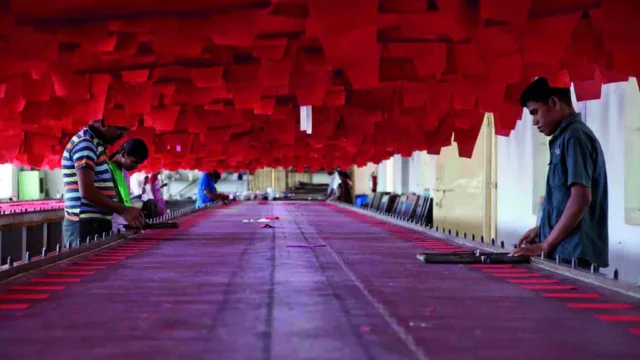
EPFO Amnesty Scheme 2026: deadline 28 December for PF Trust regularisation
EPFO is reminding establishments that the Amnesty Scheme, 2026 for retrospective regularisation of Provident Fund Trust exemption status closes on 28 December 2026. It covers trusts recognised under the Income Tax Act but without a formal exemption order under the EPF Act or the Code on Social Security.
UPSC angle: Prelims: Amnesty dates and legal sections. · Mains GS-III: social security and labour compliance.
13 Oct 2026
VB–G RAM G: 375 permissible rural works notified, 41% more than the previous scheme
The Rural Development Ministry has notified 375 permissible works under the VB-G RAM G Act, 2025, the law that replaced MGNREGA. That is 41% more than the 266 works earlier. Works fall under four pillars: water security (128), core rural infrastructure (111), livelihood infrastructure (98) and disaster preparedness (38), all planned through Gram Sabha-approved village plans.
UPSC angle: Prelims: Act name, 125 days, works count. · Mains GS-II: welfare schemes; GS-III: rural employment.
6 Oct 2026
PM-SETU at one year: 850 ITIs identified, 14 clusters approved
PM-SETU, launched on 4 October 2025 to upgrade 1,000 Government ITIs through a hub-and-spoke model, has identified 850 ITIs and approved 14 ITI clusters worth ₹3446 crore in its first year. The scheme has a ₹60,000 crore outlay shared by the Centre, States and industry, and also upgrades five NSTIs.
UPSC angle: Prelims: PM-SETU expansion; hub-and-spoke. · Mains: Making ITIs industry-relevant.
3 Oct 2026Learn the concept
Question text as printed in the official UPSC question paper: https://www.upsc.gov.in/sites/default/files/QP-CSM-23-GENERAL-STUDIES-PAPER-III-180923.pdf The model answer is original Battle IAS work; use it to learn structure, not to memorise.