
UPSC Mains 2023 GS3 Q3: model answer
How does e-Technology help farmers in production and marketing of agricultural produce? Explain it.
What the question wants
e-technology uses across production and marketing, with examples.
How to structure it
Intro: digital agriculture in India. Body: (1) Production: soil health cards, weather advisories (Meghdoot), precision farming, drones (Kisan drones, Namo Drone Didi), remote sensing for crop insurance, Kisan Call Centres, AI pest detection; (2) Marketing: e-NAM, price information (Agmarknet), FPO platforms, ONDC, warehouse receipts, digital payments, PM-KISAN DBT; (3) Limits. Conclusion: Digital Agriculture Mission.
- 1(1) Production: soil health cards, weather advisories (Meghdoot), precision farming, drones (Kisan drones, Namo Drone Didi), remote sensing for crop insurance, Kisan Call Centres, AI pest detection
- 2(2) Marketing: e-NAM, price information (Agmarknet), FPO platforms, ONDC, warehouse receipts, digital payments, PM-KISAN DBT
- 3(3) Limits
Model answer
e-Technology means using digital tools such as mobile apps, sensors, drones and online platforms in farming.
Help in production
- Soil Health Cards guide balanced fertiliser use.
- Weather advisories through the Meghdoot app and SMS help time sowing and spraying.
- Drones for spraying and crop monitoring; Namo Drone Didi trains women SHGs.
- Remote sensing assesses crop damage for PM Fasal Bima Yojana claims.
- Kisan Call Centres and apps give expert advice on pests and diseases.
- Precision farming: sensors for micro-irrigation save water.
Help in marketing
- e-NAM links over 1,000 mandis for online trading and better price discovery.
- Agmarknet gives daily price data.
- FPOs on ONDC sell directly to consumers.
- e-Negotiable warehouse receipts allow loans against stored produce.
- Digital payments and DBT under PM-KISAN.
Limits: poor connectivity, low literacy and small holdings.
The Digital Agriculture Mission and AgriStack can bring these gains to every farmer.
Keywords, cases and data to drop in
e-NAM Soil Health Card Kisan drones Agmarknet AgriStack
Where most answers lose marks
- Only marketing or only production.
- No schemes named.
Fresh examples from current affairs
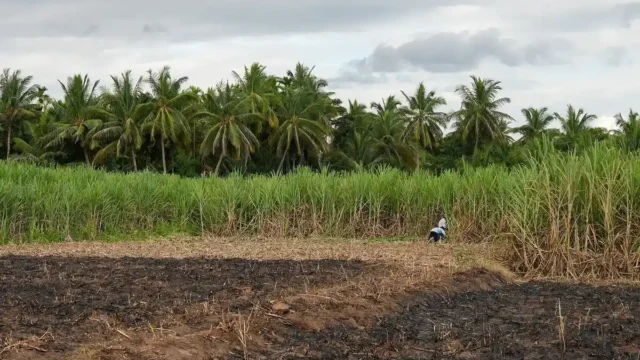
Ramesh Chand committee to examine sugarcane farmers’ and sugar sector issues
On 14 October 2026 the Centre set up a committee under Prof. Ramesh Chand, former NITI Aayog Member, on issues raised by sugarcane farmers. It will examine returns to cane growers, the ex-mill Minimum Selling Price of sugar, how sugar recovery is tested, weighment at mills, and deductions on mechanically harvested cane.
UPSC angle: Prelims: chair, terms of reference, ex-mill MSP of sugar. · Mains GS-III: cane pricing, sugar sector economics, farm incomes.
14 Oct 2026
Cotton Corporation of India showcases procurement reforms: digital slot booking, traceability, Kasturi Cotton
The Textiles Ministry, through the Cotton Corporation of India, held a reform showcase in Hyderabad on 6 October 2026 under Reform Utsav 2026. It covered the Kapas Kisan digital platform for registration, slot booking and Aadhaar-enabled payments, traceability and the Kasturi Cotton Bharat brand, and the High-Density Planting System to lift yields.
UPSC angle: Prelims: CCI, Kasturi. · Mains GS-III: MSP procurement, textiles.
4 Oct 2026
Sugar stock limit for bulk consumers relaxed to 30 days; retail prices down ~10%
On 18 September 2026 the Government relaxed the stock limit for bulk sugar consumers from 15 to 30 days, on the condition that the extra stock comes only from sugar imported under the Advance Authorisation Scheme and Tariff Rate Quota. Retail prices have fallen about 10% from their August peak, but ex-mill prices have fallen nearly 25%.
UPSC angle: Prelims: what a Tariff Rate Quota is. · Mains: Are stock limits an effective anti-inflation tool?
18 Sep 2026
NAFED launches e-auction portal NAFEX.in
The Cooperation Ministry launched NAFED's e-auction portal NAFEX.in in New Delhi on 23 June 2026. Payments for produce are to reach farmers' bank accounts within 48 hours. NAFED serves more than 74 lakh farmers. Over the next two years, NCCF and NAFED are to buy pulses directly from farmers. A scholarship from 1% of NAFED profits was also announced.
UPSC angle: Prelims: NAFED, NCCF roles.
23 Jun 2026Learn the concept
Question text as printed in the official UPSC question paper: https://www.upsc.gov.in/sites/default/files/QP-CSM-23-GENERAL-STUDIES-PAPER-III-180923.pdf The model answer is original Battle IAS work; use it to learn structure, not to memorise.