
UPSC Mains 2025 GS2 Q15: model answer
What are environmental pressure groups? Discuss their role in raising awareness, influencing policies and advocating for environmental protection in India.
What the question wants
Define, then role under the three heads with Indian examples; limits.
How to structure it
Intro: definition. Body: (1) Raising awareness; (2) Influencing policy; (3) Advocacy and litigation; (4) Limitations. Conclusion: Pressure groups are the conscience of environmental governance.
- 1(1) Raising awareness
- 2(2) Influencing policy
- 3(3) Advocacy and litigation
- 4(4) Limitations
Model answer
Environmental pressure groups are organised groups that try to influence public opinion and government decisions on the environment without seeking political power. They include movements, NGOs, research bodies and citizen groups.
Raising awareness
- Chipko (1973) made forest rights of hill women a national issue.
- Centre for Science and Environment's reports on pesticides in soft drinks (2003) and on Delhi's air.
- Campaigns like Save Aarey and Save Mollem drew young urban citizens.
Influencing policy
- Silent Valley campaign led to the national park (1984).
- Advocacy shaped the Forest Rights Act, 2006 and CNG for Delhi buses.
- Kalpavriksh and others gave inputs on biodiversity law and EIA rules.
Advocacy and litigation
- M.C. Mehta cases on the Taj, Ganga and vehicle pollution.
- T.N. Godavarman case widened the meaning of 'forest'.
- Narmada Bachao Andolan put rehabilitation at the centre of dam policy.
- Petitions before the National Green Tribunal.
Limitations
- Accused of stalling projects; foreign funding questioned under FCRA.
- Urban bias; local livelihood voices sometimes ignored.
- Shrinking space for public consultation in EIA.
Pressure groups are the conscience of environmental governance. Their credibility rests on sound data and local roots, and the State gains by treating them as partners.
Keywords, cases and data to drop in
Chipko Silent Valley CSE M.C. Mehta Godavarman NBA NGT
Where most answers lose marks
- Not defining pressure groups.
- No examples.
Fresh examples from current affairs
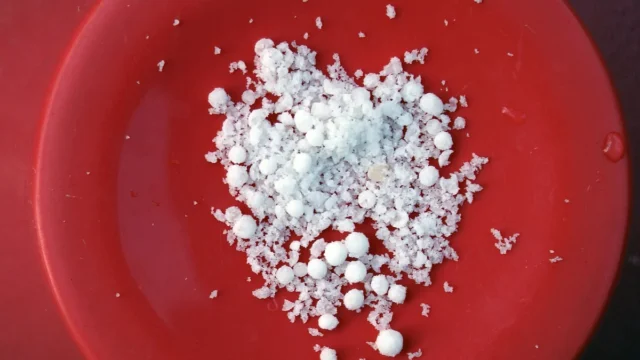
CCPA acts against online sale of explosives: 3,940 sellers delisted from seven platforms
The Central Consumer Protection Authority (CCPA) said on 19 October 2026 that 3,940 sellers of regulated explosives such as ammonium nitrate, picric acid and PETN have been delisted from seven online platforms after its action. It has fined Dial4Trade and ExportersIndia ₹10 lakh per order, and other cases are under hearing or investigation.
UPSC angle: Prelims: CCPA, PESO, CPA 2019 sections, helpline 1915. · Mains GS-II/III: platform liability and security.
19 Oct 2026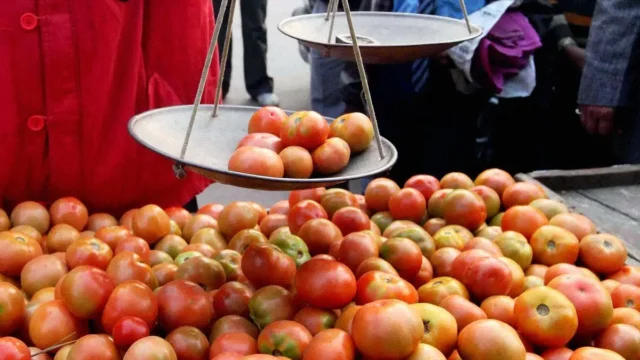
India to host 61st CIML meeting on legal metrology in New Delhi, 26–28 October
India will host the 61st meeting of the International Committee of Legal Metrology (CIML) for the first time, in New Delhi from 26 to 28 October 2026. The Department of Consumer Affairs is organising it with the International Organization of Legal Metrology (OIML), and more than 100 delegates are expected, PIB said on 19 October.
UPSC angle: Prelims: OIML, CIML, Legal Metrology Act 2009, Union List Entry 50. · Mains GS-III: standards and trade.
19 Oct 2026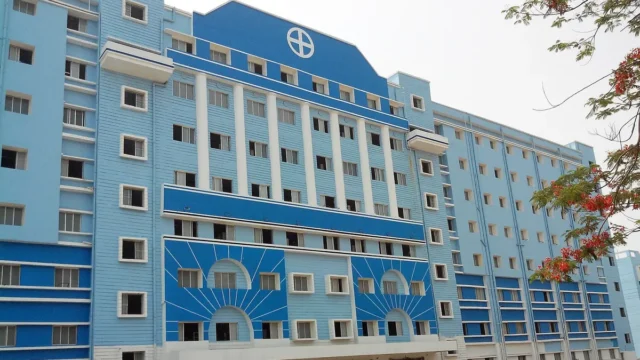
NMC withdraws MSMER-2023: medical colleges lose the fixed penalty rulebook, annual disclosure stays
The National Medical Commission (NMC) has de-notified the Maintenance of Standards of Medical Education Regulations, 2023 (MSMER-2023) by a notification dated 14 October 2026, published in the Gazette on 16 October. Its fixed penalties, including seat cuts and fines of up to ₹5 lakh for false records, go with it. The Annual Disclosure Report stays.
UPSC angle: Prelims: NMC Act 2019, autonomous boards, Concurrent List Entry 25. · Mains GS-II: regulation of medical education.
19 Oct 2026
Supreme Court: no prior approval under Section 17A needed to probe a bribe demand
In a judgment of 16 October 2026, a Supreme Court Bench of Justices S.V.N. Bhatti and N.V. Anjaria held that investigating a bribe demand by a public servant does not need prior approval under Section 17A of the Prevention of Corruption Act. Asking for a bribe, the court said, is not part of discharging official duties.
UPSC angle: Prelims: Sections 7, 7A, 17A and 19 of the PC Act. · Mains GS-II/GS-IV: honest officers versus accountability.
19 Oct 2026Learn the concept
Question text as printed in the official UPSC question paper: https://www.upsc.gov.in/sites/default/files/GENERAL-STUDIES-PAPER-II-QP-CSM-25-010925.pdf The model answer is original Battle IAS work; use it to learn structure, not to memorise.