
UPSC Mains 2025 GS3 Q18: model answer
Write a review on India’s climate commitments under the Paris Agreement (2015) and mention how these have been further strengthened in COP26 (2021). In this direction, how has the first Nationally Determined Contribution intended by India been updated in 2022 ?
What the question wants
Trace India's 2015 INDC, Panchamrit at COP26, and the 2022 updated NDC; assess progress.
How to structure it
Intro: Paris and NDCs. Body: (1) First NDC (2015); (2) COP26, Glasgow (2021): the Panchamrit; (3) Updated NDC (August 2022); (4) Review. Conclusion: India has kept its word on targets that are within its control.
- 1(1) First NDC (2015)
- 2(2) COP26, Glasgow (2021): the Panchamrit
- 3(3) Updated NDC (August 2022)
- 4(4) Review
Model answer
Under the Paris Agreement (2015), each country sets its own Nationally Determined Contribution (NDC), to be raised over time. India's commitments reflect 'common but differentiated responsibilities'.
| Target | 2015 NDC | COP26 (2021) | Updated NDC (2022) |
|---|---|---|---|
| Emission intensity cut by 2030 (vs 2005) | 33–35% | 45% | 45% |
| Non-fossil share | 40% of capacity | 500 GW; 50% of energy needs | About 50% of capacity |
| Net zero | — | 2070 | LT-LEDS (2022) |
| Other | Forest sink 2.5–3 Gt | Cut 1 bn t projected emissions | LiFE movement |
First NDC (2015)
- Reduce emission intensity of GDP by 33–35% by 2030 from 2005 levels.
- 40% of installed electricity capacity from non-fossil sources by 2030.
- Additional carbon sink of 2.5–3 billion tonnes CO2-equivalent through forests and tree cover.
COP26, Glasgow (2021): the Panchamrit
- 500 GW non-fossil capacity by 2030.
- 50% of energy requirements from renewables by 2030.
- Cut one billion tonnes of projected emissions by 2030.
- Emission intensity down 45% by 2030.
- Net zero by 2070.
Updated NDC (August 2022)
- Emission intensity target raised to 45% by 2030 from 2005.
- About 50% of installed electric capacity from non-fossil sources by 2030.
- Added mass movement for LiFE (Lifestyle for Environment).
- Sink target kept; adaptation and finance goals restated.
- India also submitted a Long-Term Low Emission Development Strategy at COP27.
Review
- Progress: the 2015 intensity target was met early, and non-fossil capacity crossed 50% in 2025, five years ahead.
- Gaps: coal still dominates generation; forest sink accounting is debated; climate finance from developed countries has fallen short of promises.
- Adaptation needs (heatwaves, floods) are growing.
India has kept its word on targets that are within its control. A fair share of finance and technology from richer nations will decide how far it can go.
Keywords, cases and data to drop in
NDC 2015 Panchamrit 45% intensity 50% non-fossil capacity net zero 2070 LiFE LT-LEDS
Where most answers lose marks
- Mixing up 50% capacity and 50% energy targets.
- No review element.
Fresh examples from current affairs

NBA shares Rs 1.19 crore with 29 State Biodiversity Boards from use of crop genetic resources
On 17 October 2026 the National Biodiversity Authority (NBA) said it had shared ₹1.19 crore with 29 State Biodiversity Boards and one UT Biodiversity Council. The money came from seed companies that used Indian maize, rice, pearl millet and cotton for research and commercial hybrids. As the crops were bought from markets and the original holders could not be traced, the amount was split in proportion to each State’s cultivation area. The release comes two days before the CBD COP 17 opens in Yerevan.
UPSC angle: Prelims: NBA, BD Act 2002, Nagoya Protocol, BMCs, CBD COP 17. · Mains GS-III: benefit sharing and community-led conservation.
18 Oct 2026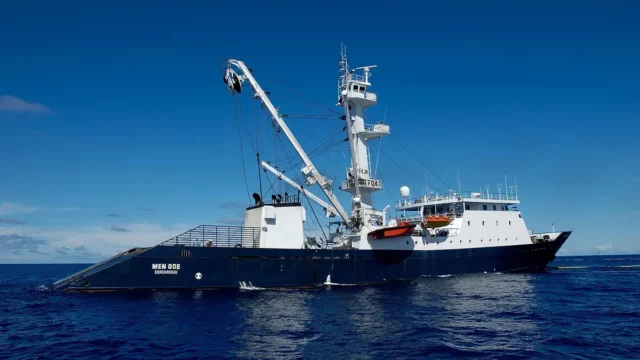
India to accede to the Southern Indian Ocean Fisheries Agreement (SIOFA)
On 14 October 2026 the Centre approved India's accession to the Southern Indian Ocean Fisheries Agreement. India, a Cooperating Non-Contracting Party since 2022, will become a full Contracting Party. Indian vessels can then fish squids, toothfish, alfonsino and other non-migratory stocks in the SIOFA area and join its scientific and compliance bodies.
UPSC angle: Prelims: SIOFA vs IOTC, India's status, species, UNCLOS references. · Mains GS-III: blue economy and fisheries; GS-II: international agreements.
14 Oct 2026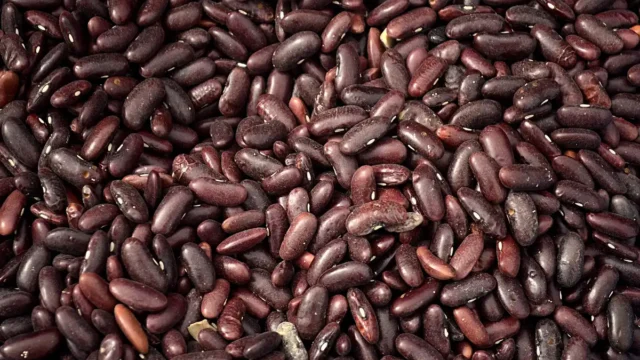
National Biodiversity Authority shares ₹2.02 crore Access and Benefit-Sharing money from seed companies
The National Biodiversity Authority distributed ₹2.02 crore of Access and Benefit-Sharing money, paid by seed companies using crops such as rice, tomato and okra, among 27 State Biodiversity Boards and 3 UT councils by cultivation area. Its total ABS disbursement has now reached ₹202 crore, ahead of CBD COP 17 in Yerevan from 19 October 2026.
UPSC angle: Prelims: ABS, KMGBF targets, COP 17 venue. · Mains GS-III: biodiversity conservation and benefit-sharing.
10 Oct 2026
IWC-70 in Hobart: India backs science-based cetacean conservation
At the 70th meeting of the International Whaling Commission in Hobart, Australia (28 September to 2 October 2026), India called for science-based conservation of whales and other cetaceans. The meeting marks 80 years of the International Convention for the Regulation of Whaling, signed in 1946. India has been an IWC member since 1981.
UPSC angle: Prelims: IWC parent convention; cetacean examples (Gangetic dolphin).
28 Sep 2026Learn the concept
Question text as printed in the official UPSC question paper: https://www.upsc.gov.in/sites/default/files/GENERAL-STUDIES-PAPER-III-QP-CSM-25-010925.pdf The model answer is original Battle IAS work; use it to learn structure, not to memorise.