
NBA shares Rs 1.19 crore with 29 State Biodiversity Boards from use of crop genetic resources
UPSC has already asked about this. Read the story with these questions in mind.
On 17 October 2026 the National Biodiversity Authority (NBA) said it had shared ₹1.19 crore with 29 State Biodiversity Boards and one UT Biodiversity Council. The money came from seed companies that used Indian maize, rice, pearl millet and cotton for research and commercial hybrids. As the crops were bought from markets and the original holders could not be traced, the amount was split in proportion to each State’s cultivation area. The release comes two days before the CBD COP 17 opens in Yerevan.
- Amount
- ₹1.19 crore
- Recipients
- 29 SBBs + 1 UT
- Crops
- Maize, rice, bajra, cotton
- COP 17
- Yerevan, 19–30 Oct
NBA’s benefit-sharing payout: what happened?
Every hybrid maize seed sold in a packet carries something that no company invented: the genetic variety that Indian farmers kept alive over generations. India’s biodiversity law says those who profit from such resources must share part of the gain. This week that idea turned into actual money for the States.
- 17 Oct 2026: NBA disbursed ₹1.19 crore (₹1,18,61,655) under the Access and Benefit Sharing (ABS) mechanism to 29 State Biodiversity Boards (SBBs) and one UT Biodiversity Council (PIB).
- Source of money: ABS contributions from companies such as Corteva, Pioneer, Limagrain and Syngenta for research and commercial use of maize, sweet corn, rice, pearl millet and cotton.
- Since the resources were bought through markets or traders, individual benefit claimers could not be identified. NBA used the method recommended by an Expert Committee: shares in proportion to each State’s cultivation area, using the Agriculture Ministry’s Unified Portal for Agricultural Statistics.
- The money must be spent only on activities under Section 32(2) of the Biological Diversity Act, 2002: documentation, conservation, local biodiversity governance, research, capacity building and community livelihoods.
What is access and benefit sharing?
- The idea: anyone who uses biological resources or traditional knowledge for research or business must get permission and share benefits fairly with the people and places that conserved them.
- Global roots: it is the third objective of the Convention on Biological Diversity (CBD), 1992. The Nagoya Protocol on ABS was adopted in 2010 and came into force on 12 October 2014 (CBD).
- Indian law: the Biological Diversity Act, 2002 sets up a three-tier system: the NBA at Chennai (set up in 2003), State Biodiversity Boards, and Biodiversity Management Committees (BMCs) in local bodies, which keep People’s Biodiversity Registers.
- So far: NBA has disbursed over ₹203 crore under ABS, of which ₹86 crore came from the agriculture sector (PIB).
Which States got the most?
| State | Amount (₹) |
|---|---|
| Maharashtra | 19,46,149 |
| Rajasthan | 13,97,525 |
| Madhya Pradesh | 13,32,250 |
| Karnataka | 10,49,957 |
| Telangana | 9,55,754 |
| Gujarat | 8,84,783 |
| Uttar Pradesh | 8,26,607 |
| Bihar | 4,82,143 |
| Andhra Pradesh | 4,27,541 |
| West Bengal | 3,72,103 |
| All others (incl. the UT council) | 21,86,843 |
| Total | 1,18,61,655 |
Which constitutional and legal provisions apply?
- Article 253: Parliament can make laws to implement international treaties. The Biological Diversity Act, 2002 gives effect to India’s CBD commitments.
- Article 48A (DPSP) and Article 51A(g) (Fundamental Duty): protect and improve the environment, forests and wildlife.
- Biological Diversity Act, 2002, Section 32(2): use of State Biodiversity Fund money for conservation and local development; amended by the Biological Diversity (Amendment) Act, 2023.
- Nagoya Protocol, 2010: India is a Party; it is the international rulebook for prior informed consent and mutually agreed terms.
How does the money flow?
From seed company to State Board
- Company uses Indian crop genetic resources
- Pays ABS contribution to the NBA
- Holders untraceable: Expert Committee formula applied
- Shares split by cultivation area across States
- SBBs spend under Section 32(2), with BMCs at the local level
Which numbers should you remember?
| Number | What it means |
|---|---|
| ₹1.19 crore | This disbursement, to 29 SBBs and 1 UT council |
| ₹19.46 lakh | Highest share: Maharashtra |
| ₹86 crore | Total ABS money from agriculture disbursed so far |
| ₹203 crore+ | Total ABS money disbursed by NBA so far |
Uttar Pradesh received ₹8,26,607 and ranks seventh.
Why does this matter?
| Angle | What to note |
|---|---|
| Environment | Shows ABS working for agrobiodiversity, not only for forest or medicinal plants. |
| Equity | Benefits reach States and communities that conserve crop diversity. |
| Federalism | National body collects; State Boards and local BMCs spend. |
| Global | Timed with CBD COP 17 (Yerevan, 19–30 Oct 2026); ABS is Target 13 of the Kunming-Montreal Global Biodiversity Framework. |
What are the challenges?
- When holders cannot be traced, money goes to States by area. The actual farming communities that kept the varieties may not see it directly.
- The sums are small when spread over 30 boards. Rajasthan’s ₹13.98 lakh, for example, cannot fund much field work.
- Many BMCs exist mostly on paper, and People’s Biodiversity Registers need updating; that weakens local spending.
- Digital sequence information (genetic data used without the physical sample) is still hard to bring under benefit sharing.
What should be done next?
- Route a fixed share of the money to BMCs in major growing districts of maize, bajra, rice and cotton.
- Update People’s Biodiversity Registers so that future claims can be traced to communities.
- Publish how each SBB uses the money, project by project.
- Use COP 17 to push for workable global rules on benefit sharing from digital sequence information.
What can Prelims ask on access and benefit sharing?
- NBA: statutory body under the Biological Diversity Act, 2002; headquarters Chennai.
- Three tiers: NBA (national), SBB (State), BMC (local body).
- Nagoya Protocol on ABS: adopted 2010, in force 12 October 2014.
- Oct 2026 payout: ₹1.19 crore to 29 SBBs and 1 UT council; Maharashtra got the most.
- Crops in this payout: maize, rice, pearl millet, cotton.
- CBD COP 17: Yerevan, Armenia, 19–30 October 2026.
How to write about benefit sharing in Mains
Practice question (10 marks, 150 words): “Access and benefit sharing can turn conservation into a source of income for communities.” Examine with reference to India.
- Intro: CBD’s third objective; Nagoya Protocol; BD Act, 2002.
- Body: three-tier system; Oct 2026 payout of ₹1.19 crore from crop genetic resources; ₹203 crore so far.
- Issue: untraceable holders, small sums, weak BMCs.
- Way forward: BMC share, updated registers, transparency.
- Conclusion: fair sharing keeps communities invested in conservation.
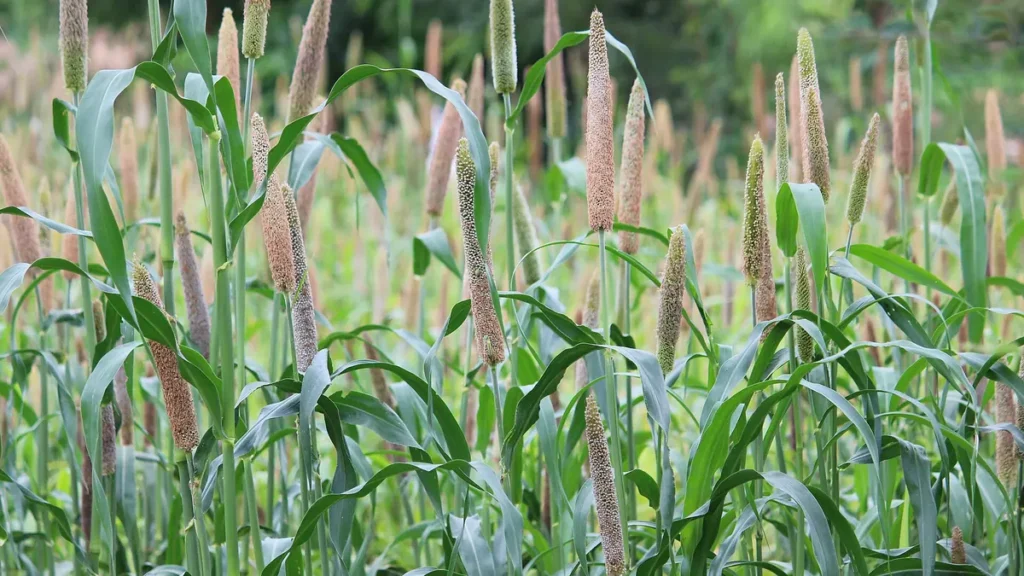
Image: Shanmugamp7, Wikimedia Commons, CC BY-SA 3.0
How to use this in Mains
If asked: Discuss the significance of the Nagoya Protocol for a megadiverse country like India. (GS-III)
Quote: “The agriculture sector is emerging as a potential contributor to India’s ABS mechanism, demonstrating how the utilisation of agricultural biological resources can generate benefits for conservation and local communities.”
Use it: Use it in the body to show the Protocol at work in India, then add the cultivation-area formula as a concrete detail.
If asked: How can local communities be made partners in biodiversity conservation? (GS-III)
Quote: “The funds allocated to the State Biodiversity Boards and the Union Territory Biodiversity Council shall be utilised exclusively for activities specified under Section 32(2) of the Biological Diversity Act, 2002.”
Use it: Quote it, then argue that a fixed share should reach Biodiversity Management Committees. That turns a fact into a suggestion, which examiners reward.
Exam angle
Prelims: NBA, BD Act 2002, Nagoya Protocol, BMCs, CBD COP 17. · Mains GS-III: benefit sharing and community-led conservation.
Practice MCQs
Original practice questions (not PYQs).
With reference to the National Biodiversity Authority’s disbursement of October 2026, consider the following statements:
1. The money came from companies that used agricultural biological resources such as maize and cotton.
2. It was shared among States in proportion to their forest cover.
Which of the statements given above is/are correct?
Answer (a) & explanation
PIB, 17 Oct 2026: allocation was in proportion to the estimated cultivation area of the resources, not forest cover.
Biodiversity Management Committees under the Biological Diversity Act, 2002 are constituted at the level of
Answer (c) & explanation
The Act has a three-tier structure: NBA, State Biodiversity Boards and BMCs in local bodies.
The seventeenth Conference of the Parties (COP 17) to the Convention on Biological Diversity is scheduled to be held in October 2026 at
Answer (c) & explanation
PIB, 17 Oct 2026: COP 17 is scheduled for 19–30 October 2026 in Yerevan, Armenia.
Questions students ask about this
What did the NBA announce?
It shared Rs 1.19 crore of ABS money with 29 State Biodiversity Boards and one UT Biodiversity Council.
Where did the money come from?
From seed and crop companies that used Indian maize, sweet corn, rice, pearl millet and cotton for research and commercial hybrids.
Why was it split by cultivation area?
Because the crops were bought from markets and traders, so the original holders could not be identified.
How much did Uttar Pradesh get?
Rs 8,26,607, the seventh-highest share.
Keep studying
Go deeper
Official source: PIB, 17 Oct 2026: NBA disburses Rs 1.19 crore to 29 State Biodiversity Boards and one UT Biodiversity Council under Access and Benefit Sharing mechanism
facts from cited sources only; faculty review pending