
Chapter 15 · Topic 15.3 · Prelims + Mains3 of 3
Ancient Indian Science & Technology: Metallurgy
Key points
- Harappans cast bronze by the lost-wax method (Dancing Girl).
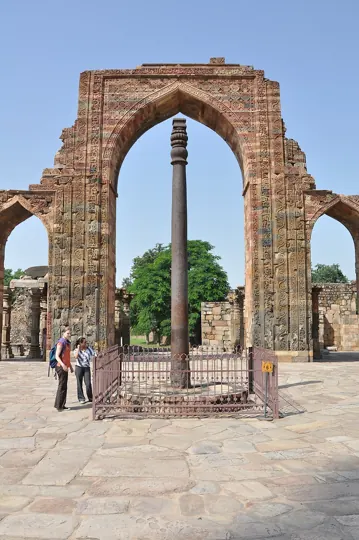
- Iron Pillar (Gupta period): over 7 m, about 6 tonnes, phosphorus-rich iron with a protective film.
- Wootz crucible steel from south India made Damascus swords; Zawar was an early zinc centre.
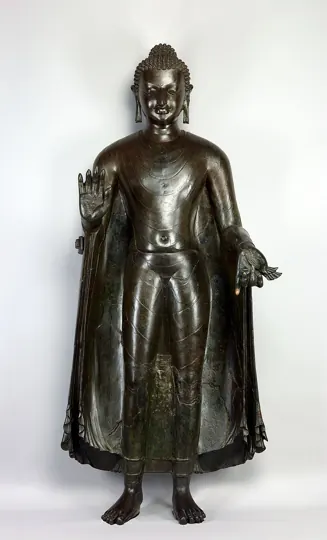
- Sultanganj Buddha: copper, over 2 m, now in Birmingham.
Prelims box: facts and traps
- Iron Pillar inscription: King Chandra, usually Chandragupta II.
- Wootz: from 'ukku', steel.
- Zawar (Rajasthan): zinc by downward distillation.
- Chola bronzes: lost-wax casting.
Metallurgy
Indian metalworkers were among the best in the ancient world. Metallurgy simply means the skill of getting metal from ore (rock with metal in it) and shaping it into tools, coins or statues. Harappans cast bronze by the lost-wax method; later craftsmen made rust-resistant iron, crucible steel and huge copper images.
From bronze to iron
Bronze is copper mixed with tin, harder than copper alone. Harappan smiths used the lost-wax method: they shaped a model in wax, covered it in clay, heated it so the wax melted out, and poured hot metal into the empty mould. The famous ‘Dancing Girl’ of Mohenjodaro was made this way. Iron came into wide use in the first millennium BCE, and iron axes and ploughshares helped people clear forests and farm the Ganga plain.
| Achievement | Detail |
|---|---|
| Iron Pillar, Delhi | Gupta period (4th–5th century CE), over 7 m tall and about 6 tonnes; barely rusted, thanks to high phosphorus and a protective surface film |
| Wootz steel | Crucible steel from south India, prized abroad; the raw material of Damascus swords |
| Sultanganj Buddha | A copper Buddha over 2 m tall (about 500–700 CE), now in Birmingham |
| Zinc at Zawar (Rajasthan) | One of the earliest places to make metallic zinc by distillation |
| Chola bronzes | Lost-wax casting at its finest |
The Iron Pillar: why it does not rust
Ordinary iron left in the open turns red with rust in a few years. The Iron Pillar has stood for about 1,600 years with little rust. Studies by metallurgists at IIT Kanpur found that its iron is rich in phosphorus, which helps a thin protective film form on the surface, like a natural coat of paint. Its inscription names King Chandra, usually identified as Chandragupta II, so the pillar also links science with Gupta art and history.
Wootz steel and zinc
Steel is iron with a little carbon, much stronger than plain iron. South Indian smiths made wootz steel by heating iron with plant matter in small sealed clay pots called crucibles. The name ‘wootz’ comes from ukku, a south Indian word for steel. Traders carried wootz to West Asia, where it was forged into the famous Damascus swords with wavy patterns.
Zinc is hard to make because it turns into vapour before it can be collected as liquid metal. At Zawar near Udaipur, workers solved this by heating ore in clay retorts (closed pots) turned upside down, so the zinc vapour cooled and dripped down into a collecting pot. This was one of the earliest zinc-making centres in the world.
Giant copper statues
The Sultanganj Buddha, a copper image over 2 m tall from Bihar, shows how large casting could be. It is now in the Birmingham Museum and Art Gallery in England. Its size shows that Indian workers could melt and pour large amounts of metal at once. Centuries later, Chola artists made bronze Natarajas by the same lost-wax method.
What UPSC asks
Prelims: Iron Pillar, wootz, Sultanganj Buddha, Zawar zinc. Mains: ancient technology. The Iron Pillar is the stock example and often appears with Gupta art. Next likely: heritage conservation.
Mains box: analysis and answer points
- Ancient technology: bronze, iron, steel, zinc as examples of applied science.
- Likely next angle: heritage conservation and metallurgy studies.
Practice
Write an answer
In 150 words, explain the significance of Ancient Indian Science & Technology with one recent example.
Flashcards (4)
Why hasn't the Iron Pillar rusted?
High phosphorus and a protective film.
What was wootz?
South Indian crucible steel.
Where is the Sultanganj Buddha now?
Birmingham.
Where was zinc distilled early?
Zawar, Rajasthan.
Read more: related explainers
In the news
- 20 Oct 2026Sirpur in Chhattisgarh enters UNESCO’s Tentative List of World Heritage sites
- 15 Oct 2026PM inaugurates five Ladakh projects: Nimmu–Padum–Darcha road, Leh terminal, Hanu hydro
- 14 Oct 2026HAL, NCF and ASI sign MoA for Hampi, Taj Mahal and Bekal Fort
- 11 Oct 2026Birth anniversaries: Jayaprakash Narayan and Nanaji Deshmukh
 Next chapter · 16. Ancient Indian Art & Architecture →Ancient Indian Art & Architecture: Stupas and caves
Syllabus: Prelims GS-I · History of India and Indian National Movement.