
Sirpur in Chhattisgarh enters UNESCO’s Tentative List of World Heritage sites
Next story · 20 OctRubio in Mumbai: India–US trade deal ‘very, very close’; energy and defence on the table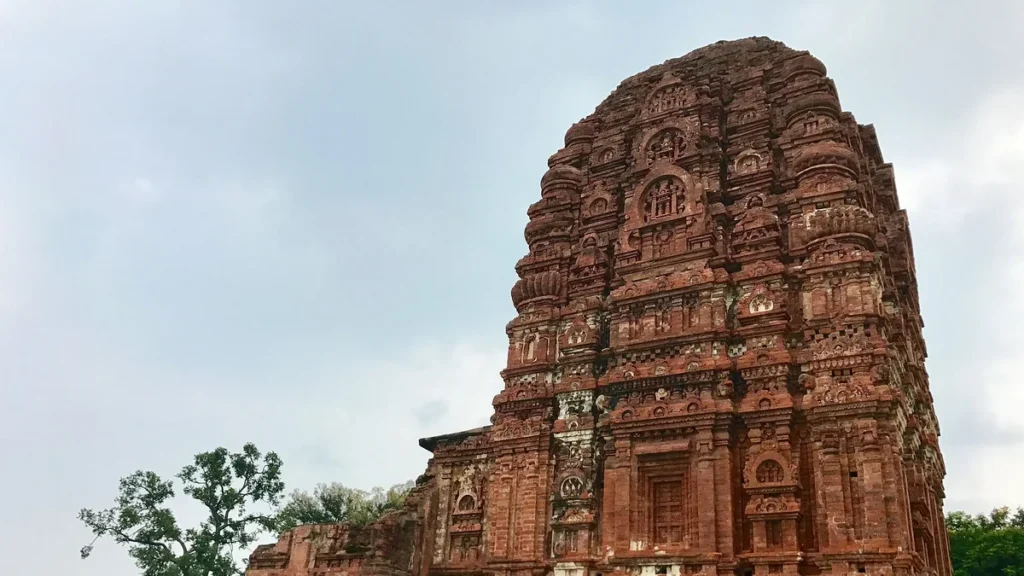
UPSC has already asked about this. Read the story with these questions in mind.
Sirpur, an archaeological site in Chhattisgarh’s Mahasamund district with Hindu, Buddhist and Jain remains from the 5th to the 12th century CE, has been added to UNESCO’s Tentative List. The ASI now has about a year to prepare a nomination dossier proving its Outstanding Universal Value. Sirpur was once the capital of Dakshina Kosala.
- Site
- Sirpur, Mahasamund
- River
- Mahanadi
- Period
- 5th–12th century CE
- Status
- Tentative List
Sirpur and UNESCO: what happened?
Picture a single old town where a Shiva temple, a Buddhist vihara and a Jain vihara stand a short walk apart. That is Sirpur. Its entry into UNESCO’s Tentative List is the first formal step towards World Heritage status.
- Oct 2026: SADA Sirpur and the ASI confirmed Sirpur’s entry into the Tentative List (Indian Express).
- The ASI Raipur circle says it has one year to submit a detailed nomination dossier.
- The dossier will cover buffer zones, conservation and management plans, and the case for OUV.
- Heritage pathways and battery-operated vehicles are being introduced at the site.
What makes Sirpur special?
- It has 22 Shiva temples, five Vaishnava temples, 10 Buddhist viharas and three Jain viharas.
- The 7th-century Lakshmana Temple is one of India’s finest brick temples; it is credited to Queen Vasata.
- It was a capital of Dakshina Kosala under the Panduvanshi and later the Somavamshi kings.
- Remains include palaces, markets, homes, stupas and water systems.
How does the Tentative List compare with World Heritage inscription?
| Point | Tentative List | World Heritage List |
|---|---|---|
| Meaning | A State’s inventory of sites it may nominate | Sites inscribed by the World Heritage Committee |
| Decision by | The State Party (India) | World Heritage Committee |
| Evaluation | No formal evaluation | Advisory bodies such as ICOMOS or IUCN evaluate |
| Rule | Must come first | Nomination only for sites already on the Tentative List |
Which constitutional and legal provisions apply?
- Article 49: the State must protect monuments of national importance.
- Article 51A(f): citizens’ duty to value and preserve our composite culture.
- Ancient Monuments and Archaeological Sites and Remains Act, 1958 (AMASR) governs ASI sites.
- UNESCO World Heritage Convention, 1972: India is a State Party.
How does a site become World Heritage?
From tentative to inscribed
- Site enters the Tentative List
- Nomination dossier prepared
- Dossier sent to World Heritage Centre
- ICOMOS or IUCN evaluates the site
- World Heritage Committee decides
Why does this matter?
| Angle | What to note |
|---|---|
| Composite culture | Hindu, Buddhist and Jain monuments in one urban fabric. |
| Architecture | Brick temple building at its best. |
| Tourism | Global attention for a lesser-known site. |
| Regional history | Dakshina Kosala and its dynasties. |
What are the challenges?
- Proving Outstanding Universal Value against strong global sites.
- Brick structures are fragile and need careful conservation.
- Tourism growth may pressure the site and local people.
- Managing buffer zones needs local consent.
What should be done next?
- Submit a strong, well-documented dossier on time.
- Involve local communities in the management plan.
- Keep eco-friendly access, as proposed by the ASI.
- Publish excavation records for scholars.
What can Prelims ask on Sirpur?
- Location: east bank of the Mahanadi, Mahasamund district, Chhattisgarh.
- Lakshmana Temple: 7th-century brick temple dedicated to Vishnu.
- Dynasties: Panduvanshis and Somavamshis of Dakshina Kosala.
- Mix of Shaiva, Vaishnava, Buddhist and Jain monuments.
- OUV is the core test for World Heritage status.
How to write about heritage nominations in Mains
Practice question (10 marks, 150 words): Sites like Sirpur reflect India’s composite culture. Discuss the significance of the World Heritage tag and the challenges in obtaining it. (GS-I)
- Intro: Sirpur on the Tentative List; Mahasamund, Chhattisgarh.
- Value: Hindu, Buddhist, Jain monuments; Lakshmana Temple.
- Process: dossier, ICOMOS review, Committee decision.
- Challenges: OUV case, fragile brick, tourism pressure.
- Way out: community-led management, documentation.
Image: The 7th-century brick Lakshmana Temple at Sirpur, Chhattisgarh. Ms Sarah Welch, Wikimedia Commons, CC BY-SA 4.0
How to use this in Mains
If asked: Discuss how India’s archaeological sites reflect religious coexistence. (GS-I)
Quote: “Sirpur is one of the few archaeological landscapes in India where Hindu, Buddhist, and Jain monuments exist within a unified urban fabric.”
Use it: Use it as a lead example; then add other composite sites you know.
If asked: What are the challenges in securing World Heritage status for Indian sites? (GS-I)
Quote: “Now that we have made it to the tentative list, we have one year to prepare and submit a detailed nomination dossier to the UNESCO.”
Use it: Quote it to explain the dossier stage; then discuss OUV, integrity and management.
Exam angle
Prelims: Sirpur location, Lakshmana Temple, dynasties, UNESCO process. · Mains GS-I: heritage conservation and composite culture.
Practice MCQs
Original practice questions (not PYQs).
Sirpur, recently added to UNESCO’s Tentative List, is located on the banks of which river?
Answer (b) & explanation
Sirpur lies on the eastern bank of the Mahanadi in Mahasamund district.
Consider the following statements about the Lakshmana Temple at Sirpur:
1. It is built mainly of brick.
2. It dates to around the 7th century CE.
3. It is dedicated to Shiva.
How many of the statements given above are correct?
Answer (b) & explanation
Statements 1 and 2 are correct. The Lakshmana Temple is dedicated to Vishnu.
Which body evaluates nominations of cultural sites for the World Heritage List?
Answer (b) & explanation
ICOMOS evaluates cultural sites; IUCN evaluates natural sites.
Questions students ask about this
Where is Sirpur?
In Mahasamund district of Chhattisgarh, on the Mahanadi, about two hours from Raipur.
Is Sirpur now a World Heritage Site?
No. It is on the Tentative List, the first step towards nomination.
What is next?
The ASI has a year to prepare a detailed nomination dossier.
Why is Sirpur important?
It has Hindu, Buddhist and Jain monuments in one ancient town.
Keep studying
Go deeper
facts from cited sources only; faculty review pending