
Chapter 7 · Topic 7.2 · Prelims + Mains2 of 3
Indian Literature: Sanskrit, Persian and regional literature
Key points
- Rajatarangini: Kalhana, Kashmir, 12th century.
- Kannada and Telugu: classical languages in 2008.
- Yogavasistha in Persian: Akbar's reign (Prelims 2022).
- Krishnadeva Raya: Amuktamalyada; Ashtadiggajas.
Prelims box: facts and traps
- Harshacharita: Banabhatta.
- Gujarati is not a classical language (Prelims 2014).
- Baburnama: written in Turki.
- Sirr-i-Akbar: Dara Shikoh's Persian Upanishads.
Classical Sanskrit and classical languages
| Author | Work |
|---|---|
| Kalidasa | Abhijnanashakuntalam, Meghaduta, Raghuvamsha |
| Bharavi, Dandin | Kiratarjuniya; Dashakumaracharita (Pallava Kanchi) |
| Banabhatta | Harshacharita, Kadambari |
| Kalhana | Rajatarangini (Kashmir, 12th century) |
| Jayadeva | Gita Govinda (Bengal, 12th century) |
Mains 2024 asked candidates to ‘Estimate the contribution of Pallavas of Kanchi for the development of Art and literature of South India.’ For literature, give these points. Bharavi and Dandin wrote at their court. King Mahendravarman I wrote a comic play, Mattavilasa Prahasana. The Alvar and Nayanar saints sang Tamil hymns. Kanchi had a ghatika, a college for learning.
Estimate the contribution of Pallavas of Kanchi for the development of Art and literature of South India.
Prelims 2014 asked which of Gujarati, Kannada and Telugu ‘have been declared as ‘Classical Language/ Languages’ ‘. Kannada and Telugu were declared in 2008. Gujarati is not one (answer c).
Consider the following languages : 1. Gujarati 2. Kannada 3. Telugu Which of the above has/have been declared as ‘Classical Language/Languages’ by the Government?
- 1 and 2 only
- 3 only
- 2 and 3 only
- 1, 2 and 3
Show answer
Answer: (c) · UPSC official key
What UPSC asks: Pallavas (Mains 2024). Classical languages (Prelims 2014). Kalidasa.
Persian and regional literature
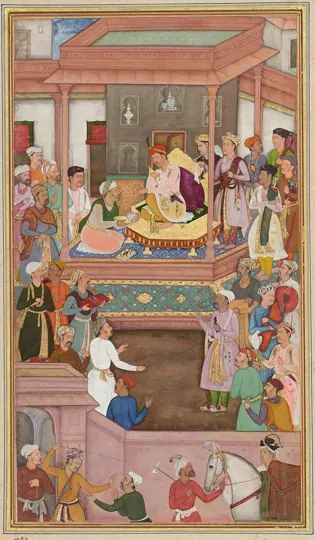
| Writer or text | Detail |
|---|---|
| Amir Khusrau | Persian poet of the Delhi Sultanate; Hindavi verse |
| Ziauddin Barani | Tarikh-i-Firoz Shahi |
| Babur | Tuzuk-i-Baburi (Baburnama), in Turki |
| Gulbadan Begum | Humayun-nama |
| Abul Fazl | Akbarnama and Ain-i-Akbari |
| Dara Shikoh | Majma-ul-Bahrain; Persian Upanishads (Sirr-i-Akbar) |
| Krishnadeva Raya | Amuktamalyada (Telugu); the Ashtadiggajas at court |
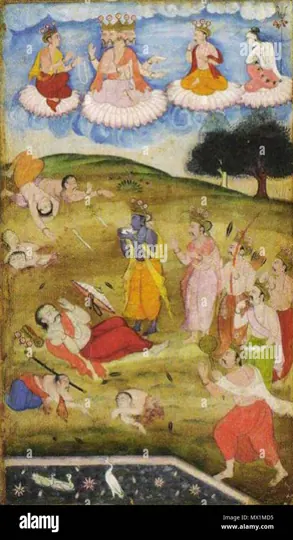
Prelims 2022: ‘“Yogavasistha” was translated into Persian by Nizamuddin Panipati during the reign of’ Akbar (answer a). It was part of the court’s translation of Sanskrit works, along with the Razmnama.
“Yogavasistha” was translated into Persian by Nizamuddin Panipati during the reign of :
- Akbar
- Humayun
- Shahjahan
- Aurangzeb
Show answer
Answer: (a) · UPSC official key
Mains 2020: ‘Persian literary sources of medieval India reflect the spirit of the age. Comment.’ Court histories show how rulers saw kingship and religion. Memoirs like the Baburnama show personal views. Translations show curiosity about other faiths.
Persian literary sources of medieval India reflect the spirit of the age. Comment.
Mains 2016: ‘Krishnadeva Raya, the King of Vijayanagar, was not only an accomplished scholar himself but was also a great patron of learning and literature.’ He wrote Amuktamalyada and Jambavati Kalyanam. He also supported the poet Allasani Peddana and the Ashtadiggajas, the eight great poets of his court.
Krishnadeva Raya, the King of Vijayanagar, was not only an accomplished scholar himself but was also a great patron of learning and literature. Discuss.
What UPSC asks: Yogavasistha (Prelims 2022). Persian sources (Mains 2020). Krishnadeva Raya (Mains 2016).
Mains box: analysis and answer points
- Pallava patronage (Mains 2024).
- Persian sources and the spirit of the age (Mains 2020).
- Krishnadeva Raya as scholar-king (Mains 2016).
Practice
Practice MCQs (8)
The Dasbodh, a Marathi work of spiritual and practical instruction composed in the form of a dialogue between a teacher and a disciple, is by:
Answer (d) & explanation
The Dasbodh of Samarth Ramdas (17th century) gives advice on devotion to Rama, self-discipline, effort and worldly conduct in the form of a guru–shishya dialogue. Ramdas founded the Samartha sampradaya and many maths, and tradition links him with Shivaji. Jnaneshwar wrote the Jnaneshwari, Eknath the Eknathi Bhagavat and Bhavartha Ramayana, and Tukaram is known for his abhangs.
Which one of the following works was NOT originally written in Persian?
Answer (c) & explanation
Babur wrote his memoirs, the Baburnama (Tuzuk-i-Baburi), in his mother tongue, Chaghatai Turkish (Turki). They were translated into Persian under Akbar by Abdur Rahim Khan-i-Khanan in 1589. The Akbarnama of Abul Fazl, Jahangir's own memoir (Tuzuk-i- Jahangiri) and Lahori's Padshahnama on Shah Jahan's reign were written in Persian, the language of the Mughal court.
With reference to medieval Bengali literature, consider the following statements:
1. Krittibas Ojha composed a widely popular Bengali version of the Ramayana.
2. The Chaitanya Charitamrita of Krishnadasa Kaviraj is a biography of Chaitanya Mahaprabhu.
3. The Mangalkavyas are Persian court chronicles of the Bengal Sultans.
Which of the statements given above are correct?
Answer (b) & explanation
Krittibas Ojha (15th century) retold the Ramayana in Bengali verse (Shri Rama Panchali), the most popular Bengali Ramayana. Krishnadasa Kaviraj's Chaitanya Charitamrita (late 16th–early 17th century) is the authoritative Bengali biography and theology of Chaitanya. The Mangalkavyas are Bengali narrative poems in praise of popular deities such as Manasa (the snake goddess), Chandi and Dharma — devotional village epics, not Persian chronicles.
Consider the following pairs of Indo-Persian works and their authors:
1. Tarikh-i-Firuz Shahi — Ziauddin Barani
2. Humayun-nama — Gulbadan Begum
3. Muntakhab-ut-Tawarikh — Abul Fazl
4. Tabaqat-i-Nasiri — Minhaj-us-Siraj
Which of the pairs given above are correctly matched?
Answer (c) & explanation
Ziauddin Barani wrote a Tarikh-i-Firuz Shahi (completed under Firuz Tughlaq; Shams-i-Siraj Afif wrote another work of that name). Gulbadan Begum, Babur's daughter, wrote the Humayun-nama at Akbar's request. The Muntakhab-ut-Tawarikh is by Abdul Qadir Badauni, a critic of Akbar's religious policy — Abul Fazl wrote the official Akbarnama. Minhaj- us-Siraj wrote the Tabaqat-i-Nasiri for Sultan Nasiruddin Mahmud.
With reference to the Guru Granth Sahib, consider the following statements:
1. Its first version, the Adi Granth, was compiled under Guru Arjan Dev and installed at the Harmandir Sahib in 1604.
2. It includes compositions of saints from outside the line of the Sikh Gurus, such as Kabir, Ravidas and Sheikh Farid.
3. Guru Gobind Singh added the hymns of Guru Tegh Bahadur and declared the Granth the eternal Guru of the Sikhs.
Which of the statements given above are correct?
Answer (d) & explanation
Guru Arjan Dev, the fifth Guru, compiled the Adi Granth with Bhai Gurdas as scribe and installed it at the Harmandir Sahib, Amritsar, in 1604. Besides the Gurus' hymns it contains the bani of bhagats from varied backgrounds — Kabir, Namdev, Ravidas, the Sufi Sheikh Farid and others — written in the Gurmukhi script. Guru Gobind Singh added his father Guru Tegh Bahadur's hymns (the Damdama recension) and, before his death in 1708, vested Guruship in the Granth. All three statements are correct.
Which work of Amir Khusrau is a prose account of the military campaigns and conquests of Sultan Alauddin Khalji?
Answer (b) & explanation
Amir Khusrau (1253–1325), disciple of Nizamuddin Auliya, served several Delhi sultans. His Khazain-ul-Futuh ('Treasures of Victories'), also called Tarikh-i-Alai, is an ornate Persian prose account of Alauddin Khalji's reign and conquests, including the southern campaigns. Qiran-us-Sadain describes the meeting of Bughra Khan and his son Kaiqubad; the Nuh Sipihr ('Nine Skies') praises India, its people and its languages under Mubarak Shah Khalji; the Tughlaq Nama narrates Ghiyasuddin Tughlaq's rise.
With reference to Sufi-inspired literature in Indian languages, consider the following statements:
1. Malik Muhammad Jayasi's Padmavat belongs to the Sufi premakhyan (romance) tradition, in which a love story serves as an allegory of the soul's quest for God.
2. Bulleh Shah is known for his Punjabi kafis.
3. Waris Shah composed his version of the Heer–Ranjha story in Persian.
Which of the statements given above are correct?
Answer (a) & explanation
The premakhyan (Sufi romance) tradition — Qutuban's Mrigavati, Manjhan's Madhumalati and Jayasi's Padmavat (1540) — uses a quest for a beloved as an allegory of the seeker's path to the divine. Bulleh Shah (18th century), a Qadiri Sufi of Kasur, wrote Punjabi kafis mocking ritualism. Waris Shah's Heer (1766) is the classic Punjabi version of the Heer– Ranjha legend; it is in Punjabi, not Persian, which is why it became a folk text recited across Punjab.
Consider the following Sanskrit mahakavyas:
1. Kiratarjuniya
2. Shishupalavadha
3. Naishadhiyacharita
4. Raghuvamsha
How many of the above are traditionally grouped as the 'Brihattrayi' (the 'greater three')?
Answer (c) & explanation
Sanskrit tradition groups the court epics into two triads. The Brihattrayi comprises Bharavi's Kiratarjuniya (Arjuna's encounter with Shiva as a hunter), Magha's Shishupalavadha (Krishna's slaying of Shishupala) and Shriharsha's Naishadhiyacharita (the story of Nala and Damayanti). Kalidasa's Raghuvamsha and Kumarasambhava, with the Meghaduta, form the Laghutrayi ('lesser three'), a label of length and difficulty for students, not of quality.
0 / 0 correct
Write an answer
In 150 words, explain the significance of Indian Literature with one recent example.
Flashcards (7)
Who wrote Rajatarangini?
Kalhana.
Mahendravarman I's play?
Mattavilasa Prahasana.
When were Kannada and Telugu made
classical? 2008.
Who translated Yogavasistha into Persian?
Nizamuddin Panipati, under Akbar.
In what language is the Baburnama?
Turki.
Who wrote Humayun-nama?
Gulbadan Begum.
Krishnadeva Raya's Telugu work?
Amuktamalyada.
In the news
- 20 Oct 2026Sirpur in Chhattisgarh enters UNESCO’s Tentative List of World Heritage sites
- 15 Oct 2026PM inaugurates five Ladakh projects: Nimmu–Padum–Darcha road, Leh terminal, Hanu hydro
- 14 Oct 2026HAL, NCF and ASI sign MoA for Hampi, Taj Mahal and Bekal Fort
- 3 Oct 2026Centres of Excellence approved for five newer classical languages
 Next topic · 7.3 →Indian Literature: Bhakti, Sufi and modern literature
Syllabus: GS-I · Indian culture will cover the salient aspects of Art Forms, literature and Archi…