
Chapter 5 · Topic 5.3 · Prelims + Mains3 of 3
Biogeography: Distribution of wildlife
Key points
- Zoogeographic realms, Wallace Line, marsupials (2023); India's biogeographic zones; alpine
Prelims box: facts and traps
- India sits where three realms meet (Oriental, Palaearctic in the high Himalaya, and Ethiopian in the dry west), which is one reason it is a megadiverse country, with about 7–8% of the world's recorded species on 2.4% of its land.
Distribution of wildlife
Animals are spread unevenly over the Earth because of climate, vegetation, barriers (oceans, mountains, deserts) and the long history of moving continents. Alfred Russel Wallace divided the world into zoogeographic realms: Palaearctic (Europe and north Asia), Nearctic (North America), Neotropical (South and Central America), Ethiopian or Afrotropical (Africa south of the Sahara), Oriental (South and South-East Asia, including most of India) and Australian. The Wallace Line, a deep-water channel between Bali and Lombok and between Borneo and Sulawesi, separates Asian from Australian animals.
Prelims 2023 offered Statement-I: Marsupials are not naturally found in India. Correct: marsupials (pouched mammals such as kangaroos and koalas) are found naturally in Australia, New Guinea and the Americas (opossums). Statement-II, that they can thrive only in montane grasslands with no predators, is wrong (option c). Australia’s marsupials survived because the continent split off before placental mammals reached it.
Consider the following statements : Statement-I : Marsupials are not naturally found in India. Statement-II : Marsupials can thrive only in montane grasslands with no predators. Which one of the following is correct in respect of the above statements? Statement-I
- Both Statement-I and Statement-II are correct and Statement-II is the correct explanation for Statement-I
- Both Statement-I and Statement-II are correct and Statement-II is not the correct explanation for
- Statement-I is correct but Statement-II is incorrect
- Statement-I is incorrect but Statement-II is correct
Show answer
Answer: (c) · UPSC official key
India sits where three realms meet (Oriental, Palaearctic in the high Himalaya, and Ethiopian in the dry west), which is one reason it is a megadiverse country, with about 7–8% of the world’s recorded species on 2.4% of its land. It is the only country with both lions and tigers in the wild.
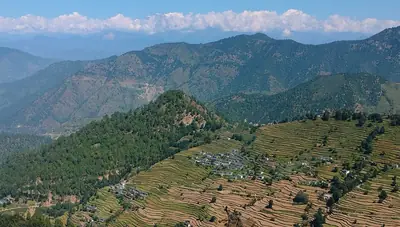
Altitude gives zones too. Prelims 2019 asked which one of the following National Parks lies completely in the temperate alpine zone: the Valley of Flowers (option d); Manas, Namdapha and Neora Valley include lower, tropical or subtropical forests. Mains 2019 asked: How can the mountain ecosystem be restored from the negative impact of development initiatives and tourism? Mains 2019 Carrying-capacity limits for pilgrims and tourists, strict slope and building rules, scientific road cutting with slope stabilisation, eco-sensitive zones, afforestation with native species, solid-waste management, community-run homestays, and early-warning systems for floods and landslides, as the Joshimath subsidence and Kedarnath flood showed.
Which one of the following National Parks lies completely in the temperate alpine zone?
- Manas National Park
- Namdapha National Park
- Neora Valley National Park
- Valley of Flowers National Park
Show answer
Answer: (d) · UPSC official key
How can the mountain ecosystem be restored from the negative impact of development initiatives and tourism?
Mains box: analysis and answer points
- Animals are spread unevenly over the Earth because of climate, vegetation, barriers (oceans, mountains, deserts) and the long history of moving continents.
- Australia's marsupials survived because the continent split off before placental mammals reached it.
- The Wallace Line, a deep-water channel between Bali and Lombok and between Borneo and Sulawesi, separates Asian from Australian animals.
- Correct: marsupials (pouched mammals such as kangaroos and koalas) are found naturally in Australia, New Guinea and the Americas (opossums).
- Likely next angle: Realms, Wallace Line and India's biogeographic zones
- Asked: Mains 2019 (GS Paper I, 15 marks): How can the mountain ecosystem be restored from the negative impact of development initiatives and tourism?
Practice
Write an answer
In 150 words, explain the significance of Biogeography with one recent example.
Flashcards (2)
Are marsupials found naturally in India?
No.
National park wholly in the temperate alpine
zone? Valley of Flowers.
Read more: related explainers
In the news
- 22 Oct 2026Haryana’s first private power distributor: what a parallel licence means for Gurugram and Nuh
- 21 Oct 2026Rubio at Jamnagar: US pitches oil and Venezuelan crude to India’s ‘refining superpower’
- 19 Oct 2026Pumped storage hydropower: India’s roadmap for 100 GW of ‘water batteries’ by 2035-36
- 17 Oct 2026Khet Bachao Abhiyan: Centre reviews 22 October to 30 November farm campaign with States
 Next chapter · 6. World Geography →World Geography: Relief, rivers, lakes and deserts