
Volcanoes: How They Form, Types, Volcanic Landforms, World Distribution and India’s Volcanoes (UPSC Notes + PYQs)
UPSC has already asked about this. Read the story with these questions in mind.
Background: what a volcano is
A volcano is an opening in the Earth’s crust through which molten rock, gases and fragments escape to the surface. Below the crust, in the upper mantle, there is a weak zone called the asthenosphere, where rock is partly molten. When pressure drops, water is added or temperature rises, rock melts and forms magma, which is lighter than the solid rock around it and rises. It collects in a magma chamber and erupts through a vent when pressure is high enough. Once on the surface it is called lava. Volcanoes are not spread randomly over the globe. Most lie along plate boundaries, where plates either pull apart or one plate dives under another, and a few lie over hotspots in the middle of plates. Studying them explains much of physical geography: the shape of continents, island arcs, mountain chains, fertile soils and even short-term changes in climate.
Where volcanoes occur
- Convergent boundaries: oceanic plate subducts, melts and feeds explosive volcanoes (Andes, Japan, Indonesia).
- Divergent boundaries: magma wells up at mid-ocean ridges and rift valleys (Iceland, East African Rift).
- Hotspots: plumes from the mantle (Hawaii, Yellowstone, Reunion; the Deccan Traps are linked to the Reunion hotspot).
- 1Oceanic plate sinks under another plate
- 2Water released from the sinking slab
- 3Mantle above melts and forms magma
- 4Magma rises and collects in a chamber
- 5Explosive eruption at the surface
Types of volcanoes
| Type | Lava | Shape and eruption | Example |
|---|---|---|---|
| Shield | Basaltic, runny | Broad, gentle slopes; mild eruptions | Mauna Loa, Hawaii |
| Composite (strato) | Andesitic, viscous, alternating with ash | Steep cones; explosive | Fuji, Vesuvius, Pinatubo |
| Caldera | Very explosive | Large collapse depression | Toba, Yellowstone |
| Flood basalt | Very fluid basalt from fissures | Plateaus | Deccan Traps |
| Mid-ocean ridge | Basalt | Underwater chains | Mid-Atlantic Ridge |
Volcanic landforms
Extrusive: lava plateaus, cones, craters, calderas. Intrusive (magma cools underground): batholiths (large granite bodies), laccoliths (dome-shaped), lopoliths (saucer-shaped), phacoliths (wavy, in folds), sills (horizontal) and dykes (vertical). Dykes are common in the Deccan region.
- Runny basaltic lava
- Gentle slopes, huge width
- Mild, effusive eruptions
- Example: Mauna Loa, Hawaii
- Thick andesitic lava and ash
- Steep cone with layers
- Explosive eruptions
- Example: Fuji, Vesuvius
India’s volcanoes
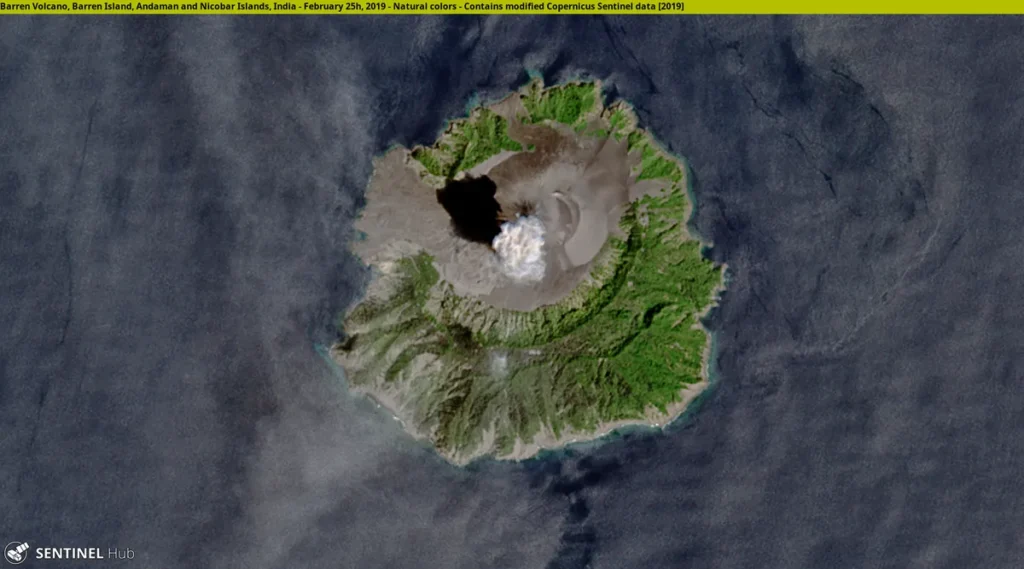
Barren Island (Andaman) erupted in 1991 and several times since; Narcondam is considered dormant. The Deccan Traps formed from huge fissure eruptions around 66 million years ago; weathering of that basalt produced black cotton (regur) soil. Dhinodhar hill in Kutch and the Dhosi hill in Haryana are remnants of ancient volcanic activity.
Materials that come out
| Material | What it is | Examples |
|---|---|---|
| Lava | Molten rock on the surface | Basaltic lava of Hawaii; Deccan basalt |
| Pyroclasts (tephra) | Solid fragments thrown into the air | Ash, lapilli, volcanic bombs |
| Gases | Mostly water vapour, plus carbon dioxide and sulphur dioxide | SO2 forms aerosols that cool climate |
| Pyroclastic flow | Fast, hot avalanche of gas and ash | Vesuvius buried Pompeii (79 CE) |
| Lahar | Mudflow of ash and water | Nevado del Ruiz, Colombia (1985) |
The type of lava decides the type of eruption. Basaltic lava, low in silica, is runny and lets gas escape gently. Andesitic and rhyolitic lava, rich in silica, is thick and traps gas, so eruptions are explosive.
Effects
Destruction and lahars, but also fertile soils (Java, Deccan), geothermal energy (Iceland), and short-term global cooling from sulphur aerosols (Pinatubo, 1991, cooled the earth by about 0.5°C).
Plate boundaries and volcanoes
| Setting | Process | Example |
|---|---|---|
| Divergent (mid-ocean ridge) | Plates move apart; mantle rises and melts | Iceland on the Mid-Atlantic Ridge |
| Ocean-continent convergence | Oceanic plate subducts; water causes melting | Andes, Cascades |
| Ocean-ocean convergence | Island arcs form | Japan, Indonesia, Aleutians, Barren Island |
| Hotspot | Plume of hot mantle under a plate | Hawaii, Reunion |
| Continental rift | Continent begins to split | East African Rift: Kilimanjaro |
Continental-continental collisions, such as India with Asia, produce fold mountains but few volcanoes, because neither plate sinks deep enough to melt.
Volcanoes and climate
Large explosive eruptions can cool the planet for one or two years. They inject sulphur dioxide into the stratosphere, where it turns into tiny sulphate droplets that reflect sunlight. Tambora in Indonesia (1815) led to the ‘year without a summer’ in 1816 in Europe and North America, with crop failures. Mount Pinatubo in the Philippines (1991) cooled global average temperature by about half a degree Celsius for a year or so. Over much longer periods, volcanic carbon dioxide has warmed the climate, and huge outpourings such as the Deccan Traps are linked by many scientists to mass extinctions. These ideas also lie behind proposals for solar geoengineering, which would mimic volcanic aerosols, a topic UPSC has touched in questions on climate.
Hazards and benefits
Volcanoes kill through pyroclastic flows, lahars, ash fall, gases and tsunamis. Krakatoa (1883) generated tsunamis that killed tens of thousands. Ash grounds flights, as in the Eyjafjallajokull eruption in Iceland in 2010. But volcanoes also bring benefits. Volcanic soils are very fertile: the black regur soil of the Deccan, derived from basalt, is ideal for cotton. Geothermal energy powers much of Iceland and parts of New Zealand, Kenya and Indonesia. Volcanic regions hold valuable minerals and attract tourism. In India, geothermal potential exists at Puga valley in Ladakh and in several hot spring belts. A balanced answer mentions both sides and the role of monitoring, hazard mapping and early warning in reducing risk.
Mains and Prelims tips
For Prelims, link each Indian volcano with its location: Barren Island and Narcondam in the Andaman Sea, the Deccan Traps in peninsular India, and the Dhinodhar hills of Kutch with old volcanic rocks. For Mains, a world map sketch showing the Ring of Fire, the Mid-Atlantic Ridge and Hawaii, with arrows for plate movement, earns marks in questions on the distribution of volcanoes and earthquakes.
Volcanoes: UPSC angle
For UPSC CSE
Prelims: types, landforms, Barren Island, places in news (Tungurahua, Etna). Mains GS-I: plate tectonics and distribution; volcanoes and climate.
Volcanoes UPSC PYQs (Prelims)
Questions UPSC has actually asked, from the official papers. Pick an option to check yourself.
Consider the following statements :
– 1. The Barren Island volcano is an active volcano located in the Indian territory.
– 2. Barren Island lies about 140 km east of Great Nicobar.
– 3. The last time the Barren Island volcano erupted was in 1991 and it has remained inactive since then.
Which of the statements given above is/are correct ?
Barren Island, in the Andaman Sea, is India’s (and South Asia’s) only confirmed active volcano. It lies about 140 km north-east of Port Blair, not near Great Nicobar. After 1991 it erupted again in 1994–95, 2005–07 and 2017, so it has not been inactive. Answer as per the official UPSC key · Battle IAS PYQ bankAnswer (a) & why
The black cotton soil of India has been formed due to the weathering of
Black (regur) soil formed from the weathering of basalt that poured out through fissures to build the Deccan Traps. It is rich in iron, lime and magnesium, holds moisture, and cracks when dry. It suits cotton, hence its name. Answer as per the official UPSC key · Battle IAS PYQ bankAnswer (b) & why
Consider the following :
– 1. Pyroclastic debris
– 2. Ash and dust
– 3. Nitrogen compounds
– 4. Sulphur compounds
How many of the above are products of volcanic eruptions ?
An eruption throws out pyroclastic fragments (bombs, lapilli, cinders), ash and dust, and gases. The gases are mainly water vapour, carbon dioxide, sulphur compounds (sulphur dioxide, hydrogen sulphide) and nitrogen compounds. All four are volcanic products. Answer as per the official UPSC key · Battle IAS PYQ bankAnswer (d) & why
Mains PYQs on this topic
No UPSC Mains question from 2023-2026 is directly on this topic. Older papers (2013-2022) will be added as the Mains bank grows.
Quick quiz
India’s only confirmed active volcano is on
In the Andaman Sea.Answer (b)
A vertical intrusive igneous body cutting across rock layers is a
Sills are horizontal.Answer (b)
Black cotton soil of the Deccan formed from
Weathering of Deccan Trap basalt.Answer (b)
FAQs
What is the Ring of Fire?
A horseshoe-shaped belt around the Pacific with most of the world’s active volcanoes and earthquakes.
Is Narcondam active?
It is generally classified as dormant.
What is a caldera?
A large depression formed when a volcano collapses after an eruption.
How did the Deccan Traps form?
From massive fissure eruptions of basalt about 66 million years ago.
What is the difference between magma and lava?
Magma is molten rock below the surface; once it reaches the surface it is called lava.
What is a hotspot?
A spot where a plume of unusually hot mantle rises beneath a plate, creating volcanoes away from plate boundaries, such as Hawaii and Reunion.
Why are there few volcanoes in the Himalaya?
Because it is a continent-continent collision. Neither plate sinks deep enough to melt and produce magma.
Spotted an error? Tell us. We correct within 48 hours.
Image: SentinelHub, Wikimedia Commons, CC BY 2.0
How to use this in Mains
If asked: Explain the effects of volcanic eruptions on climate and life. (GS-I)
Quote: “Destruction and lahars, but also fertile soils (Java, Deccan), geothermal energy (Iceland), and short-term global cooling from sulphur aerosols (Pinatubo, 1991, cooled the earth by about 0.5°C).”
Use it: Ready examples for both benefits and harms.
In the news

Pumped storage hydropower: India’s roadmap for 100 GW of ‘water batteries’ by 2035-36
A PIB backgrounder of 19 October 2026 explains how pumped storage projects (PSPs) will store solar and wind power for India’s grid. India runs 7.43 GW of pumped storage today, is building 15.87 GW more and has an assessed potential of 345.38 GW. A roadmap aims to add about 100 GW between 2025-26 and 2035-36.
19 Oct 2026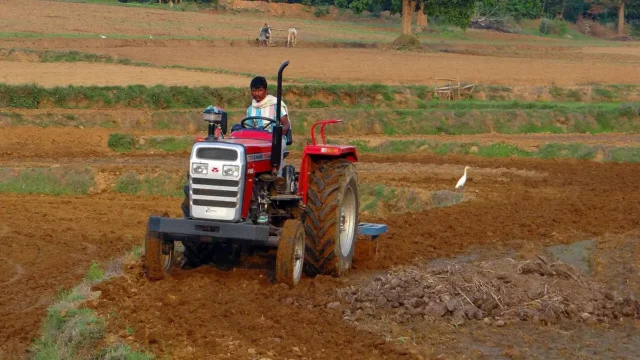
Khet Bachao Abhiyan: Centre reviews 22 October to 30 November farm campaign with States
On 17 October 2026 Union Agriculture Minister Shivraj Singh Chouhan reviewed preparations for the Khet Bachao Abhiyan with agriculture ministers of 11 States and UTs. The campaign runs from 22 October to 30 November 2026. About 4,150 teams of Krishi Vigyan Kendra and ATMA staff, with over 12,000 scientists and officials, plan around 1.5 lakh meetings with farmers on soil health, crop residue, balanced fertiliser use and key schemes.
17 Oct 2026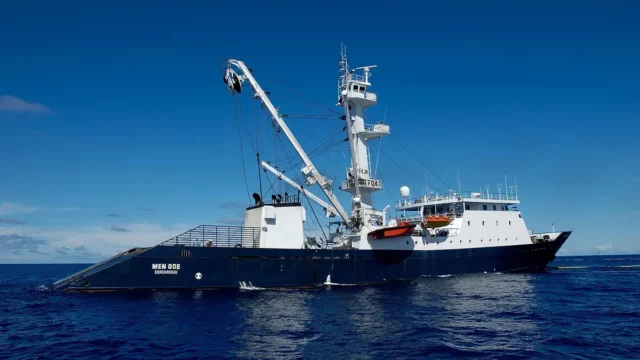
India to accede to the Southern Indian Ocean Fisheries Agreement (SIOFA)
On 14 October 2026 the Centre approved India's accession to the Southern Indian Ocean Fisheries Agreement. India, a Cooperating Non-Contracting Party since 2022, will become a full Contracting Party. Indian vessels can then fish squids, toothfish, alfonsino and other non-migratory stocks in the SIOFA area and join its scientific and compliance bodies.
14 Oct 2026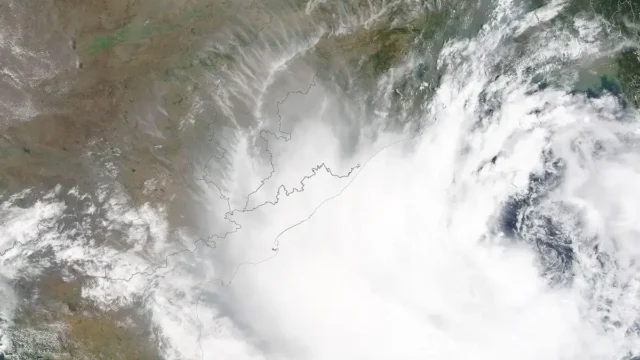
IMD launches a map-based Decision Support System for cyclone and marine warnings
On 12 October 2026 the India Meteorological Department dedicated a Cyclone Warning and Marine Weather Services Decision Support System to the nation. The WebGIS platform shows cyclone track, intensity, winds, rainfall, storm surge and district-wise warnings on one map for disaster managers and the public.
13 Oct 2026