
Chapter 6 · Topic 6.1 · Prelims + Mains1 of 3
Regional Kingdoms: Rajputs and Kashmir
Key points
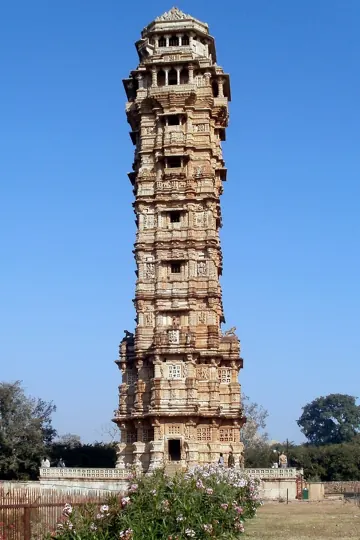
- Rana Kumbha (1433–68): Vijaya Stambha at Chittorgarh, Kumbhalgarh fort, works on music.
- Rana Sanga led a Rajput alliance but lost to Babur at Khanwa (1527).
- Rao Jodha founded Jodhpur (1459) and Mehrangarh.
- Zain-ul-Abidin (1420–70), 'Budshah', abolished jizya, recalled Brahmins, promoted crafts and translations.
Prelims box: facts and traps
- Hill forts of Rajasthan (UNESCO 2013): Chittorgarh, Kumbhalgarh, Ranthambore, Gagron, Amber, Jaisalmer.
- Sikandar 'But-shikan': harsh on non-Muslims.
- Jonaraja: continued the Rajatarangini.
Rajput kingdoms: Mewar and Marwar
After Timur’s raid (1398), the Delhi Sultanate shrank, and many regional states rose. When the centre is weak, local rulers stop sending tribute and act on their own, like states in a country whose capital has lost control. Start with the Rajputs of Rajasthan.
| Ruler | Kingdom | Remember |
|---|---|---|
| Rana Kumbha (1433–68) | Mewar (Chittor) | Built the Vijaya Stambha (Tower of Victory) at Chittorgarh after beating the sultan of Malwa; built Kumbhalgarh fort; wrote on music |
| Rana Sanga (1509–28) | Mewar | Led a Rajput alliance; defeated by Babur at Khanwa (1527) |
| Rao Jodha | Marwar | Founded Jodhpur (1459) and Mehrangarh fort |
Mewar: the leading Rajput state
Mewar, with its capital at Chittor, was the strongest Rajput kingdom of the 15th century. Rana Kumbha fought the sultans of Malwa and Gujarat. To celebrate his win over the Malwa sultan, he built the Vijaya Stambha, a nine-storey tower covered with carvings of gods. He also built the mountain fort of Kumbhalgarh and wrote on music, including the Sangitaraja. Interestingly, the Malwa sultan also claimed victory in the same war and built his own tower at Mandu, so each side told the story its own way.
Rana Sanga later united many Rajput chiefs into an alliance (a group that agrees to fight together). He hoped to rule north India after the Lodis, but Babur’s guns and cavalry beat him at Khanwa in 1527.
Marwar
In Marwar, Rao Jodha of the Rathore clan founded Jodhpur in 1459 and built Mehrangarh fort on a rocky hill above the city.
UPSC link: six hill forts of Rajasthan, including Chittorgarh and Kumbhalgarh, are a UNESCO World Heritage Site (2013). The others are Ranthambore, Gagron, Amber and Jaisalmer.
Mewar kept resisting later too. Rana Pratap fought Akbar’s army, led by Man Singh, at Haldighati in 1576 and kept up the fight from the hills and forests of Mewar for the rest of his life. For a Mains answer on Rajput resistance, use this chain: Kumbha’s forts, Sanga’s alliance, and Pratap’s refusal to submit.
What UPSC asks
Prelims: Kumbha, Sanga, Jodha. Mains: Rajput resistance. Next likely: hill forts of Rajasthan (UNESCO).
Kashmir under the Shah Mir sultans
Shah Mir founded a Muslim dynasty in Kashmir in 1339. Its most famous ruler was Zain-ul-Abidin (1420– 70), whom Kashmiris called Budshah, ‘the great king’.
| Ruler | Remember |
|---|---|
| Sikandar (1389–1413) | Called ‘But-shikan’ (idol-breaker); harsh on non-Muslims |
| Zain-ul-Abidin (1420–70) | Abolished jizya, brought back Brahmins who had fled, banned cow slaughter; had the Mahabharata and the Rajatarangini translated into Persian; promoted shawl and papier-mâché crafts |
The two rulers in the table show opposite policies. Sikandar pressed non-Muslims hard, and many Brahmins fled the valley. Zain-ul-Abidin reversed this: he removed jizya (a tax on non-Muslims), invited the Brahmins back and let temples be repaired. He also built canals and the island of Zaina Lank in Wular lake, and invited craftsmen from Central Asia, which helped Kashmir’s shawl, carpet and papier-mâché work. Many of these crafts carry GI tags today.
Jonaraja continued Kalhana’s Rajatarangini in this period, and his pupil Srivara carried the story further. For Mains, Zain-ul-Abidin is a strong example of religious tolerance in medieval India.
What UPSC asks
Prelims: Zain-ul-Abidin. Mains: religious tolerance. Next likely: Kashmiri crafts (GI tags).
Mains box: analysis and answer points
- Rajput resistance: Kumbha, Sanga, Pratap (Haldighati 1576).
- Religious tolerance: Zain-ul-Abidin as the model.
Practice
Write an answer
In 150 words, explain the significance of Regional Kingdoms with one recent example.
Flashcards (8)
Who built the Vijaya Stambha at Chittor?
Rana Kumbha.
Who built Kumbhalgarh fort?
Rana Kumbha.
Battle where Babur beat Rana Sanga?
Khanwa (1527).
Who founded Jodhpur?
Rao Jodha (1459).
Founder of the Shah Mir dynasty?
Shah Mir (1339).
Who was called Budshah?
Zain-ul-Abidin.
Who continued the Rajatarangini in this
period? Jonaraja.
Last sultan of Malwa?
Baz Bahadur.
Read more: related explainers
In the news
- 20 Oct 2026Sirpur in Chhattisgarh enters UNESCO’s Tentative List of World Heritage sites
- 15 Oct 2026PM inaugurates five Ladakh projects: Nimmu–Padum–Darcha road, Leh terminal, Hanu hydro
- 14 Oct 2026HAL, NCF and ASI sign MoA for Hampi, Taj Mahal and Bekal Fort
- 11 Oct 2026Birth anniversaries: Jayaprakash Narayan and Nanaji Deshmukh
 Next topic · 6.2 →Regional Kingdoms: East and north-east
Syllabus: Prelims GS-I · History of India and Indian National Movement.