
Chapter 11 · Topic 11.1 · Prelims + Mains1 of 3
Health Science: Immunity and communicable disease
Key points
- B and T cells; vaccine platforms; ACE2.
- Zika, Wolbachia, H1N1, hepatitis, smallpox.
Prelims box: facts and traps
| Infection | People infected (WHO estimate) |
|---|---|
| Chronic hepatitis B | about 240 million |
| Chronic hepatitis C | about 47 million |
| HIV | 41.0 million. |
- PIB names Covishield (Serum Institute, Pune) as the ChAdOx1 nCoV-19 Corona Virus Vaccine (Recombinant) and COVAXIN (Bharat Biotech, Hyderabad) as a Whole Virion Inactivated Corona Virus Vaccine (PIB, 14 Dec 2021).
- Smallpox was a contagious disease caused by the variola virus; its global eradication was certified by an independent Global Commission in December 1979 at WHO Headquarters, Geneva (WHO).
- On 26 September 2024 world leaders approved a political declaration committing to reduce the estimated 4.95 million deaths associated with bacterial AMR (2019 baseline) by 10% by 2030.
- Trap (UPSC Prelims 2014): “Diphtheria” is incorrect. “Chickenpox” is incorrect.
- Trap (UPSC Prelims 2013): “Chikungunya” is incorrect.
Immunity and vaccines
The immune system defends the body against pathogens (disease-causing microbes such as viruses and bacteria). Its two main lymphocytes are B cells, which make antibodies, and T cells, which help B cells and kill infected cells. UPSC’s key says the role of B cells and T cells is that They protect the body from the diseases caused by pathogens, not that they fight allergens, relieve pain or suppress immunity (Prelims 2022: answer (d)).
Which one of the following statements best describes the role of B cells and T cells in the human body ?
- They protect the body from environmental allergens.
- They alleviate the body’s pain and inflammation.
- They act as immunosuppressants in the body.
- They protect the body from the diseases caused by pathogens.
Show answer
Answer: (d) · UPSC official key
A vaccine trains this system in advance by showing it a harmless form or part of the pathogen, so the body remembers it. Platforms differ in how the antigen (the part the body learns to recognise) is
delivered: killed (inactivated) whole virus, a harmless carrier virus (viral vector), a protein piece (subunit), or genetic instructions (mRNA or DNA).
India’s COVID-19 vaccines show the platforms. PIB names Covishield (Serum Institute, Pune) as the ChAdOx1 nCoV-19 Corona Virus Vaccine (Recombinant) and COVAXIN (Bharat Biotech, Hyderabad) as a Whole Virion Inactivated Corona Virus Vaccine (PIB, 14 Dec 2021). So per UPSC’s key Covishield is not mRNA, Sputnik V vaccine is manufactured using vector based platform, and COVAXIN is an inactivated pathogen based vaccine (Prelims 2022: answer (b), 2 and 3 only).
In the context of vaccines manufactured to prevent COVID-19 pandemic, consider the following statements : 1. The Serum Institute of India produced COVID-19 vaccine named Covishield using mRNA platform. 2. Sputnik V vaccine is manufactured using vector based platform. 3. COVAXIN is an inactivated pathogen based vaccine. Which of the statements given above are correct ?
- 1 and 2 only
- 2 and 3 only
- 1 and 3 only
- 1, 2 and 3
Show answer
Answer: (b) · UPSC official key
Viruses enter cells by binding to receptors on the cell surface. The SARS-CoV-2 coronavirus’s spike binds to receptors on human cells called angiotensin-converting enzyme 2, or ACE2 (NIH), which is why the term ACE2 is talked about in the context of spread of viral diseases (Prelims 2021: answer (d)).
The term ‘ACE2’ is talked about in the context of
- genes introduced in the genetically modified plants
- development of India’s own satellite navigation system
- radio collars for wildlife tracking
- spread of viral diseases
Show answer
Answer: (d) · UPSC official key
Communicable diseases and vectors
Zika is a virus spread mainly by Aedes mosquitoes that bite mostly during the day; most infected people show no symptoms, there is no vaccine yet, and sexual transmission was confirmed as an alternate route (WHO fact sheet, Nov 2025). Dengue is spread chiefly by Aedes aegypti and Aedes albopictus (WHO). So both statements hold: in tropical regions Zika is spread by the same mosquito that transmits dengue, and Sexual transmission of Zika virus disease is possible (Prelims 2017: answer (c)).
Consider the following statements : 1. In tropical regions, Zika virus disease is transmitted by the same mosquito that transmits dengue. 2. Sexual transmission of Zika virus disease is possible. Which of the statements given above is/are correct ?
- 1 only
- 2 only
- Both 1 and 2
- Neither 1 nor 2
Show answer
Answer: (c) · UPSC official key
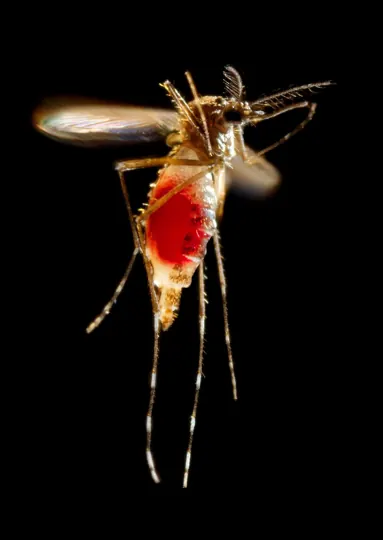
Wolbachia is a naturally occurring bacterium that can be introduced into Aedes mosquito populations to reduce their ability to transmit viruses such as dengue; WHO’s advisory group found in 2020 that this population replacement approach had shown epidemiological impact, and WHO expects formal recommendations in late 2027 (WHO, 11 Jun 2026). Hence the Wolbachia method refers to Controlling the viral diseases spread by mosquitoes (Prelims 2023: answer (a)).
‘Wolbachia method’ is sometimes talked about with reference to which one of the following?
- Controlling the viral diseases spread by mosquitoes
- Converting crop residues into packing material
- Producing biodegradable plastics
- Producing biochar from thermo-chemical conversion of biomass
Show answer
Answer: (a) · UPSC official key
Influenza viruses can jump from animals: WHO notes that humans can be infected with avian, swine and other influenza viruses (WHO, Jan 2026). The H1N1 strain is the one linked in the news to Swine flu, not bird flu, AIDS or dengue (Prelims 2015: answer (d)).
H1N1 virus is sometimes mentioned in the news with reference to which one of the following diseases?
- AIDS
- Bird flu
- Dengue
- Swine flu
Show answer
Answer: (d) · UPSC official key
Blood-borne viruses spread through blood and body fluids. Hepatitis B is transmitted from mother to child at birth, through blood or body fluids during sex, unsafe injections and sharp instruments (WHO). That is why UPSC’s key says Hepatitis B and HIV-AIDS, but not mosquito-borne chikungunya, can pass from person to person through tattooing (Prelims 2013: answer (b), 2 and 3 only).
Which of the following diseases can be transmitted from one person to another through tattooing? 1. Chikungunya 2. Hepatitis B 3. HIV-AIDS Select the correct answer using the codes given below.
- 1 only
- 2 and 3 only
- 1 and 3 only
- 1, 2 and 3
Show answer
Answer: (b) · UPSC official key
Hepatitis B can be prevented by safe and effective vaccines (WHO), but there is currently no effective vaccine against hepatitis C; it is curable in more than 95% of cases with direct-acting antiviral medicines (WHO). So the false statement is Hepatitis B, unlike Hepatitis C, does not have a vaccine. WHO estimates about 240 million people with chronic hepatitis B (2024) and 47 million with chronic hepatitis C, against 41.0 million living with HIV (end-2025), and many carriers show no symptoms for years (Prelims 2019: answer (b)).
Which one of the following statements is not correct? infected with HIV.
- Hepatitis B virus is transmitted much like HIV.
- Hepatitis B, unlike Hepatitis C, does not have a vaccine.
- Globally, the number of people infected with Hepatitis B and C viruses are several times more than those
- Some of those infected with Hepatitis B and C viruses do not show the symptoms for many years.
Show answer
Answer: (b) · UPSC official key
| Infection | People infected (WHO estimate) | Year |
|---|---|---|
| Chronic hepatitis B | about 240 million | 2024 |
| Chronic hepatitis C | about 47 million | latest WHO fact sheet |
| HIV | 41.0 million | end-2025 |
WHO fact sheets. All are modelled estimates, not counts.
Smallpox was a contagious disease caused by the variola virus; its global eradication was certified by an independent Global Commission in December 1979 at WHO Headquarters, Geneva (WHO). In 1980 WHO declared smallpox eradicated, the only infectious disease to achieve this distinction (WHO). Diphtheria and chickenpox still occur, so of the three only Smallpox has been eradicated in India (Prelims 2014: answer (b), 3 only).
Consider the following diseases : 1. Diphtheria 2. Chickenpox 3. Smallpox Which of the above diseases has/have been eradicated in India?
- 1 and 2 only
- 3 only
- 1, 2 and 3
- None
Show answer
Answer: (b) · UPSC official key
Mains box: analysis and answer points
- The immune system defends the body against pathogens (disease-causing microbes such as viruses and bacteria).
- A vaccine trains this system in advance by showing it a harmless form or part of the pathogen, so the body remembers it.
- Platforms differ in how the antigen (the part the body learns to recognise) is
- Likely next angle: ACE2: virus entry
Practice
Practice MCQs (8)
The Chinese scientist Tu Youyou shared the Nobel Prize in Physiology or Medicine in 2015 for discovering a therapy against malaria based on
Answer (a) & explanation
The 2015 Nobel Prize in Physiology or Medicine was divided: one half went to William Campbell and Satoshi Ōmura for avermectin (from which ivermectin was derived) against roundworm diseases such as river blindness and lymphatic filariasis, and the other half to Tu Youyou for artemisinin, drawn from the herb Artemisia annua (sweet wormwood), which sharply cut malaria deaths. Today artemisinin-based combination therapies (ACTs) are the WHO-recommended first-line treatment for falciparum malaria.
Consider the following diseases:
1. Dengue
2. Chikungunya
3. Zika virus disease
4. Japanese encephalitis
How many of the above are transmitted to humans mainly by Aedes mosquitoes?
Answer (c) & explanation
Three are Aedes-borne. Dengue, chikungunya and Zika are all transmitted mainly by Aedes aegypti (and also Aedes albopictus), a day-biting mosquito that breeds in clean water stored in containers, coolers and discarded tyres. Japanese encephalitis is spread mainly by Culex mosquitoes (Culex tritaeniorhynchus) that breed in rice fields; pigs and wading birds keep the virus in circulation. Hence only three.
Consider the following statements regarding colistin:
1. It is a new class of antibiotic introduced in the last decade to tackle antimicrobial resistance.
2. In July 2019, India prohibited its manufacture, sale and distribution for use in food-producing animals, poultry, aquaculture and animal feed supplements.
3. It is kept as a last-resort drug for treating human infections caused by multidrug-resistant Gram-negative bacteria.
Which of the statements given above is/are correct?
Answer (d) & explanation
Statements 2 and 3 are correct. Colistin (polymyxin E) is an old antibiotic, discovered in the late 1940s, that was largely abandoned for human use because of kidney toxicity, so statement 1 is wrong. It has since returned as a last-resort drug against carbapenem-resistant Gram-negative bacteria. Because it was widely used as a growth promoter in poultry, the Union Health Ministry, by a notification of 19 July 2019 under the Drugs and Cosmetics Act, prohibited colistin for food-producing animals, poultry, aqua farming and animal feed supplements.
Consider the following statements: Statement-I: Genes for antibiotic resistance can spread rapidly even among different species of bacteria. Statement-II: Bacteria can transfer plasmids carrying resistance genes to other bacteria through conjugation.
Which one of the following is correct in respect of the above statements?
Answer (a) & explanation
Both statements are correct and II explains I. Resistance genes are often carried on plasmids, small circular DNA molecules that replicate independently of the bacterial chromosome. Through conjugation, a bacterium passes a copy of a plasmid to a neighbouring cell, even one of a different species. This horizontal gene transfer is why resistance such as the plasmid-borne mcr-1 (colistin) and NDM-1 (carbapenems) genes can move quickly between unrelated bacteria, far faster than through mutation and vertical inheritance alone.
Consider the following statements regarding dengue:
1. Dengue virus has four distinct serotypes.
2. A later infection with a different serotype increases the risk of severe dengue.
3. Its main vector, Aedes aegypti, bites mostly during the daytime and breeds in clean water collected in containers.
Which of the statements given above is/are correct?
Answer (d) & explanation
All three statements are correct. WHO notes that there are four serotypes (DENV-1 to DENV-4). Recovery from one gives lifelong immunity only against that serotype; a secondary infection with a different serotype raises the risk of severe dengue, partly because cross-reacting antibodies can enhance viral entry (antibody-dependent enhancement). Aedes aegypti is a day-biting mosquito, most active after dawn and before dusk, and breeds in clean water held in containers such as coolers, pots and tyres.
Consider the following statements regarding efforts to curb the misuse of antibiotics in India:
1. Under the 'Medicines with the Red Line' campaign, a vertical red line on the pack indicates that the medicine should be used only on a doctor's prescription.
2. A chemist selling a Schedule H1 drug must record the details of the prescription in a separate register.
3. The Red Line campaign was launched by the World Health Organization as a global awareness drive.
Which of the statements given above is/are correct?
Answer (c) & explanation
Statements 1 and 2 are correct. The Union Health Ministry launched the 'Medicines with the Red Line' campaign in 2016 to tell people that a vertical red line on the pack of medicines such as antibiotics means they must be used only on prescription. Schedule H1, added to the Drugs and Cosmetics Rules in 2013 (in force from 2014), covers third- and fourth-generation antibiotics and anti-TB drugs; chemists must keep a separate register with the prescriber's and patient's names and the drug and quantity sold, retained for three years. Statement 3 is wrong: the campaign is an Indian MoHFW initiative.
With reference to the Political Declaration adopted at the UN General Assembly High-level Meeting on Antimicrobial Resistance in September 2024, consider the following statements:
1. It aims to reduce global deaths associated with bacterial antimicrobial resistance by 10% by 2030, against a 2019 baseline.
2. It is a legally binding treaty that imposes penalties on countries that miss the target.
3. It calls for a 'One Health' approach covering human, animal and environmental health.
Which of the statements given above is/are correct?
Answer (a) & explanation
Statements 1 and 3 are correct. On 26 September 2024 world leaders approved a political declaration committing to reduce the estimated 4.95 million deaths associated with bacterial AMR (2019 baseline) by 10% by 2030. It repeatedly stresses a One Health approach linking human, animal, plant and environmental sectors, and calls for funded national action plans. Statement 2 is wrong: a political declaration of the General Assembly is a statement of commitment; it is not a treaty and carries no penalties.
Consider the following pairs: Disease — Vector
1. Kyasanur Forest Disease — Hard tick
2. Plague — Rat flea
3. Scrub typhus — Sandfly
4. Kala-azar — Anopheles mosquito
How many of the pairs given above are correctly matched?
Answer (b) & explanation
Two pairs are correct. Kyasanur Forest Disease (monkey fever), first found in Karnataka in 1957, is spread by the hard tick Haemaphysalis spinigera. Plague (Yersinia pestis) reaches humans mainly through the bite of the infected rat flea (Xenopsylla cheopis). Pair 3 is wrong: scrub typhus (Orientia tsutsugamushi) is spread by the bite of larval mites called chiggers. Pair 4 is wrong: kala-azar is spread by the sandfly, not by Anopheles, which carries malaria.
0 / 0 correct
Write an answer
In 150 words, explain the significance of Health Science with one recent example.
Flashcards (12)
Role of B and T cells?
Protect the body from diseases caused by pathogens.
Covishield platform?
ChAdOx1 recombinant; not mRNA.
COVAXIN platform?
Whole-virion inactivated.
Sputnik V platform?
Vector based.
ACE2 is linked to?
Spread of viral diseases (virus entry).
Mosquito genus spreading Zika and
dengue? Aedes.
Can Zika spread sexually?
Yes.
Wolbachia method is for?
Controlling viral diseases spread by mosquitoes.
H1N1 is linked to?
Swine flu.
Which has a vaccine: hepatitis B or C?
Hepatitis B.
Diseases spread by tattooing (UPSC key)?
Hepatitis B and HIV-AIDS.
When was smallpox eradication certified?
December 1979; WHO declared it in 1980.
Read more: related explainers
In the news
- 24 Oct 2026NVS-03 launch on 30 October: can ISRO’s new satellite bring NavIC back to life?
- 22 Oct 2026eMudhra weak-key flaw: browsers block 8 certificates; what it means for India’s web trust
- 21 Oct 2026Japan’s MMX mission lifts off for Mars to bring back a sample of Phobos by 2031
- 21 Oct 2026Open-weight AI models: why Big Tech gives them away and what it means for India
 Next topic · 11.2 →Health Science: AMR, diet and NCDs
Syllabus: GS-III · Awareness in the fields of IT, Space, Computers, robotics, nano-technology, bio-…