
Chapter 12 · Topic 12.1 · Prelims + Mains1 of 3
Chinese Revolution: Qing decline and 1911
Key points
- The Qing dynasty was weakened by the Opium Wars, unequal treaties, the Taiping Rebellion and defeat by Japan.
- The Wuchang Uprising (10 October 1911) ended the monarchy; the Republic of China began on 1 January 1912.
- Sun Yat-sen's Three Principles: nationalism, democracy, people's livelihood; warlords soon split China.
Prelims box: facts and traps
- Treaty of Nanking: 1842, Hong Kong ceded.
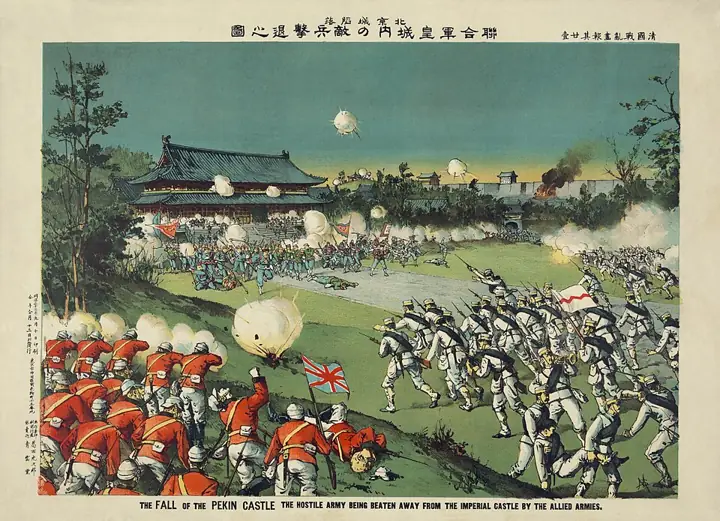
- Hundred Days' Reform: 1898, crushed by Cixi. Boxer Rebellion: 1900.
- Tongmenghui: 1905, later the KMT.
- May Fourth Movement: 1919, against Shandong going to Japan.
Decline of the Qing dynasty
Imagine an old joint family whose elder refuses to change, while outsiders keep taking rooms in the house and the younger members fight among themselves. Sooner or later the family breaks up. That is roughly what happened to the Qing.
| Blow | Detail |
|---|---|
| Opium Wars (1839–42, 1856–60) | Treaty of Nanking: Hong Kong ceded, treaty ports opened |
| Unequal treaties | Extraterritoriality, tariff control, spheres of influence |
| Taiping Rebellion (1850–64) | Massive peasant revolt; tens of millions died |
| Sino-Japanese War (1894–95) | Defeat by Japan; Taiwan lost |
| Hundred Days’ Reform (1898) | Crushed by Empress Dowager Cixi |
| Boxer Rebellion (1900) | Anti-foreign uprising suppressed by eight foreign powers |
Each blow in plain words
- Opium Wars: Britain sold opium, much of it grown in India, to China. When China banned it, Britain went to war and won. China had to give up Hong Kong and open “treaty ports” to foreign traders.
- Extraterritoriality: foreigners in China were tried in their own countries’ courts, not Chinese ones. It meant China was not master in its own home.
- Taiping Rebellion: a huge peasant revolt led by a man who claimed to be Jesus’s younger brother. It was one of the deadliest wars of the 19th century.
- Defeat by Japan: losing to a smaller Asian neighbour that had modernised showed how far China had fallen behind.
- Hundred Days’ Reform: a young emperor tried to modernise schools, the army and government in 1898. The powerful Empress Dowager Cixi stopped it after about 100 days.
- Boxers: a secret society that attacked foreigners and Christians. An eight-nation force, including Indian troops under the British, crushed them, and China paid a huge fine.
Sun Yat-sen and the 1911 Revolution
| Point | Detail |
|---|---|
| Three Principles of the People | Nationalism, democracy, people’s livelihood |
| Revolutionary Alliance | Tongmenghui (1905), later the Kuomintang (KMT) |
| Wuchang Uprising | 10 October 1911 (‘Double Tenth’) |
| Republic of China | Proclaimed 1 January 1912; last emperor Puyi abdicated |
| Warlord era | Yuan Shikai seized power; China fragmented (1916–28) |
| May Fourth Movement (1919) | Protest against Versailles giving Shandong to Japan; birth of modern nationalism |
Sun Yat-sen, a doctor trained abroad, is respected as the “father of modern China” by both the Nationalists and the Communists. His three principles meant: free China from foreign control, let the people rule, and give everyone a decent living, including land for peasants.
The 1911 Revolution removed the emperor but did not build a strong state. Sun handed power to the general Yuan Shikai, who even tried to make himself emperor. After Yuan died in 1916, local army chiefs called warlords carved China into private kingdoms.
On 4 May 1919, students in Beijing protested because the Versailles peace gave Germany’s rights in Shandong to Japan instead of returning them to China. This May Fourth Movement turned many young Chinese towards modern ideas and Marxism, and two years later the Chinese Communist Party was founded.
Common doubts
Why is 1911 called an incomplete revolution? It ended the monarchy, but it did not bring democracy, unity or land for peasants. Those tasks were left for the next 38 years.
What UPSC asks
Prelims: Treaty of Nanking 1842, Double Tenth 1911, Sun Yat-sen’s Three Principles, May Fourth 1919. Mains: why the Qing fell and why 1911 was an “incomplete” revolution.
Mains box: analysis and answer points
- Why the Qing fell: foreign pressure, rebellions, failed reforms, Manchu rule seen as foreign.
- 1911 as incomplete: ended monarchy but not disunity, foreign control or peasant poverty.
Practice
Write an answer
In 150 words, explain the significance of Chinese Revolution with one recent example.
Flashcards (11)
Treaty ending the first Opium War?
Nanking (1842).
Taiping Rebellion?
1850–64.
Anti-foreign rising of 1900?
Boxer Rebellion.
Empress who crushed 1898 reforms?
Cixi.
Sun Yat-sen's doctrine?
Three Principles of the People.
Wuchang Uprising?
10 October 1911.
Last Qing emperor?
Puyi.
May Fourth Movement?
1919.
Where did the KMT retreat?
Taiwan.
Mao's social base?
Peasantry.
PRC proclaimed?
1 October 1949.
Read more: related explainers
 Next topic · 12.2 →Chinese Revolution: Civil war and Mao
Syllabus: GS-I · History of the world will include events from 18th century such as industrial re…