
Chapter 11 · Topic 11.2 · Prelims + Mains2 of 3
Cold War: Crises
Key points
- Berlin.
- Korea.
- Cuba.
2 PYQs 2002–2011
Prelims box: facts and traps
| Crisis | Detail |
|---|---|
| Blockade (June 1948–May 1949) | Soviets cut land routes after currency reform in the western zones |
| Airlift | Over 2 million tonnes flown into West Berlin; blockade lifted |
| Two Germanys (1949) | Federal Republic (West) and German Democratic Republic (East) |
| Berlin Wall (August 1961) | Built to stop flight from East to West |
| Kennedy (1963) | 'Ich bin ein Berliner'. |
On this page (3 sections)
Berlin crises
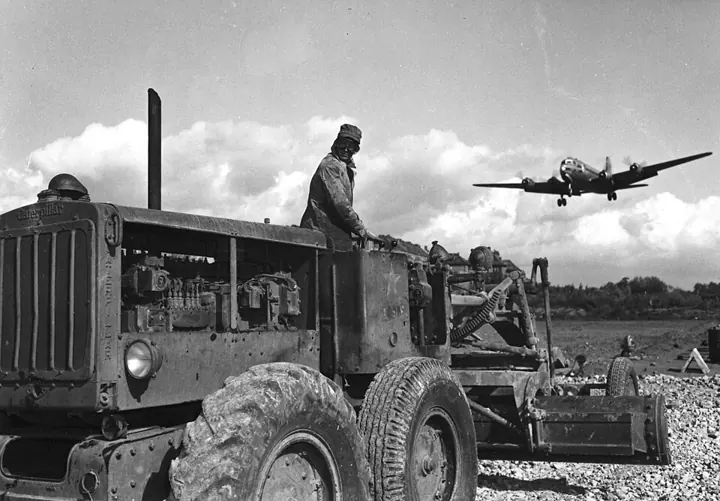
| Crisis | Detail |
|---|---|
| Blockade (June 1948–May 1949) | Soviets cut land routes after currency reform in the western zones |
| Airlift | Over 2 million tonnes flown into West Berlin; blockade lifted |
| Two Germanys (1949) | Federal Republic (West) and German Democratic Republic (East) |
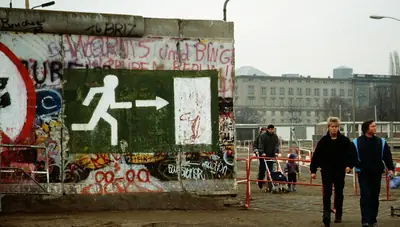
| Berlin Wall (August 1961) | Built to stop flight from East to West |
| Kennedy (1963) | ‘Ich bin ein Berliner’ |
| Fall (9 November 1989) | Wall opened; German reunification on 3 October 1990 |
The Korean War (1950–53)
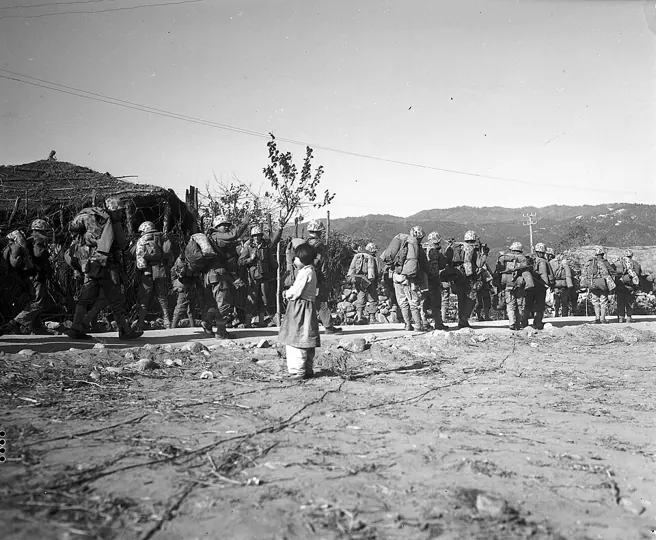
| Stage | Detail |
|---|---|
| Division | Along the 38th parallel (1945) |
| Invasion | North Korea attacked the South, 25 June 1950 |
| UN action | Security Council (USSR boycotting) authorised a US-led force; Inchon landing |
| China enters | October 1950; front stabilised near the 38th parallel |
| Armistice | Panmunjom, July 1953; India chaired the Neutral Nations Repatriation Commission |
The Cuban Missile Crisis (1962)
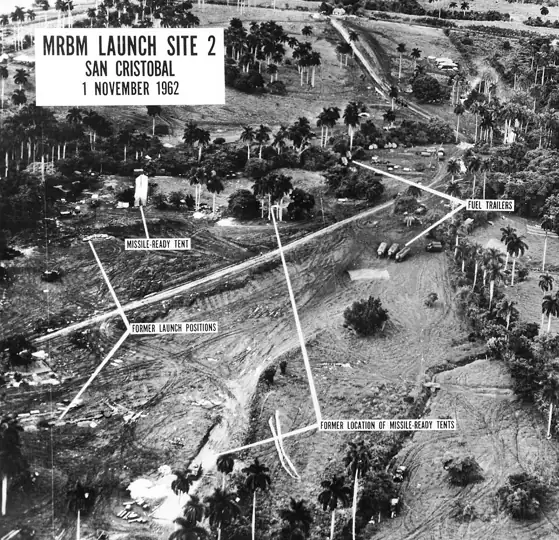
| Step | Detail |
|---|---|
| Background | Castro’s revolution (1959); failed Bay of Pigs invasion (1961) |
| Discovery | US U-2 photographs of Soviet missile sites, October 1962 |
| Quarantine | Kennedy’s naval blockade; 13 days of crisis |
| Deal | Khrushchev withdrew the missiles; US pledged not to invade Cuba and quietly removed missiles from Turkey |
| Aftermath | Hotline (1963); Partial Test Ban Treaty (1963); NPT (1968) |
Mains box: analysis and answer points
| Crisis | Detail |
|---|---|
| Blockade (June 1948–May 1949) | Soviets cut land routes after currency reform in the western zones |
| Airlift | Over 2 million tonnes flown into West Berlin; blockade lifted |
| Two Germanys (1949) | Federal Republic (West) and German Democratic Republic (East) |
| Berlin Wall (August 1961) | Built to stop flight from East to West |
| Kennedy (1963) | 'Ich bin ein Berliner'. |
- Likely next angle: Fall 1989
Practice
Prelims PYQs on this topic (2)
Southeast Asia has captivated the attention of global community over space and time as a geostrategically significant region. Which among the following is the most convincing explanation for this global perspective ?
Answer (d) & explanation
Option (d) is the most convincing (d). Southeast Asia lies between the Pacific and Indian Oceans, and sea lanes such as the Strait of Malacca, Sunda and Lombok carry a large share of world trade and energy. This lasting maritime character explains its importance 'over space and time'. (a) and (c) are wrong because they describe single periods, the Second World War and the Cold War. (b) is wrong because its position between China and India is only one, narrower angle, not the deepest reason.
Notice the present: the South China Sea disputes, ASEAN centrality and India's Act East and Indo-Pacific policies all flow from this maritime geography. Trap: options tied to one era cannot explain 'over space and time'.
(a) and (c) are true but belong to one period each; the question asks for a reason that holds "over space and time".
Answer as per the official UPSC answer key.
With reference to “Look East Policy” of India, consider the following statements :
- 1. India wants to establish itself as an important regional player in the East Asian affairs.
- 2. India wants to plug the vacuum created by the termination of Cold War.
- 3. India wants to restore the historical and cultural ties with its neighbours in Southeast and East Asia.
Which of the statements given above is/are correct ?
Answer (b) & explanation
Statements 1 and 3 are correct (b). The Look East Policy (1991, under P.V. Narasimha Rao) aimed to make India an important regional player in East and Southeast Asia through trade, investment and ties with ASEAN (1), and to revive old historical and cultural links of Buddhism, trade and Indian kingdoms (3). Statement 2 is wrong: the policy was driven by economic reform and the loss of the Soviet partner, not by a wish to 'fill a Cold War vacuum'. So (a), (c) and (d) fail.
Notice the upgrade: it became the Act East Policy in 2014, adding security, connectivity (Kaladan, India–Myanmar–Thailand highway) and the Indo-Pacific. India became an ASEAN dialogue partner in 1995 and a Comprehensive Strategic Partner in 2022.
Statement 2 sounds right because the policy began in 1991, just as the Cold War ended, but filling a "vacuum" was never its aim.
Answer as per the official UPSC answer key.
Write an answer
In 150 words, explain the significance of Cold War with one recent example.
Flashcards (7)
Berlin Blockade?
1948–49.
Berlin Wall built?
August 1961.
Wall fell?
9 November 1989.
Korean War began?
25 June 1950.
Korean armistice?
Panmunjom, 1953.
Failed US-backed invasion of Cuba?
Bay of Pigs (1961).
Cuban Missile Crisis?
October 1962.
Read more: related explainers
 Next topic · 11.3 →Cold War: Chapter test
Syllabus: GS-I · History of the world will include events from 18th century such as industrial re…