
Chapter 7 · Topic 7.2 · Prelims + Mains2 of 3
Russian Revolution: October and civil war
Key points
- Lenin returned in April 1917 with 'Peace, Land and Bread' and 'All power to the soviets'.
- The Bolsheviks seized power on 7 November 1917 (25 October old style).
- They won the civil war (1918–21) through the Red Army, but War Communism led to famine and the Kronstadt revolt.
1 PYQ 2013–2022
Prelims box: facts and traps
- April Theses: April 1917. Kornilov affair: August 1917.
- Treaty of Brest-Litovsk: March 1918, peace with Germany.
- Constituent Assembly dissolved in January 1918.
- Kronstadt revolt: 1921, led to the NEP.
Lenin and the October Revolution
| Point | Detail |
|---|---|
| Return of Lenin (April 1917) | Arrived from Switzerland in a German-arranged sealed train |
| April Theses | ‘All power to the soviets’; slogan ‘Peace, Land and Bread’ |
| July Days and Kornilov affair | Bolsheviks briefly suppressed, then strengthened when they defended Petrograd |
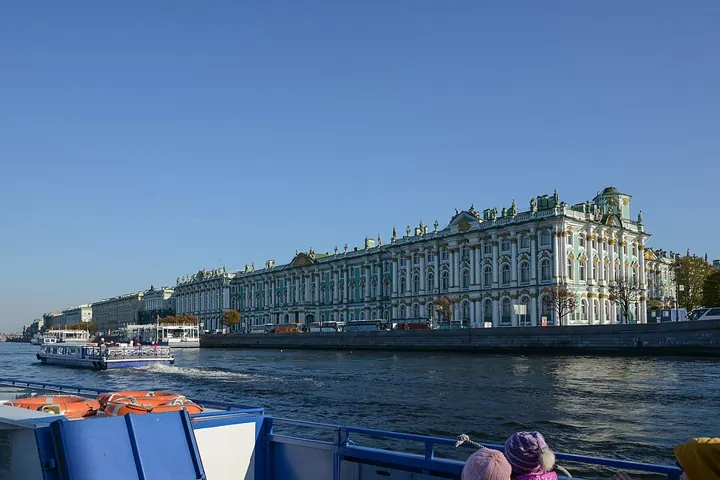
| October Revolution (25 October old style; 7 November 1917) | Military Revolutionary Committee under Trotsky seized the Winter Palace and key points |
| First decrees | Decree on Peace; Decree on Land (estates to peasants); banks and industry nationalised |
| Constituent Assembly | Dissolved in January 1918 after the Socialist Revolutionaries won |
How the Bolsheviks won support
Germany helped Lenin get home because it hoped he would take Russia out of the war. His slogan was simple, and every group heard what it wanted: soldiers heard “peace”, peasants heard “land” and workers heard “bread”. In August 1917, General Kornilov seemed to march on Petrograd. The Bolsheviks helped defend the city and came out as heroes.
The takeover itself was quick, and the Second Congress of Soviets, meeting the same night, approved it. The Winter Palace, where the Provisional Government met, was seized almost without a fight. A Constituent Assembly is a body elected to write a constitution. When the Bolsheviks lost its election, they simply shut it down.
Lenin’s contribution: the idea of a vanguard party, a small, disciplined group that leads workers and peasants. He also decided to seize power at once, without waiting for capitalism to develop fully as Marx had expected.
Civil war and War Communism
| Point | Detail |
|---|---|
| Treaty of Brest-Litovsk (March 1918) | Peace with Germany at the cost of Ukraine, the Baltic and Poland |
| Civil war (1918–21) | Reds versus Whites (Kolchak, Denikin, Wrangel) backed by Allied intervention |
| Red Army | Built by Trotsky |
| Terror | Cheka secret police; the Tsar’s family shot at Yekaterinburg (July 1918) |
| War Communism | Grain requisitioning, nationalisation, ban on private trade; famine of 1921 |
| Kronstadt revolt (1921) | Sailors’ rising showed the crisis |
In plain words
- Reds and Whites: the Reds were the Bolsheviks. The Whites were a mix of monarchists, army officers and liberals, helped by troops from Britain, France, Japan and the USA.
- War Communism: the state took grain from peasants by force to feed the army and cities, and took over all factories. Peasants grew less, and famine followed.
- Kronstadt: the sailors of Kronstadt had been Bolshevik heroes in 1917. When even they rebelled in 1921, demanding free soviets, Lenin knew he had to change course. The result was the New Economic Policy.
Why did the Reds win?
- They held the centre, with Moscow, Petrograd and the railways.
- Trotsky built a disciplined Red Army, using former Tsarist officers watched by party commissars.
- The Whites were divided and had no common aim.
- Peasants feared the Whites would bring back the landlords.
- Foreign help to the Whites let the Reds pose as defenders of Russia.
Common doubts
Was October a popular revolution or a coup? Both views exist. The seizure was planned by one party, but the Bolsheviks did have strong support among workers and soldiers in the big cities.
What UPSC asks
Prelims: April Theses, 7 November 1917, Brest-Litovsk 1918, Kronstadt 1921, Trotsky and the Red Army. Mains: why the Bolsheviks won power, and why they won the civil war.
Mains box: analysis and answer points
- Why the Bolsheviks won power: simple slogans, a disciplined party, a failing Provisional Government.
- Why the Reds won the civil war: held the centre and railways, Red Army, divided Whites, peasant fear of landlords.
Practice
Prelims PYQs on this topic (1)
Consider the following statements :
- 1. Bidibidi is a large refugee settlement in north-western Kenya.
- 2. Some people who fled from South Sudan civil war live in Bidibidi.
- 3. Some people who fled from civil war in Somalia live in Dadaab refugee complex in Kenya.
Which of the statements given above is/are correct ?
Answer (c) & explanation
Statements 2 and 3 are correct (c). Statement 2 is right: Bidibidi, one of the world's largest refugee settlements, shelters people who fled the South Sudan civil war that began in 2013. Statement 3 is right: the Dadaab complex in eastern Kenya, near the border, has sheltered Somali refugees fleeing civil war since 1991. Statement 1 is wrong: Bidibidi is in north-western Uganda, in Yumbe district, not in Kenya.
Notice Kenya's other huge camp, Kakuma, in the north-west, which hosts many South Sudanese. Uganda is praised for its open policy: refugees get land to farm and can move and work freely. UPSC uses such places to test both map sense and current affairs.
Answer as per the official UPSC answer key.
Write an answer
In 150 words, explain the significance of Russian Revolution with one recent example.
Flashcards (7)
Lenin's programme of April 1917?
April Theses.
Bolshevik slogan?
Peace, Land and Bread.
October Revolution new-style date?
7 November 1917.
Who led the Military Revolutionary
Committee? Trotsky.
Treaty ending Russia's war with Germany?
Brest-Litovsk, March 1918.
Founder of the Red Army?
Trotsky.
Revolt that led to the NEP?
Kronstadt, 1921.
Read more: related explainers
 Next topic · 7.3 →Russian Revolution: Chapter test
Syllabus: GS-I · History of the world will include events from 18th century such as industrial re…