
Chapter 4 · Topic 4.3 · Prelims + Mains3 of 3
Unification of Italy: Impact and limits
Key points
- Italy was united, but as a kingdom with few voters and a rich north and poor south.
- The Pope refused to accept the loss of Rome until the Lateran Treaty (1929).
- 'We have made Italy; now we must make Italians' (d'Azeglio).
Prelims box: facts and traps
- Lateran Treaty: 1929, created Vatican City.
- Irredentism: claims to 'unredeemed' lands (Trentino, Trieste); Italy joined WWI in 1915.
Impact and limits
Joining states on a map is the easy part. Making people feel like one nation is harder. Think of two families merging after a marriage: the paperwork is done in a day, but feeling like one family takes years.
| Impact | In simple words |
|---|---|
| Political | A constitutional monarchy under the Savoy dynasty, with a narrow franchise |
| North–South gap | Industrial North, poor rural South; brigandage and mass emigration |
| Roman Question | The Pope refused to accept the loss of Rome until the Lateran Treaty (1929) |
| Irredentism | Claims to Trentino and Trieste pulled Italy into the First World War |
| Inspiration | Mazzini and Garibaldi were heroes to Indian nationalists (Lajpat Rai, Savarkar) |
Each impact, explained
- Few voters: a constitutional monarchy is a king whose powers are limited by a written constitution. But the franchise, the right to vote, was narrow: only a small share of men, those with property and education, could vote at first.
- North vs South: the north had industry and railways. The south was poor, with big landlords and landless peasants. Many southerners felt “conquered” rather than united. Brigandage, armed banditry and revolt, spread in the south, and millions later emigrated to the Americas.
- Roman Question: when Italy took Rome in 1870, the Pope called himself a “prisoner in the Vatican” and told Catholics to stay away from national politics. The quarrel ended only with the Lateran Treaty of 1929, which created Vatican City.
- Irredentism: the word comes from “unredeemed” lands. Italians said areas like Trentino and Trieste, still under Austria, were Italian too. This helped pull Italy into the First World War in 1915, after the Allies secretly promised it these lands in the Treaty of London.
‘We have made Italy; now we must make Italians’
This line by Massimo d’Azeglio sums it up. Most people spoke local dialects, not standard Italian. Schools, the army and railways slowly built a shared identity over the next decades.
Effects on Europe
- A new kingdom appeared in southern Europe, and Austria lost ground.
- Together with German unification in 1871, it showed that nationalism could redraw the map. The Vienna settlement of 1815 was finished.
- Later, Italians felt they got too little at the 1919 peace talks. They called it a “mutilated victory”, and that anger helped Mussolini’s fascism grow.
- The new state spent heavily on its army and on colonies in Africa, trying to be seen as a great power.
Why it matters for India
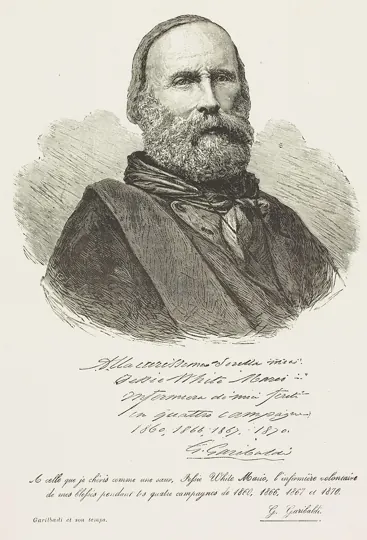
Indian nationalists saw Italy as a model: a divided land, under foreign control, that became one nation. Lajpat Rai and Savarkar wrote about Mazzini and Garibaldi to inspire young Indians.
Common doubts
Was Italian unification a people’s movement? Only partly. Garibaldi’s volunteers and the plebiscites involved ordinary people, but the key decisions were made by the king, Cavour and foreign powers. Historians call it a “revolution from above”.
Why did the south stay poor? Land stayed with a few big landlords, taxes and army service fell on peasants, and new industry grew mostly in the north. The gap still shows in Italy today.
How is it different from German unification? Italy needed foreign help (France, then Prussia). Germany was made mainly by Prussia’s own army under Bismarck. Germany became a far stronger industrial power.
What UPSC asks
Prelims: Lateran Treaty 1929, the meaning of irredentism, d’Azeglio’s line. Mains: was unification complete in 1871, and what problems did it leave? Answer: politically yes, socially no.
Mains box: analysis and answer points
- Was unification complete? Politically yes by 1870–71; socially and economically no (dialects, north–south gap, Roman Question).
- Revolution from above: key decisions by the king, Cavour and foreign powers.
Practice
Write an answer
In 150 words, explain the significance of Unification of Italy with one recent example.
Flashcards (3)
Treaty settling the Roman Question?
Lateran Treaty, 1929.
'We have made Italy; now we must make
Italians'? Massimo d'Azeglio.
Italy's chief regional problem?
North–South gap.
Read more: related explainers
 Next chapter · 5. Unification of Germany →Unification of Germany: Background and 1848
Syllabus: GS-I · History of the world will include events from 18th century such as industrial re…