
Chapter 8 · Topic 8.3 · Prelims + Mains3 of 3
World War I: Chapter test
Key points
- The League of Nations (1920) did good social work but failed against Japan, Italy and Germany.
- It had no army, needed unanimity, and the USA never joined.
- For India the war brought the Montagu promise (1917), then the Rowlatt Act (1919), Khilafat anger and Gandhi's mass movement.
Prelims box: facts and traps
- League: 1920, Geneva; India a founder member; dissolved 1946.
- ILO: 1919. Åland Islands: 1921 success.
- Failures: Manchuria 1931, Abyssinia 1935–36.
- Empires that fell: German, Austro-Hungarian, Russian, Ottoman.
The League of Nations
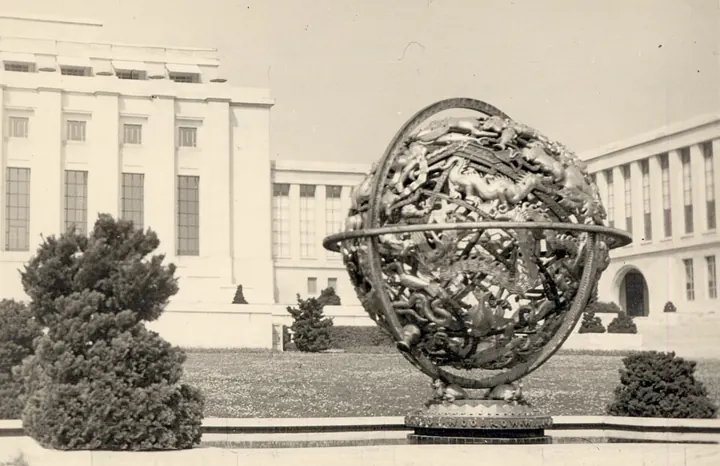
The League was like a residents’ welfare association with rules but no guard. It could talk, warn and fine, but if a powerful member broke the rules, nobody could stop him.
| Point | Detail |
|---|---|
| Set up | 1920, Geneva; Covenant in Part I of the treaty; India a founder member |
| Organs | Assembly, Council, Secretariat; Permanent Court of International Justice; ILO |
| Successes | Åland Islands (1921), refugees, health and labour work |
| Weaknesses | USA never joined; Germany and the USSR in late and briefly; unanimity rule; no army |
| Failures | Manchuria (Japan, 1931), Abyssinia (Italy, 1935–36), German rearmament |
| End | Replaced by the UN; formally dissolved in 1946 |
- Covenant: the League’s rulebook, written into the peace treaty itself.
- Unanimity rule: big decisions needed every member to agree, so one “no” could block action.
- ILO: the International Labour Organization, set up in 1919 for workers’ rights. It still exists and is now part of the UN family.
- Åland Islands: a dispute between Finland and Sweden that the League settled peacefully, giving the islands to Finland.
India was a founder member even though it was not independent, because Britain wanted more votes for its empire.
Consequences
| Consequence | Detail |
|---|---|
| Human cost | About 9–10 million soldiers dead |
| Empires fell | German, Austro-Hungarian, Russian and Ottoman |
| New states | Poland, Czechoslovakia, Yugoslavia, Baltic states; mandates in the Middle East |
| USA and Japan rise | Europe’s dominance weakened |
| Seeds of the next war | Humiliation, reparations, economic chaos, fascism |
| India | Montagu Declaration (1917), Rowlatt Act (1919), Khilafat issue over the Ottoman treaty, a war-driven price rise and Gandhi’s mass politics |
What the war meant for India, step by step
- Hope: Indians expected a reward for their sacrifice. The Home Rule Leagues and the Lucknow Pact (1916) pressed for self-rule.
- Promise: the Montagu Declaration of August 1917 promised gradual responsible government, meaning ministers answerable to elected Indians.
- Betrayal: instead, the Rowlatt Act of 1919 allowed arrest without trial. In April 1919 came the Jallianwala Bagh massacre.
- Anger: Muslims were angry at the harsh treaty with the Ottoman Sultan, seen as the Khalifa (Khilafat issue). High prices hurt everyone.
- Mass movement: Gandhi joined these streams into the Non-Cooperation Movement of 1920.
The war changed the world map and minds
Four royal families lost their thrones. New countries appeared in eastern Europe, built on the idea that each nation should have its own state. Women in many countries took factory jobs during the war, which helped them win the vote soon after, as in Britain in 1918 for women over 30 and the USA in 1920. The USA became the world’s banker. Communism took power in Russia. And millions of soldiers from the colonies came home with new ideas about freedom.
Common doubts
Why is the League called a failure if it did good work? Its main job was to stop wars between big powers, and it could not stop Japan, Italy or Germany. Its social work lived on in the UN, which learned from its mistakes by giving big powers a veto and a way to use force.
What UPSC asks
Prelims: League organs, ILO 1919, India as a founder member, empires that fell. Mains: why the League failed, and how the war changed Indian nationalism.
Mains box: analysis and answer points
- Why the League failed: no USA, no army, unanimity, great powers acting for themselves.
- War and Indian nationalism: hope, promise, betrayal, anger, mass movement.
Practice
Write an answer
In 150 words, explain the significance of World War I with one recent example.
Flashcards (3)
League headquarters?
Geneva.
League failure of 1935–36?
Italian invasion of Abyssinia.
Four empires that fell?
German, Austro-Hungarian, Russian, Ottoman.
Read more: related explainers
 Next chapter · 9. Inter-War Period →Inter-War Period: Depression, fascism, Italy
Syllabus: GS-I · History of the world will include events from 18th century such as industrial re…