
Chapter 10 · Topic 10.2 · Prelims + Mains2 of 3
World War II: The war and its horrors
Key points
- Battles.
- Holocaust.
- Hiroshima.
1 PYQ 2016–2025
Prelims box: facts and traps
| Battle | Significance |
|---|---|
| Blitzkrieg (1939–40) | Poland, Norway, Low Countries, fall of France; Dunkirk evacuation |
| Battle of Britain (1940) | RAF defeated the Luftwaffe; invasion called off |
| Midway (June 1942) | US naval victory turned the Pacific war |
| El Alamein (1942) | Britain halted Rommel in North Africa |
| Stalingrad (1942–43) | German Sixth Army surrendered; the turning point in the east. |
- The bombs killed well over 100,000 people by the end of 1945 and began the nuclear age.
On this page (3 sections)
Main campaigns and battles
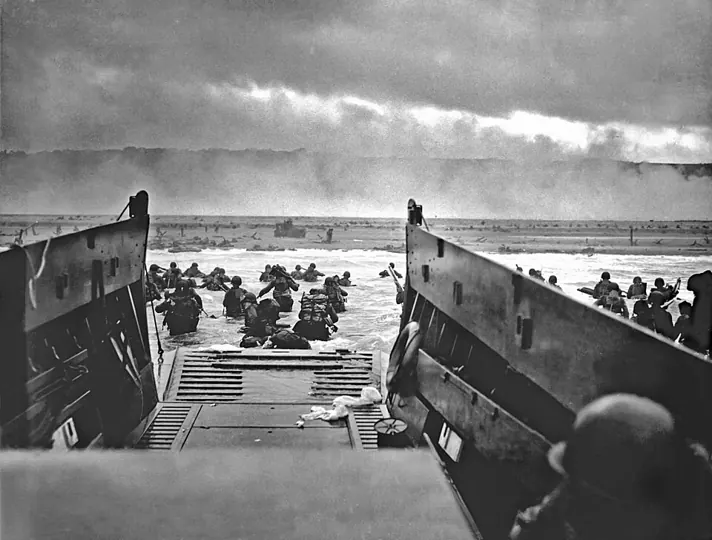
| Battle | Significance |
|---|---|
| Blitzkrieg (1939–40) | Poland, Norway, Low Countries, fall of France; Dunkirk evacuation |
| Battle of Britain (1940) | RAF defeated the Luftwaffe; invasion called off |
| Midway (June 1942) | US naval victory turned the Pacific war |
| El Alamein (1942) | Britain halted Rommel in North Africa |
| Stalingrad (1942–43) | German Sixth Army surrendered; the turning point in the east |
| D-Day (6 June 1944) | Allied landings in Normandy opened the western front |
| Imphal–Kohima (1944) | Japanese invasion of India defeated; INA fought with Japan |
The Holocaust
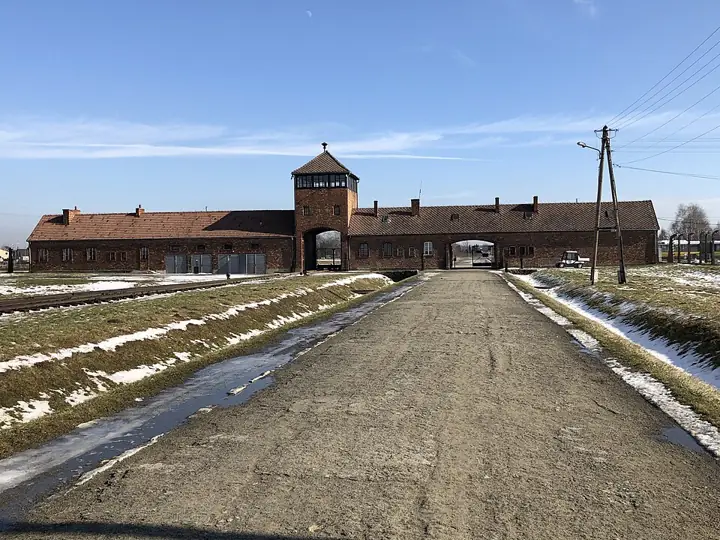
| Stage | Detail |
|---|---|
| Persecution | Nuremberg Laws (1935); Kristallnacht (1938) |
| Ghettos | Jews confined in occupied Poland (Warsaw ghetto) |
| Mass shootings | Einsatzgruppen in the occupied USSR (1941) |
| Final Solution | Wannsee Conference (January 1942) coordinated extermination |
| Death camps | Auschwitz-Birkenau, Treblinka, Sobibor; about 6 million Jews killed, plus Roma, disabled people and others |
| Aftermath | Nuremberg trials (1945–46); Genocide Convention (1948); Universal Declaration of Human Rights (1948) |
Hiroshima, Nagasaki and the end of the war
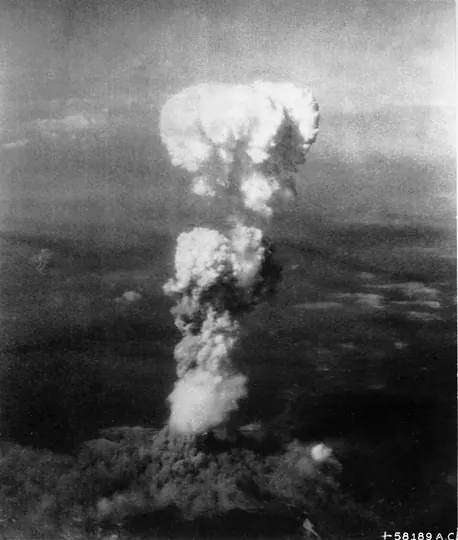
| Event | Date |
|---|---|
| Germany surrendered (VE Day) | 8 May 1945 |
| Potsdam Declaration | 26 July 1945: demand for Japan’s unconditional surrender |
| Hiroshima (‘Little Boy’) | 6 August 1945 |
| Soviet entry against Japan | 8 August 1945 |
| Nagasaki (‘Fat Man’) | 9 August 1945 |
| Japan surrendered | 15 August announced; signed 2 September 1945 |
The bombs killed well over 100,000 people by the end of 1945 and began the nuclear age. The debate over whether they were needed continues, and they shaped the Cold War arms race.
Mains box: analysis and answer points
- Likely next angle: Imphal–Kohima
Practice
Prelims PYQs on this topic (1)
Consider the following statements in respect of the International Bank for Reconstruction and Development (IBRD) :
- I. It provides loans and guarantees to middle income countries.
- II. It works single-handedly to help developing countries to reduce poverty.
- III. It was established to help Europe rebuild after the World War II.
Which of the statements given above are correct?
Answer (c) & explanation
Statements I and III are correct (c). Statement III is right: the IBRD, set up at Bretton Woods in 1944, was meant to rebuild war-torn Europe; its first loan went to France in 1947. Statement I is right: today it gives loans and guarantees to middle-income and creditworthy poorer countries. Statement II is wrong: it works with the IDA, IFC, MIGA and ICSID as the World Bank Group, so "single-handedly" is wrong.
Notice the split: the IDA gives soft loans and grants to the poorest countries, the IFC lends to the private sector, and MIGA gives risk insurance. India is one of the IBRD's largest borrowers, and is not a member of ICSID. The World Bank's twin is the IMF.
"single-handedly". A Bank with four sister bodies does not work alone.
Answer as per the official UPSC answer key.
Write an answer
In 150 words, explain the significance of World War II with one recent example.
Flashcards (8)
Pacific turning point?
Midway (1942).
Eastern turning point?
Stalingrad (1942–43).
D-Day?
6 June 1944, Normandy.
Battles that saved India from Japan?
Imphal and Kohima (1944).
Wannsee Conference?
January 1942.
Trials of Nazi leaders?
Nuremberg (1945–46).
Hiroshima?
6 August 1945.
Nagasaki?
9 August 1945.
Read more: related explainers
 Next topic · 10.3 →World War II: Chapter test
Syllabus: GS-I · History of the world will include events from 18th century such as industrial re…