
Anti-Defection Law (Tenth Schedule): Grounds, Exceptions, Speaker’s Role and Key Judgments (UPSC Notes + PYQs)
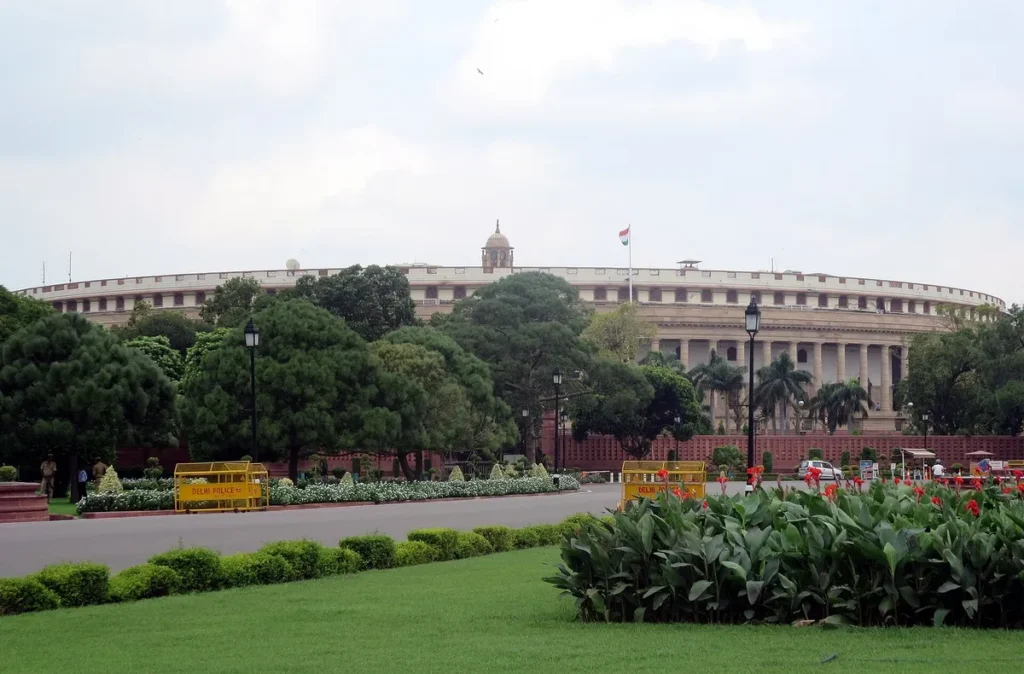
UPSC has already asked about this. Read the story with these questions in mind.
- Prelims 2014Which one of the following Schedules of the Constitution of India contains provisions regarding anti-defection?Solve it below ↓
- Mains 2026 · GS2Examine whether the constitutional office of the Lok Sabha Speaker has become vulnerable to partisan politics under the current anti-defection regime. What institutional changes…See model answer →
Background: Aaya Ram, Gaya Ram
Between the fourth general election of 1967 and early 1971, close to two thousand legislators across India changed parties, and many State governments rose and fell within months. The phrase Aaya Ram, Gaya Ram came from a Haryana MLA, Gaya Lal, who switched sides three times in a single day in 1967. Offices and money, not conviction, often drove these moves, and voters who had chosen a party programme saw their mandate traded away. A committee under Home Minister Y.B. Chavan studied the problem in 1968, but a law came only in 1985, when the 52nd Amendment added the Tenth Schedule to the Constitution. Its aim was simple: a member elected on a party ticket must not betray that party after the election, and if he does, he loses his seat.
Why the law came
“Aaya Ram, Gaya Ram” entered Indian politics in 1967, when Haryana MLA Gaya Lal changed parties three times in a fortnight. In the next few years hundreds of legislators switched sides and several State governments fell. The 1985 amendment tried to tie a member’s seat to the party label on which he or she won.
- 1967Wave of defections after general election
- 1968Y.B. Chavan committee
- 198552nd Amendment adds Tenth Schedule
- 1992Kihoto Hollohan upholds law
- 200391st Amendment ends split exception
- 2020Keisham: decide within three months
Grounds for disqualification
- A party member voluntarily gives up membership. Conduct counts: the Court has treated public anti-party activity as giving up membership.
- Votes or abstains against the party whip without prior permission, unless the party condones it within 15 days.
- An independent member joins a party after election.
- A nominated member joins a party after six months of taking the seat.
Exceptions, then and now
The original law allowed a “split” if one-third of the legislature party broke away. That was abused, so the 91st Amendment (2003) deleted it. It also capped the Council of Ministers at 15% of the lower House and barred defectors from becoming ministers until re-elected. Today only a merger with another party, supported by two-thirds of the legislature party, is protected. Presiding officers who resign their party on election are also exempt.
What the courts have said
- Kihoto Hollohan (1992): upheld the law, but the Speaker acts as a tribunal and the decision is open to judicial review. Paragraph 7, which barred courts, was struck down.
- Keisham Meghachandra (2020): Speakers should decide petitions within three months; the Court suggested an independent tribunal.
- Subhash Desai (2023): the political party, not just the legislature party, issues the whip; the Speaker must decide disqualification petitions in a reasonable time.
- 1Member petitions the Speaker or Chairman
- 2Notice to the member and reply
- 3Speaker hears as a tribunal
- 4Order of disqualification or dismissal
- 5Judicial review in High Court or Supreme Court
Grounds of disqualification at a glance
| Type of member | Disqualified if | Not disqualified if |
|---|---|---|
| Elected on a party ticket | Voluntarily gives up party membership, or votes or abstains against the party whip without permission and is not condoned within 15 days | Two-thirds of the legislature party agree to merge with another party |
| Independent member | Joins any political party after the election | Remains unattached |
| Nominated member | Joins a party after six months from taking the seat | Joins a party within the first six months |
| Presiding officer | Not applicable | Leaves the party on election as Speaker or Chairman, and may rejoin after demitting office |
The problems that remain
Speakers sit on petitions for years when it suits the ruling side. Mass resignations replace defections, since a resigned member is not disqualified and can contest the by-poll. The whip applies to every vote, which silences members on matters of conscience. Reform ideas: the Election Commission or a tribunal to decide (Dinesh Goswami Committee, 1990; Law Commission 170th Report), limiting the whip to confidence and money votes, and fixed timelines.
Key judgments on the Tenth Schedule
| Case | Year | Holding |
|---|---|---|
| Kihoto Hollohan v Zachillhu | 1992 | Tenth Schedule valid; Speaker acts as a tribunal and the decision is open to judicial review; paragraph 7 barring courts struck down |
| Ravi S. Naik v Union of India | 1994 | Voluntarily giving up membership can be inferred from conduct, not only formal resignation |
| G. Viswanathan v Speaker, Tamil Nadu | 1996 | An expelled member stays bound to the party that set him up |
| Rajendra Singh Rana v Swami Prasad Maurya | 2007 | Speaker’s failure to decide a petition is itself reviewable |
| Keisham Meghachandra Singh v Speaker, Manipur | 2020 | Petitions should ordinarily be decided within three months; Parliament may consider an independent tribunal |
| Subhash Desai v Principal Secretary, Governor of Maharashtra | 2023 | Speaker must look to the political party, not just the legislature party, when deciding the real whip |
Reform options for Mains
Four reform ideas recur. First, move the decision from the Speaker to the President or Governor acting on the advice of the Election Commission, as the Dinesh Goswami Committee (1990) and the Law Commission (170th Report, 1999) suggested. Second, set a time limit for disposing of petitions, so that defectors do not serve out a full term while a petition gathers dust. Third, limit the whip to votes that affect the survival of the government, such as confidence motions and Money Bills, so that members can speak their conscience on ordinary legislation; this was urged by the Constitution Review Commission (2002) as well. Fourth, bar defectors from ministerial or paid political posts for the rest of the term, which the 91st Amendment partly did. A balanced answer notes that the law has reduced individual defection but has also weakened debate inside parties, and that group defections and mass resignations to bring down governments have found ways around it.
Anti-defection Law: UPSC angle
For UPSC CSE
Prelims: which Schedule, which amendments, grounds, merger threshold, who decides. Mains GS-II: Speaker’s neutrality, intra-party democracy, resignations as a loophole.
Anti-defection Law UPSC PYQs (Prelims)
Questions UPSC has actually asked, from the official papers. Pick an option to check yourself.
As per agreement with a bank, a businessman had to refund a loan in some equal instalments without interest. After paying 18 instalments he found that 60 percent of his loan was refunded. How many instalments were there in the agreement?
The Tenth Schedule was added by the 52nd Amendment (1985). The 91st Amendment (2003) removed the “split” exception and kept only mergers by two-thirds of the legislature party. Answer as per the official UPSC key · Battle IAS PYQ bankAnswer (c) & why
With reference to anti-defection law in India, consider the following statements :
– 1. The law specifies that a nominated legislator cannot join any political party within six months of being appointed to the House.
– 2. The law does not provide any time-frame within which the presiding officer has to decide a defection case.
Which of the statements given above is/are correct?
The Tenth Schedule works the other way. A nominated member may join a party within six months of taking the seat. After that, joining one leads to disqualification. The Schedule sets no deadline for the presiding officer to decide. In Keisham Meghachandra Singh (2020) the Supreme Court said this should normally be done within three months. Answer as per the official UPSC key · Battle IAS PYQ bankAnswer (b) & why
Mains PYQs on this topic
Questions from the official UPSC Mains papers (2023-2026 in the Battle IAS Mains bank), newest first. Each links to a model answer.
- UPSC Mains 2026 · GS Paper II · Q3 · 10 marks
Examine whether the constitutional office of the Lok Sabha Speaker has become vulnerable to partisan politics under the current anti-defection regime. What institutional changes are required to ensure the neutrality of the Lok Sabha Speaker in managing a polarised House?
Quick quiz
The anti-defection provisions are contained in the
Added by the 52nd Amendment, 1985.Answer (c)
The 91st Amendment removed the exception for
2003.Answer (b)
Kihoto Hollohan held that the Speaker’s decision under the Tenth Schedule is
1992.Answer (b)
FAQs
Who decides a disqualification petition?
The Speaker of the Lok Sabha or the Chairman of the Rajya Sabha, and their State counterparts, subject to judicial review.
Does the law apply to voting in a Presidential election?
No. The whip does not apply to Presidential elections, which use a secret ballot.
Is there a time limit for the Speaker?
The law has none. The Supreme Court in 2020 said three months is reasonable, unless there are exceptional circumstances.
Can a nominated member join a party?
Yes, within six months of taking the seat, without disqualification.
Can a member who is expelled by his party be disqualified?
Expulsion alone does not disqualify, but in G. Viswanathan (1996) the Court held that the expelled member remains attached to his original party for the purposes of the Tenth Schedule, so joining another party later can lead to disqualification.
Which Amendment removed the split exception?
The 91st Amendment, 2003, removed the one-third split exception, leaving only the two-thirds merger exception.
Is there a time limit for the Speaker to decide?
The Schedule sets none. In Keisham Meghachandra Singh (2020) the Supreme Court said petitions should ordinarily be decided within three months.
Spotted an error? Tell us. We correct within 48 hours.
Image: Nikhilb239, Wikimedia Commons, CC BY-SA 4.0
How to use this in Mains
If asked: UPSC Mains 2026, GS-II: Examine whether the constitutional office of the Lok Sabha Speaker has become vulnerable to partisan politics under the current anti-defection regime. What institutional changes are required to ensure the neutrality of the Lok Sabha Speaker in managing a polarised House?
Quote: “Speakers sit on petitions for years when it suits the ruling side.”
Use it: The core problem; follow with the tribunal idea.
In the news

Supreme Court: no prior approval under Section 17A needed to probe a bribe demand
In a judgment of 16 October 2026, a Supreme Court Bench of Justices S.V.N. Bhatti and N.V. Anjaria held that investigating a bribe demand by a public servant does not need prior approval under Section 17A of the Prevention of Corruption Act. Asking for a bribe, the court said, is not part of discharging official duties.
19 Oct 2026
CCPA acts against online sale of explosives: 3,940 sellers delisted from seven platforms
The Central Consumer Protection Authority (CCPA) said on 19 October 2026 that 3,940 sellers of regulated explosives such as ammonium nitrate, picric acid and PETN have been delisted from seven online platforms after its action. It has fined Dial4Trade and ExportersIndia ₹10 lakh per order, and other cases are under hearing or investigation.
19 Oct 2026
India to host 61st CIML meeting on legal metrology in New Delhi, 26–28 October
India will host the 61st meeting of the International Committee of Legal Metrology (CIML) for the first time, in New Delhi from 26 to 28 October 2026. The Department of Consumer Affairs is organising it with the International Organization of Legal Metrology (OIML), and more than 100 delegates are expected, PIB said on 19 October.
19 Oct 2026
NMC withdraws MSMER-2023: medical colleges lose the fixed penalty rulebook, annual disclosure stays
The National Medical Commission (NMC) has de-notified the Maintenance of Standards of Medical Education Regulations, 2023 (MSMER-2023) by a notification dated 14 October 2026, published in the Gazette on 16 October. Its fixed penalties, including seat cuts and fines of up to ₹5 lakh for false records, go with it. The Annual Disclosure Report stays.
19 Oct 2026