
UPSC Prelims 2017 · GS Paper I: Who among the following can join the National Pension System (NPS) ?
Who among the following can join the National Pension System (NPS) ?
Answer (c) & explanation
State Government employees who join after their State notifies NPS can join (c). The National Pension System, regulated by PFRDA, is open to Indian citizens, resident or non-resident, so (a) is wrong. The age range was 18–60 then and is now 18–70, not 21–55, so (b) is wrong. It is compulsory for Central Government employees joining on or after 1 January 2004, but the Armed Forces are kept out, so (d) is wrong twice over. Each State joins from the date it notifies NPS, so (c) is correct.
The Unified Pension Scheme (UPS), in force from April 2025, now lets central employees under NPS choose an assured pension of 50% of their average last-year basic pay. Notice that some States, such as Rajasthan and Himachal, have gone back to the old pension scheme.
option (d) slips in "including those of Armed Forces". One added group spoils the whole option.
Answer as per the official UPSC answer key.
Same theme in UPSC Mains
- MAINS UPSC Mains 2025 · GS Paper II · Q13Discuss the evolution of collegium system in India. Critically examine the advantages and disadvantages of the system of appointment of the Judges of the Supreme Court…
- MAINS UPSC Mains 2024 · GS Paper IV · Q6a“In Indian culture and value system, an equal opportunity has been provided irrespective of gender identity. The number of women in public service has been steadily…
- MAINS UPSC Mains 2024 · GS Paper III · Q13What are the major challenges faced by Indian irrigation system in recent times? State the measures taken by the government for efficient irrigation management.
Related questions from other years
Which one of the following best describes the key objective of India's 'Open Network for Digital Commerce' (ONDC) initiative ?
Answer (c) & explanation
ONDC aims to break the dominance of large platforms (c). The Open Network for Digital Commerce, a DPIIT initiative (2021-22), is an open set of rules, like UPI for shopping. A buyer on one app can buy from a seller listed on another app. This interoperability lets small sellers reach buyers without joining a giant platform. Option (a) is wrong: it does not give the government control of transactions. Option (b) is wrong: private players can join; they are not replaced. Option (d) is wrong: it does not force UPI payments.
Notice ONDC's design: it is a not-for-profit company and part of India's Digital Public Infrastructure, along with Aadhaar, UPI and DigiLocker. It now covers food, groceries and mobility too.
options (a), (b) and (d) use strong words: "all", "replace", "mandate". A public digital platform usually opens a market; it does not take it over.
Answer as per the official UPSC answer key.
Which one of the following statements about Unified Payments Interface (UPI) and Central Bank Digital Currency (Digital Rupee) is not correct ?
Answer (d) & explanation
Statement (d) is not correct (d). Under UPI, money moves between bank accounts; the deposit is a liability of the bank. The Digital Rupee (e₹) is like a currency note in digital form, a direct liability of the RBI, not of users or banks. Option (a) is correct: UPI is a payment system, while the e-rupee is sovereign currency. Option (b) is correct: an e-rupee transfer moves value from wallet to wallet with no separate settlement. Option (c) is correct: e-rupee wallet transactions do not appear in bank statements.
Notice the legal base: the RBI Act was amended in 2022 to let the RBI issue a CBDC. Pilots began that year in wholesale (e₹-W) and retail (e₹-R) forms.
a "not correct" question. Look for the statement that puts the RBI's liability on someone else.
Answer as per the official UPSC answer key.
Which of the following statements about Real-World Assets (RWA) Tokenization are correct ?
- 1. Tokenization is the process of turning real world assets into digital tokens using blockchain technology.
- 2. Tokenization of real world assets offers 24x7 access, promoting financial inclusion.
- 3. Tokenization of real world assets will allow the access to high growth investment opportunities for individuals in India.
Select the answer using the code given below :
Answer (a) & explanation
All three statements are correct (a). Statement 1 is right: tokenization turns a real asset, like a building, bond or gold, into digital tokens recorded on a blockchain. Statement 2 is right: tokens can be traded 24x7, which widens financial inclusion. Statement 3 is right: small, fractional tokens let ordinary individuals get into high-growth investments that once needed crores. So options (b), (c) and (d) fail.
Notice the risks: unclear regulation, cyber threats and weak investor protection. In India, related steps include Fractional Ownership Platforms and REITs and InvITs, which already let small investors own slices of real estate and infrastructure. The RBI is also testing tokenized deposits and government securities in sandbox pilots.
Answer as per the official UPSC answer key.
A bond whose proceeds are used only to finance or refinance a combination of both environmental and social projects is called :
Answer (c) & explanation
This is a sustainability bond (c). Under the ICMA principles followed worldwide, a bond that funds a mix of environmental and social projects is a sustainability bond. Option (a) is wrong: a green bond funds only environmental projects, like solar power. Option (b) is wrong: a social bond funds only social projects, like affordable housing. Option (d) is wrong: a sovereign bond is any bond issued by a national government, whatever its use.
Notice India's practice: India has issued Sovereign Green Bonds since January 2023, with the money going to projects like metro rail and renewable energy. A sustainability-linked bond is different: its money can go anywhere, but its interest rate depends on meeting ESG targets.
"Green Bond" is the most familiar term. The words "both environmental and social" point to the combined label.
Answer as per the official UPSC answer key.
In the news since
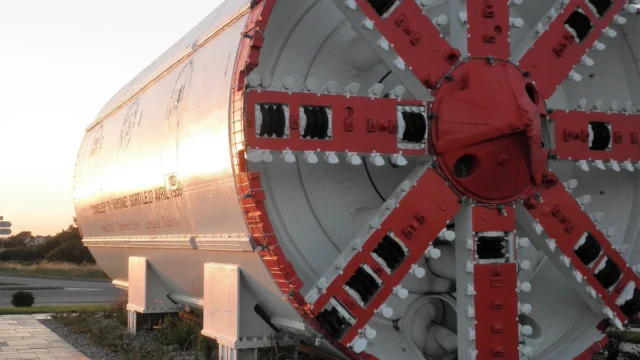
China to impose export controls on tunnel boring machines from 18 November: what it means for India
On 19 October 2026 China’s Commerce Ministry announced export controls on tunnel boring machines (TBMs) and related items from 18 November, calling them clearly dual-use. India imports TBMs for metro, rail and border tunnels and has faced customs delays on Chinese machines since 2024. China also announced controls on some drones.
19 Oct 2026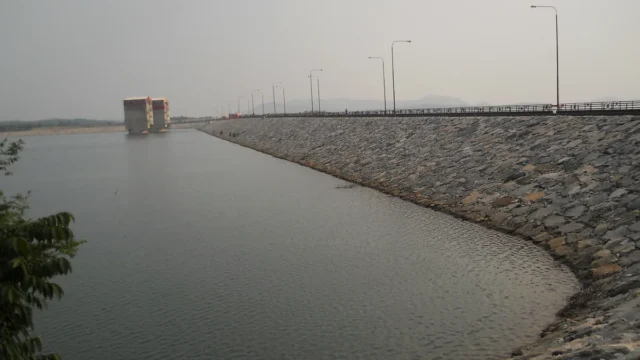
Pumped storage hydropower: India’s roadmap for 100 GW of ‘water batteries’ by 2035-36
A PIB backgrounder of 19 October 2026 explains how pumped storage projects (PSPs) will store solar and wind power for India’s grid. India runs 7.43 GW of pumped storage today, is building 15.87 GW more and has an assessed potential of 345.38 GW. A roadmap aims to add about 100 GW between 2025-26 and 2035-36.
19 Oct 2026
Kufri Jamunia: ICAR-CPRI’s purple potato to fight hidden hunger
A PIB backgrounder of 18 October 2026 puts the spotlight on Kufri Jamunia, a purple-fleshed potato bred by ICAR’s Central Potato Research Institute and released in 2024. It has nearly twice the Vitamin C of a common potato and several times more zinc and iron, along with antioxidants called anthocyanins. The idea is clever: instead of asking people to change what they eat, make the food they already eat more nutritious. That is biofortification.
18 Oct 2026