
Soils of India: ICAR Classification, Alluvial, Black, Red, Laterite, Arid, Saline, Peaty and Forest Soils, Soil Degradation and Conservation (UPSC Notes + PYQs)
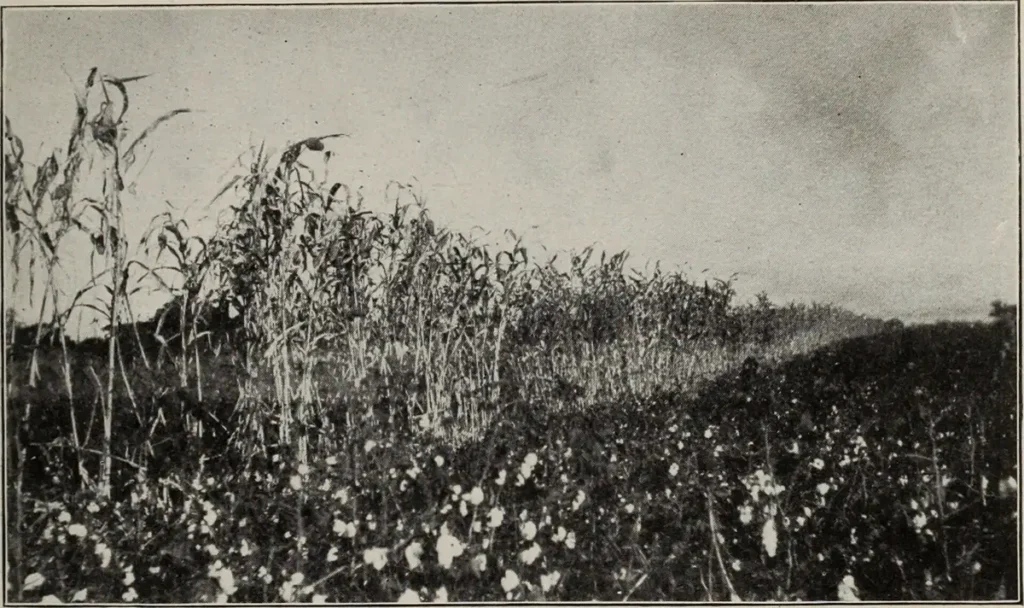
UPSC has already asked about this. Read the story with these questions in mind.
- Prelims 2021The black cotton soil of India has been formed due to the weathering ofSolve it below ↓
- Prelims 2018With reference to agricultural soils, consider the following statements: A high content of organic matter in soil drastically reduces its water holding capacity. …Solve it below ↓
See all 5 PYQs
- Prelims 2011Salinization occurs when the irrigation water accumulated in the soil evaporates, leaving behind salts and minerals. What are the effects of salinization on the…Solve it below ↓
- Prelims 2013Contour bunding is a method of soil conservation used inSolve it below ↓
- Prelims 2013Which of the following statements regarding laterite soils of India are correct?Solve with answer →
How soil forms
Five factors work together: parent material (basalt gives black soil, granite gives red soil), climate (rain and temperature control weathering and leaching), relief (slopes lose soil, valleys gain it), biological activity (plants, microbes and earthworms add humus), and time. A mature soil shows layers, or horizons: the A horizon (topsoil, rich in humus), B (subsoil, where minerals collect) and C (weathered parent rock).
- Parent rockMineral content, texture
- ClimateWeathering, leaching
- ReliefErosion or deposition
- OrganismsHumus, structure
- TimeDepth and maturity
Classification
Old Indian texts divided soil into urvara (fertile) and usara (sterile). In 1986 ICAR, through the National Bureau of Soil Survey and Land Use Planning, adopted the US Department of Agriculture’s soil taxonomy for scientific use; for general study the eight groups below are used.
The major soil types
| Soil | Where | Features | Crops |
|---|---|---|---|
| Alluvial | Indo-Gangetic-Brahmaputra plains, deltas | Deposited by rivers; khadar (new, fertile) and bhangar (old, with kankar); rich in potash, poor in nitrogen and phosphorus | Rice, wheat, sugarcane, pulses |
| Black (regur) | Deccan lava plateau: Maharashtra, Gujarat, MP, parts of Karnataka, Telangana | From basalt; clayey, holds moisture, cracks when dry (“self-ploughing”); rich in lime, iron, magnesia, potash; poor in nitrogen, phosphorus, humus | Cotton, soybean, jowar, groundnut |
| Red and yellow | Eastern and southern Deccan, Odisha, Chhattisgarh | From crystalline rocks; red from iron oxide, yellow when hydrated; porous, less fertile | Millets, pulses, groundnut with irrigation |
| Laterite | High-rainfall areas: Western Ghats, Odisha, Meghalaya, Kerala | Intense leaching removes lime and silica; rich in iron and aluminium oxides; acidic, poor in humus; hardens on exposure (used as bricks) | Tea, coffee, cashew, rubber with manure |
| Arid | Rajasthan, parts of Haryana and Gujarat | Sandy, saline, low humus; kankar layer limits water | Bajra, pulses, guar with irrigation |
| Saline and alkaline (reh, kallar, usar) | Dry areas, waterlogged canal areas of Punjab, Haryana, UP; Rann of Kutch | Salt crust; poor drainage | Reclaimed with gypsum, salt-tolerant crops |
| Peaty and marshy | Kerala (Kuttanad), Sundarbans, coastal Odisha | High organic matter, waterlogged, acidic | Rice |
| Forest and mountain | Himalaya, Western and Eastern Ghats | Thin, acidic on slopes; fertile in valleys | Tea, fruits, spices |
Soil degradation
ISRO’s Desertification and Land Degradation Atlas (2021) found about 97.85 million hectares, roughly 29.7% of India’s land, degraded in 2018-19. The main processes: water erosion (the largest), vegetation loss, wind erosion (Rajasthan, Gujarat), salinisation from over-irrigation and poor drainage (common in canal areas), waterlogging, and loss of organic carbon. Jharkhand, Rajasthan, Delhi, Gujarat and Goa have a high share of degraded land. Gullies or ravines of the Chambal (UP, MP, Rajasthan) are an extreme form of water erosion. India has pledged to restore 26 million hectares of degraded land by 2030 under the UNCCD (Bonn Challenge).
- Water erosion on bare slopes
- Deforestation and overgrazing
- Over-irrigation and poor drainage
- Wind erosion in dry areas
- Excess chemical fertiliser
Soil conservation
- Contour bunding and terracing on slopes; strip cropping; contour ploughing.
- Shelter belts and windbreaks in arid areas.
- Gypsum for alkaline soils; proper drainage for saline lands.
- Organic manure, crop rotation with legumes, zero tillage, mulching.
- Watershed development (Integrated Watershed Management Programme, now WDC-PMKSY).
- Schemes: Soil Health Card (launched 19 February 2015 at Suratgarh, Rajasthan) gives nutrient status and fertiliser advice; neem-coated urea; PM-PRANAM to cut chemical fertiliser use.
Soil Health Card and soil testing
The Soil Health Card scheme (2015) gives farmers a card every two to three years showing the status of 12 parameters in their soil, including nitrogen, phosphorus, potassium, sulphur, zinc, iron, organic carbon and pH, with crop-wise fertiliser advice. Over 24 crore cards have been issued. Indian soils are widely deficient in organic carbon, nitrogen and zinc, while overuse of urea, encouraged by its low controlled price, has skewed the ideal NPK ratio of about 4:2:1 to far higher nitrogen use in Punjab and Haryana. Neem-coated urea (2015), nano urea from IFFCO, and promotion of natural farming under the National Mission on Natural Farming (2024) aim to correct this.
Soils and crops: a quick map
Alluvial soils of the Indo-Gangetic plains support rice, wheat and sugarcane; black soils of the Deccan suit cotton, soybean and pulses; red and yellow soils grow millets and groundnut; laterite soils of Kerala and Karnataka support tea, coffee, cashew and rubber; arid soils of Rajasthan produce bajra and, with irrigation, wheat; saline soils of Gujarat’s Rann and the coastal deltas need gypsum treatment before cropping.
PYQ trend
Prelims asks origin and features: black soil from fissure volcanic rock (2021), organic matter and water holding (2018), salinisation (2011), contour bunding (2013), soil erosion (2014). Mains asked desertification and land degradation (2026) and soil and water in the Ganga basin (2025).
Soils Of India: UPSC angle
For UPSC CSE
Prelims: soil types, features, crops, conservation methods. Mains GS-I: distribution of resources; GS-III: soil health, land degradation and sustainable farming.
Soils Of India UPSC PYQs (Prelims)
Questions UPSC has actually asked, from the official papers. Pick an option to check yourself.
The black cotton soil of India has been formed due to the weathering of
Black (regur) soil formed from the weathering of basalt that poured out through fissures to build the Deccan Traps. It is rich in iron, lime and magnesium, holds moisture, and cracks when dry. It suits cotton, hence its name. Answer as per the official UPSC key · Battle IAS PYQ bankAnswer (b) & why
With reference to agricultural soils, consider the following statements :
– 1. A high content of organic matter in soil drastically reduces its water holding capacity.
– 2. Soil does not play any role in the sulphur cycle.
– 3. Irrigation over a period of time can contribute to the salinization of some agricultural lands.
Which of the statements given above is/are correct ?
Organic matter soaks up water, so it raises the holding capacity. Soil microbes and minerals are central to the sulphur cycle. Heavy irrigation with poor drainage brings salts up to the surface, as in parts of Punjab and Haryana. Only 3 is right. Answer as per the official UPSC key · Battle IAS PYQ bankAnswer (b) & why
Salinization occurs when the irrigation water accumulated in the soil evaporates, leaving behind salts and minerals. What are the effects of salinization on the irrigated land ?
As salts pile up, sodium breaks down the soil’s crumb structure, and a hard crust forms that water cannot pass through. Saline and alkaline soils (reh, usar) become impermeable and lose fertility, as in parts of Punjab and Haryana. Crop yields fall. Answer as per the official UPSC key · Battle IAS PYQ bankAnswer (b) & why
Contour bunding is a method of soil conservation used in
Contour bunding means building earth embankments along the contours of sloping land to stop runoff and soil erosion by water on hill slopes and undulating land. Wind erosion is checked by shelter belts, and flat floodplains need embankments. Answer as per the official UPSC key · Battle IAS PYQ bankAnswer (d) & why
Mains PYQs on this topic
Questions from the official UPSC Mains papers (2023-2026 in the Battle IAS Mains bank), newest first. Each links to a model answer.
- UPSC Mains 2026 · GS Paper I · Q6 · 10 marks
Discuss the role of aeolian processes in desertification and land degradation.
- UPSC Mains 2025 · GS Paper I · Q17 · 15 marks
Discuss the distribution and density of population in the Ganga River Basin with special reference to land, soil and water resources.
Quick quiz
Black cotton soil formed mainly from
Deccan Traps.Answer (b)
Which soil is used for making bricks because it hardens on exposure?
Rich in iron and aluminium oxides.Answer (b)
Usar lands in UP are an example of
Reclaimed with gypsum.Answer (b)
FAQs
Why is black soil good for cotton?
It holds moisture for long and is rich in lime and potash, suiting a long-duration crop.
What is the difference between khadar and bhangar?
Khadar is new alluvium in floodplains, renewed by floods; bhangar is older alluvium on higher ground, often with kankar.
Why are laterite soils poor in nutrients?
Heavy rain leaches away lime, silica and bases, leaving iron and aluminium oxides.
What is the biggest cause of land degradation in India?
Water erosion.
What does a Soil Health Card show?
The status of 12 soil parameters and crop-wise fertiliser advice for a farm.
Spotted an error? Tell us. We correct within 48 hours.
Image: https://commons.wikimedia.org/wiki/File:Indian_cotton_(1915)_(14766910304).jpg
How to use this in Mains
If asked: UPSC Mains 2026, GS-I: Discuss the role of aeolian processes in desertification and land degradation.
Quote: “ISRO’s Desertification and Land Degradation Atlas (2021) found about 97.85 million hectares, roughly 29.7% of India’s land, degraded in 2018-19.”
Use it: Your opening data point on land degradation.
In the news
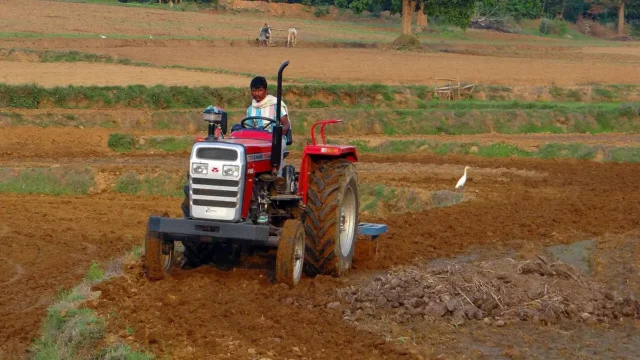
Khet Bachao Abhiyan: Centre reviews 22 October to 30 November farm campaign with States
On 17 October 2026 Union Agriculture Minister Shivraj Singh Chouhan reviewed preparations for the Khet Bachao Abhiyan with agriculture ministers of 11 States and UTs. The campaign runs from 22 October to 30 November 2026. About 4,150 teams of Krishi Vigyan Kendra and ATMA staff, with over 12,000 scientists and officials, plan around 1.5 lakh meetings with farmers on soil health, crop residue, balanced fertiliser use and key schemes.
17 Oct 2026
CAZRI moth bean varieties survive 35-day dry spell in El Niño kharif
The ICAR-Central Arid Zone Research Institute (CAZRI), Jodhpur, reported on 13 September 2026 that its four new moth bean varieties, CAZRI Moth-4, 5, 6 and 7, withstood a dry spell of about 35 days in the El Niño kharif season of 2026. They stayed green and set pods. Moth bean covers nearly 10 lakh hectares in western Rajasthan.
13 Sep 2026
Jute backgrounder: India produced 76 lakh bales of raw jute in 2025-26
A PIB note of 7 September 2026 says India made 76 lakh bales of raw jute and 12.80 lakh MT of jute goods in FY 2025-26, the largest raw jute output in the world. The MSP for raw jute in 2026-27 is ₹5,925 a quintal, and all food grains must be packed in jute.
7 Sep 2026
Backgrounder: India is world’s top coconut producer
A PIB Backgrounder of 18 August 2026 says India ranks first in global coconut production, with 31.24 per cent of the world total. Coconut product exports rose 62 per cent to ₹7,038.35 crore in 2025-26. Copra MSP for 2026 is ₹12,027 per quintal for milling copra, and Budget 2026-27 announced a Coconut Promotion Scheme.
18 Aug 2026