
UP panchayat polls: HC’s three-month deadline, 27% backward class quota and the triple test debate
Next story · 20 OctUP Interest Waiver Scheme-2026: up to 100% relief on old VAT and trade tax dues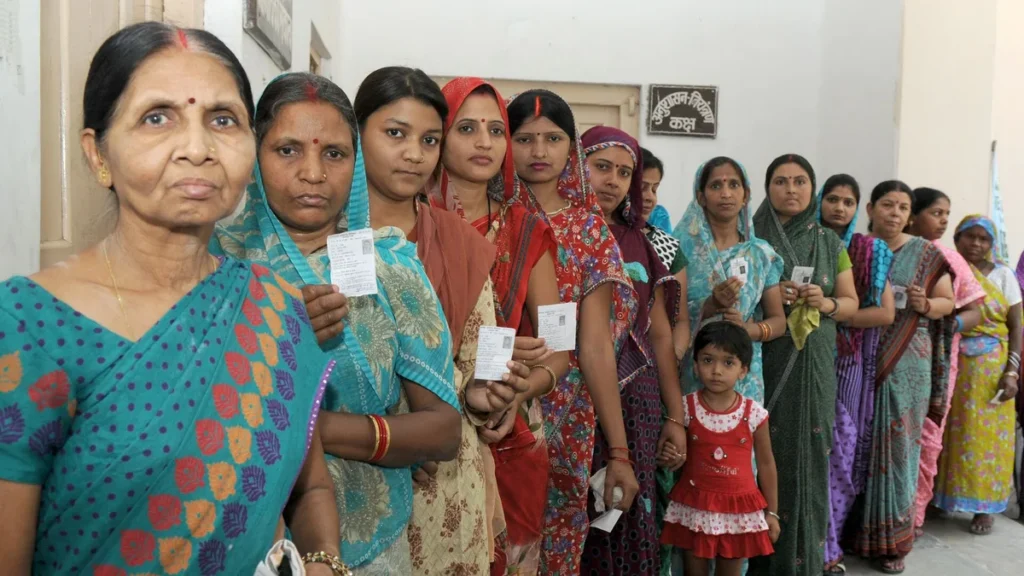
The Allahabad High Court has told the UP government and the State Election Commission to complete three-tier panchayat elections within three months under the existing 27% OBC reservation, rather than wait for the dedicated OBC commission’s report. Panchayat terms ended in May 2026, and outgoing pradhans have been running villages as administrators. On 20 October, the Panchayati Raj Minister said the State is ready, while a pradhans’ body plans to go to the Supreme Court.
- HC order
- 14 Oct 2026
- Deadline
- Three months
- OBC quota
- 27% (existing)
- Terms ended
- May 2026
UP panchayat polls: what happened?
A village pradhan from Kasganj put it simply: before May he could get ₹5 lakh of work done at the Gram Sabha level; now even ₹10 lakh of work needs district approval. That one complaint shows what is at stake when local elections are delayed.
- 14 Oct 2026: Justices Ajit Kumar and Garima Prashad ordered polls within three months (Dashrath Yadav and others).
- Elections must use the existing reservation, including 27% for OBCs; OBC seats cannot be treated as open.
- The HC rejected the challenge to the GO of 25 May 2026 making outgoing pradhans administrators.
- The Hindu, 20 Oct: Minister O.P. Rajbhar says the State is ready; the RPGPS pradhans’ body plans an SC challenge (The Hindu).
What is the triple test?
- Set up a dedicated commission for a contemporaneous, rigorous empirical inquiry into backwardness in local bodies.
- Fix the OBC share local body-wise as the commission recommends.
- Keep total SC, ST and OBC reservation within 50% of seats.
- Laid down in Vikas Kishanrao Gawali (2021), building on K. Krishna Murthy (2010).
How does the HC’s approach compare with the earlier SC route?
| Point | HC order (UP, 2026) | SC orders in Maharashtra and MP cases (2021–22) |
|---|---|---|
| OBC seats if test incomplete | Kept at existing 27% | Treated as general seats |
| Elections | Within three months | Held without waiting |
| Commission | Continues its inquiry | Report needed before OBC quota |
| Aim | No governance vacuum | Constitutional mandate of timely polls |
Which constitutional and legal provisions apply?
- Article 243E: a panchayat’s term is five years; polls must be held before it ends.
- Article 243K: State Election Commission conducts panchayat polls.
- Article 243D(6): States may reserve seats for backward classes.
- UP Panchayat Raj Act, Section 12(3-A): administrators when terms lapse.
How will the polls now proceed?
From HC order to elected panchayats
- SEC issues the election programme
- Existing 27% OBC quota applied
- Gram, kshetra and zila polls held
- Elected bodies formed in three months
- Commission report used later
Why does this matter?
| Angle | What to note |
|---|---|
| Local democracy | Article 243E bars long gaps without elected bodies. |
| OBC reservation | Clash between timely polls and the triple test. |
| Electoral rolls | UP keeps separate rolls for local polls. |
| Governance | Administrators have limited financial powers. |
What are the challenges?
- The HC’s 27% route may be challenged as against the triple test.
- Separate panchayat and Assembly voter rolls raise mismatch claims.
- Polls close to the 2027 Assembly election strain the machinery.
- Delayed polls weaken grassroots decision-making.
What should be done next?
- SEC should announce a clear time-bound schedule.
- The dedicated commission should finish its empirical study quickly.
- Clean and reconcile panchayat voter rolls.
- Set up such commissions well before terms end in future.
What can UPPCS ask on panchayat elections?
- Three tiers in UP: gram panchayat, kshetra panchayat, zila panchayat.
- Article 243K: State Election Commission.
- Triple test: Vikas Kishanrao Gawali v State of Maharashtra (2021).
- 50% ceiling on total vertical reservation in local bodies.
- 73rd Amendment, 1992 added Part IX (Articles 243–243O).
How to write about local body polls in Mains
Practice question (10 marks, 150 words): Timely elections and fair OBC representation are both constitutional values. Discuss in the context of UP panchayat elections. (UPPCS GS-V)
- Intro: HC order of 14 Oct 2026; terms ended May 2026.
- Law: Articles 243E, 243K, 243D; triple test.
- HC balance: polls in three months, existing 27%.
- Issues: SC challenge, voter rolls, timing.
- Way out: early commissions, clean rolls, schedule.
Image: Women voters queue at a polling booth in Varanasi, Uttar Pradesh (2014). Election Commission of India, Wikimedia Commons, GODL-India
Read all of October 2026 in the monthly UP current affairs compilation →
How to use this in Mains
If asked: Discuss the role of the State Election Commission in strengthening local democracy. (UPPCS GS-V)
Quote: “The State Government and the State Election Commission shall proceed forthwith with the preparatory steps, issue the election programme, and complete the elections to the village panchayats in Uttar Pradesh within three months from the date of this judgement.”
Use it: Use it to show courts enforcing Article 243E; add the SEC’s duty under Article 243K.
If asked: Examine the triple test for OBC reservation in local bodies. (UPPCS GS-V)
Quote: “The elections shall not be conducted by treating the OBC-reserved seats as open seats merely because the Dedicated Commission's inquiry remains pending.”
Use it: Quote it to explain the HC’s balance; then note the pending SC challenge.
Exam angle
UPPCS GS-V: Panchayati Raj in UP, SEC, OBC reservation and the triple test; Prelims: Articles 243E, 243K, 243D.
Practice MCQs
Original practice questions (not PYQs).
Which Article of the Constitution vests the superintendence of panchayat elections in the State Election Commission?
Answer (b) & explanation
Article 243K creates the SEC; Article 324 is for the Election Commission of India.
Consider the following about the triple test for OBC reservation in local bodies:
1. It requires a dedicated commission for empirical inquiry.
2. It allows total SC, ST and OBC reservation above 50%.
3. It was laid down in Vikas Kishanrao Gawali (2021).
How many of the statements given above are correct?
Answer (b) & explanation
Statements 1 and 3 are correct. The aggregate must not exceed 50%.
Under Article 243E, the normal term of a panchayat is
Answer (c) & explanation
A panchayat continues for five years from its first meeting, and elections must be completed before expiry.
Questions students ask about this
What did the High Court order?
Panchayat elections in UP within three months, under the existing 27% OBC reservation.
Why were the polls delayed?
The State was awaiting the dedicated OBC commission’s report after terms ended in May 2026.
Who runs villages now?
Outgoing pradhans act as administrators; the HC upheld this arrangement.
Will there be an SC appeal?
The Rashtriya Panchayatiraj Gram Pradhan Sangathan said it would challenge the order.
Keep studying
Go deeper
facts from cited sources only; cross-checked; faculty review pending