
UPSC Mains 2025 GS1 Q6: model answer
Explain briefly the ecological and economic benefits of solar energy generation in India with suitable examples.
What the question wants
Two lists, ecological and economic, each backed by Indian examples.
How to structure it
Intro: India's solar capacity and targets. Body: ecological benefits; economic benefits; examples. Conclusion: with a caveat on land and waste.
- 1Ecological benefits
- 2Economic benefits
- 3Examples
Model answer
India has crossed 100 GW of installed solar capacity (2025) on the way to its 500 GW non-fossil target for 2030.
Ecological benefits
- Lower CO2 and particulate emissions than coal, helping the NDC goal of 45% lower emissions intensity by 2030.
- Very little water use compared with thermal plants, which matters in water-stressed States.
- Canal-top and floating plants (Gujarat canals, Omkareshwar floating project) reduce evaporation and save land.
Economic benefits
- Cheaper power: auction tariffs near ₹2.5/unit, below new coal.
- Energy security: fewer fuel imports.
- Farm income: PM-KUSUM solar pumps and feeder solarisation; PM Surya Ghar rooftop scheme cuts household bills.
- Jobs and industry: module manufacturing under the PLI scheme; parks like Bhadla (Rajasthan) and Pavagada (Karnataka).
- Village access: Modhera in Gujarat, India's first solar-powered village.
Land use, grid storage and panel waste need planning, but the balance of benefit is strong.
Keywords, cases and data to drop in
500 GW non-fossil by 2030 PM-KUSUM PM Surya Ghar Bhadla solar park Omkareshwar floating Modhera ISA
Where most answers lose marks
- Mixing up ecological and economic benefits.
- No examples.
- Ignoring constraints entirely; one line on them adds balance.
Fresh examples from current affairs
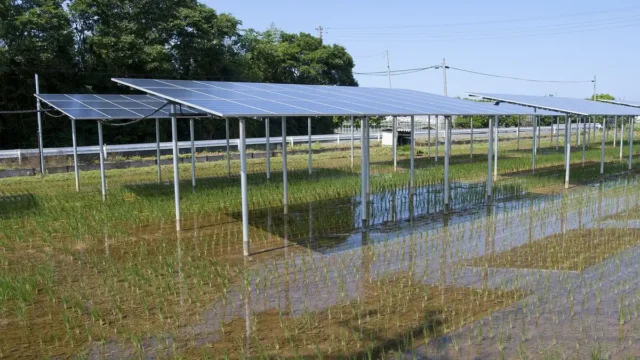
Agrivoltaics: Centre plans a scheme to push solar panels above farms; 5 GW seen in 3–4 years
MNRE Secretary Santosh Kumar Sarangi said on 19 October 2026 that the Centre is planning a central sector scheme to help States adopt agrivoltaics, either standalone or within PM-KUSUM 2.0. He expects capacity to cross 5 GW in three to four years if States notify feed-in tariffs. India hosts the 7th Agrivoltaics World Conference in New Delhi from 21 to 23 October.
UPSC angle: Prelims: agrivoltaics, PM-KUSUM components, feed-in tariffs. · Mains GS-III: energy transition and food security.
20 Oct 2026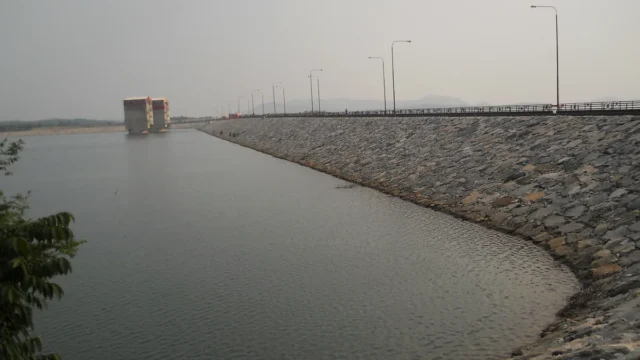
Pumped storage hydropower: India’s roadmap for 100 GW of ‘water batteries’ by 2035-36
A PIB backgrounder of 19 October 2026 explains how pumped storage projects (PSPs) will store solar and wind power for India’s grid. India runs 7.43 GW of pumped storage today, is building 15.87 GW more and has an assessed potential of 345.38 GW. A roadmap aims to add about 100 GW between 2025-26 and 2035-36.
UPSC angle: Prelims: PSP types, CEA, ISTS waiver, IRENA ranking. · Mains GS-III: storage and the clean energy transition.
19 Oct 2026
Oil companies bar sugar-based ethanol for 2026-27; maize incentive cut to ₹2.79 a litre
The oil marketing companies have kept sugar out of India’s ethanol programme for the coming year. The tender issued on 16 October 2026 seeks about 11 billion litres of ethanol for the 2026-27 supply year, but asks for none made from sugarcane juice, sugar syrup or B-heavy molasses, because the Government wants sugar diversion for ethanol cut to zero. Grain must now carry the load, and even the maize incentive has been cut. Read this as a live example of the food-versus-fuel trade-off.
UPSC angle: Prelims: E20, NPB 2018, molasses grades, feedstocks. · Mains GS-III: energy security vs food security; farm incomes.
18 Oct 2026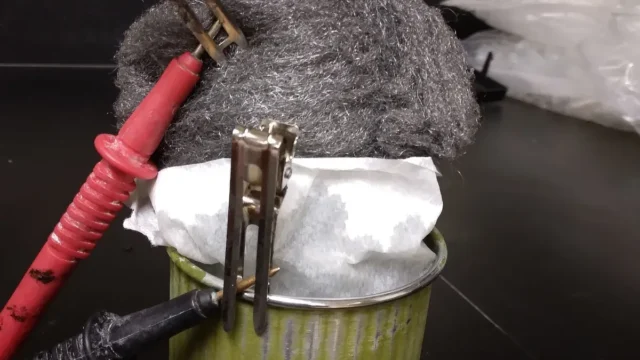
Metal-free porous catalyst could cut cost of zinc–air batteries and fuel cells
Scientists from S.N. Bose Centre Kolkata, INST Mohali and SRM University Amaravati made a metal-free porous organic catalyst, TTT-DHTD, for the oxygen reduction reaction in zinc-air batteries. It reached about 96% of commercial platinum's performance and stayed stable for 120 hours. Replacing platinum could cut the cost of zinc-air batteries and fuel cells.
UPSC angle: Prelims: battery chemistries. · Mains GS-III: energy storage, indigenous research.
7 Oct 2026Learn the concept
Question text as printed in the official UPSC question paper: https://www.upsc.gov.in/sites/default/files/GENERAL-STUDIES-PAPER%20I-QP-CSM-25-010925.pdf The model answer is original Battle IAS work; use it to learn structure, not to memorise.