
UPSC Mains 2025 GS3 Q17: model answer
Mineral resources are fundamental to the country’s economy and these are exploited by mining. Why is mining considered an environmental hazard ? Explain the remedial measures required to reduce the environmental hazard due to mining.
What the question wants
Environmental harms of mining and remedies.
How to structure it
Intro: Coal, iron ore, bauxite and limestone power India's industry. Body: (1) Why mining is hazardous: Land, Water, Air, Biodiversity; (2) Remedial measures: Planning, Technology, Reclamation, Laws. Conclusion: Mining cannot be avoided, but it can be done responsibly.
- 1(1) Why mining is hazardous: Land, Water, Air, Biodiversity
- 2(2) Remedial measures: Planning, Technology, Reclamation, Laws
Model answer
Coal, iron ore, bauxite and limestone power India's industry. But mining, especially open-cast mining, disturbs land, water and air more than most activities.
Why mining is hazardous
- Land: loss of forests and topsoil; abandoned pits; land subsidence (Jharia coalfield, burning for over a century).
- Water: acid mine drainage, heavy metals, lowered water tables; tailings dam failures.
- Air: dust and particulates; respiratory disease and silicosis among workers.
- Biodiversity: fragmentation of elephant corridors (Hasdeo Arand), loss of Western Ghats habitats.
- Hills and rivers: illegal mining in the Aravallis; sand mining eroding river beds.
- Social: displacement of tribal communities.
Remedial measures
- Planning: strict EIA, cumulative impact studies, no-go areas in dense forests.
- Technology: dust suppression, covered conveyors, water recycling, scientific tailings management.
- Reclamation: mine closure plans with backfilling and afforestation, enforced through financial guarantees.
- Laws: MMDR Act amendments (2015) for auctions and District Mineral Foundations; PMKKKY uses DMF money for affected people.
- Monitoring: satellite and drone checks against illegal mining; Supreme Court's orders in Goa and Aravalli cases show judicial watch.
- Community: Gram Sabha consent (Niyamgiri, 2013) and benefit sharing.
- Sustainable Development Framework and star rating of mines by the Ministry of Mines.
Mining cannot be avoided, but it can be done responsibly. The cost of restoring land must be counted as part of the cost of extracting minerals.
Keywords, cases and data to drop in
acid mine drainage Jharia EIA mine closure DMF PMKKKY Niyamgiri
Where most answers lose marks
- Writing only about the economy.
Fresh examples from current affairs
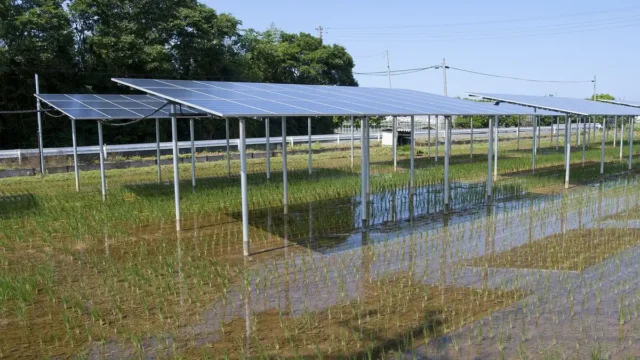
Agrivoltaics: Centre plans a scheme to push solar panels above farms; 5 GW seen in 3–4 years
MNRE Secretary Santosh Kumar Sarangi said on 19 October 2026 that the Centre is planning a central sector scheme to help States adopt agrivoltaics, either standalone or within PM-KUSUM 2.0. He expects capacity to cross 5 GW in three to four years if States notify feed-in tariffs. India hosts the 7th Agrivoltaics World Conference in New Delhi from 21 to 23 October.
UPSC angle: Prelims: agrivoltaics, PM-KUSUM components, feed-in tariffs. · Mains GS-III: energy transition and food security.
20 Oct 2026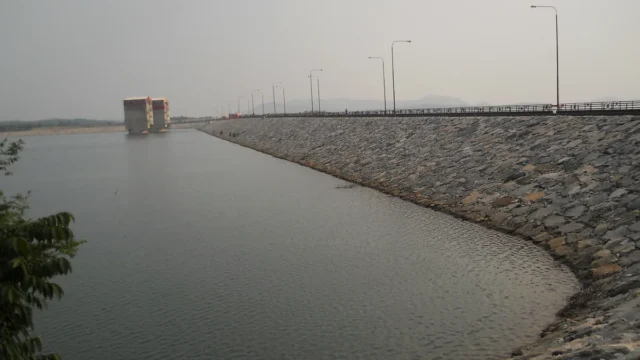
Pumped storage hydropower: India’s roadmap for 100 GW of ‘water batteries’ by 2035-36
A PIB backgrounder of 19 October 2026 explains how pumped storage projects (PSPs) will store solar and wind power for India’s grid. India runs 7.43 GW of pumped storage today, is building 15.87 GW more and has an assessed potential of 345.38 GW. A roadmap aims to add about 100 GW between 2025-26 and 2035-36.
UPSC angle: Prelims: PSP types, CEA, ISTS waiver, IRENA ranking. · Mains GS-III: storage and the clean energy transition.
19 Oct 2026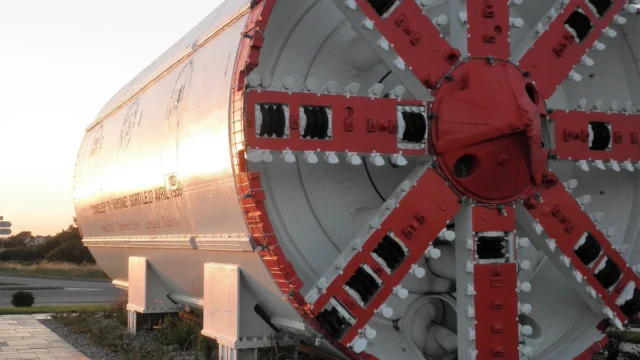
China to impose export controls on tunnel boring machines from 18 November: what it means for India
On 19 October 2026 China’s Commerce Ministry announced export controls on tunnel boring machines (TBMs) and related items from 18 November, calling them clearly dual-use. India imports TBMs for metro, rail and border tunnels and has faced customs delays on Chinese machines since 2024. China also announced controls on some drones.
UPSC angle: Prelims: export control regimes, SCOMET, Wassenaar, MTCR. · Mains GS-II/III: China dependence and supply-chain resilience.
19 Oct 2026
Oil companies bar sugar-based ethanol for 2026-27; maize incentive cut to ₹2.79 a litre
The oil marketing companies have kept sugar out of India’s ethanol programme for the coming year. The tender issued on 16 October 2026 seeks about 11 billion litres of ethanol for the 2026-27 supply year, but asks for none made from sugarcane juice, sugar syrup or B-heavy molasses, because the Government wants sugar diversion for ethanol cut to zero. Grain must now carry the load, and even the maize incentive has been cut. Read this as a live example of the food-versus-fuel trade-off.
UPSC angle: Prelims: E20, NPB 2018, molasses grades, feedstocks. · Mains GS-III: energy security vs food security; farm incomes.
18 Oct 2026Learn the concept
Question text as printed in the official UPSC question paper: https://www.upsc.gov.in/sites/default/files/GENERAL-STUDIES-PAPER-III-QP-CSM-25-010925.pdf The model answer is original Battle IAS work; use it to learn structure, not to memorise.