
Production Linked Incentive (PLI) Scheme: Rationale, 14 Sectors, Design, Achievements in Mobiles and Electronics, Criticism and Reforms (UPSC Notes + PYQs)
UPSC has already asked about this. Read the story with these questions in mind.
- Prelims 2023Consider the following statements :Statement-I :India accounts for 3.2% of global export of goods.Statement-II :Many local companies and some foreign companies operating in India…Solve it below ↓
- Mains 2025 · GS3Discuss the rationale of the Production Linked Incentive (PLI) scheme. What are its achievements ? In what way can the functioning and outcomes of…See model answer →
Rationale
Manufacturing has stayed at about 15-17% of India’s GDP for decades, while East Asian economies grew rich by becoming factories for the world. Indian firms face higher costs of power, logistics, credit and compliance, and they lack scale. Past tools such as tariff protection and tax holidays did not fix this. The PLI idea is simple: reward output, not input. A firm gets cash only if it actually produces and sells more. It also draws global firms looking to diversify supply chains away from China (“China plus one”).
Design
- Incentive of roughly 4-6% (varies by sector, up to 20% in some) on incremental sales over a base year, for about five years.
- Firms must meet thresholds for investment and sales growth; selection is by application or bidding.
- Some schemes reward domestic value addition (for example, batteries and solar modules).
- Run by the line ministry for each sector, with an empowered group of secretaries overseeing.
- 1Firm selected under a sector scheme
- 2Invests and raises production in India
- 3Sales above base year are verified
- 4Incentive of a set % of incremental sales paid
- 5Repeats yearly for about five years
The 14 sectors
| Sector | Ministry/Department |
|---|---|
| Large-scale electronics (mobiles) | MeitY |
| IT hardware (laptops, servers) | MeitY |
| Pharmaceuticals; key starting materials and APIs | Pharmaceuticals |
| Medical devices | Pharmaceuticals |
| Telecom and networking products | Telecommunications |
| Food products | Food Processing Industries |
| White goods (ACs, LEDs) | DPIIT |
| High-efficiency solar PV modules | MNRE |
| Automobiles and auto components | Heavy Industries |
| Advanced chemistry cell batteries | Heavy Industries |
| Textiles (man-made fibre, technical) | Textiles |
| Specialty steel | Steel |
| Drones and components | Civil Aviation |
Pharmaceuticals has two separate schemes (bulk drugs and finished drugs), which with the above makes 14.
What it has achieved
- Mobile phones: India became the world’s second-largest phone maker; smartphone exports rose from about USD 0.3 billion in 2017-18 to over USD 20 billion in 2024-25, led by Apple’s contract makers and Samsung. Phones became one of India’s top export items.
- Pharma: domestic production of bulk drugs such as penicillin-G began again after decades of dependence on China.
- The Government reported investment of over ₹1.5 lakh crore, production worth over ₹14 lakh crore and over 11 lakh jobs linked to PLI by 2024.
- Food PLI helped Indian brands of millet products and processed food enter foreign markets.
Criticism
- Low value addition: economists including Raghuram Rajan argued (2023) that phone “manufacturing” is mostly assembly of imported parts, so subsidies may exceed real value added.
- Slow disbursement: only a fraction of the outlay had been paid by 2024-25; some sectors (specialty steel, ACC batteries) lagged badly.
- Concentration: a few large firms get most of the money.
- Fiscal cost and WTO risk: export-linked subsidies can be challenged.
- Jobs: capital-intensive sectors create fewer jobs than garments or footwear, which were left out at first.
- Rewards output, not promises
- Built mobile phone exports
- Attracted global supply chains
- Revived bulk drug production
- Mostly assembly of imports
- Slow disbursement
- Few big beneficiaries
- Few jobs per rupee
Improving outcomes
Link incentives to domestic value addition and components, not just final assembly; this is the logic of the Electronics Component Manufacturing Scheme (2025) and the semiconductor mission. Speed up payments, add labour-intensive sectors such as footwear and toys, cut tariffs on inputs to keep costs low, and invest in logistics and skills so that firms remain after subsidies end.
Semiconductors and the next wave
PLI was followed by bigger bets on industries where India had almost no base. The India Semiconductor Mission (2021), with an outlay of about ₹76,000 crore, offers up to half the project cost for chip fabs, display fabs and assembly, testing and packaging units. Micron’s assembly plant at Sanand, the Tata-PSMC fab at Dholera and several packaging units in Gujarat, Assam and Uttar Pradesh were approved in 2023-25, and the first India-made chips were shown in 2025. The Electronics Component Manufacturing Scheme (2025) targets parts such as printed circuit boards, camera modules and passive components, answering the criticism that PLI rewarded only assembly. Together these show a shift from subsidising final goods to building deeper supply chains.
What economists measure
To judge PLI fairly, analysts look at domestic value addition (the share of a product’s value created in India), the cost per job, export growth net of imported inputs, and whether firms keep producing after incentives end. In mobiles, value addition rose from very low levels to an estimated 15-20%, compared with far higher levels in China and Vietnam. The test of PLI will be whether that share keeps rising.
PLI and the WTO
Because PLI pays on sales, including domestic sales, India argues it is not an export subsidy banned under the WTO Agreement on Subsidies. Linking payouts to exports alone would invite a challenge, as India’s older export schemes did in the 2019 US dispute.
How PLI differs from earlier industrial policy
India has tried many routes to industrial growth. The licence-permit system before 1991 told firms what to make and where. Export Processing Zones (from Kandla in 1965) and later Special Economic Zones (SEZ Act, 2005) offered tax holidays and duty-free imports inside fenced areas; many SEZ plots stayed vacant, and the tax breaks were phased out from 2020. The Make in India campaign (2014) focused on ease of doing business and FDI limits. The Merchandise Exports from India Scheme (MEIS) gave export rebates until a WTO panel ruled against it in 2019; it was replaced by RoDTEP (Remission of Duties and Taxes on Export Products), which only refunds embedded taxes.
PLI differs in three ways. It is sector-specific, picking industries where India can gain scale. It is output-linked, paid after sales are verified, so idle capacity earns nothing. And it is time-bound, meant to help firms cross a cost hump, after which scale economies should keep them competitive. The risk is the classic one of industrial policy: the State may pick the wrong sectors, and firms may lobby for extensions when the subsidy ends.
Lessons from abroad
South Korea and Taiwan in the 1960s-80s tied support to export performance and withdrew it from firms that failed. China’s rise in electronics combined cheap land and power, huge industrial clusters and a deep component ecosystem. The US Inflation Reduction Act (2022) and CHIPS Act (2022) show that rich countries also use production subsidies now. The lesson for India is that subsidies work best with a discipline test (export or value-addition targets), good infrastructure, and a clear end date.
PYQ trend
Prelims 2023 linked PLI to India’s export share. Mains GS-III 2025 asked the rationale, achievements and improvements of PLI directly. Pair it with MSMEs and Make in India.
PLI Scheme: UPSC angle
For UPSC CSE
Prelims: sectors, design. Mains GS-III: industrial policy, manufacturing, exports and jobs.
PLI Scheme UPSC PYQs (Prelims)
Questions UPSC has actually asked, from the official papers. Pick an option to check yourself.
Consider the following statements :
Statement-I :
India accounts for 3.2% of global export of goods.
Statement-II :
Many local companies and some foreign companies operating in India have taken advantage of India's 'Production-linked Incentive' scheme.
Which one of the following is correct in respect of the above statements?
India’s share of world merchandise exports is only about 1.8%. In services exports its share is higher, over 4%. The PLI scheme (2020) covers 14 sectors and has drawn both Indian firms and foreign ones such as Apple’s suppliers. So Statement I is wrong and Statement II is right. Answer as per the official UPSC key · Battle IAS PYQ bankAnswer (d) & why
Mains PYQs on this topic
Questions from the official UPSC Mains papers (2023-2026 in the Battle IAS Mains bank), newest first. Each links to a model answer.
- UPSC Mains 2025 · GS Paper III · Q12 · 15 marks
Discuss the rationale of the Production Linked Incentive (PLI) scheme. What are its achievements ? In what way can the functioning and outcomes of the scheme be improved ?
Quick quiz
PLI incentives are calculated on
Incentives are a share of incremental sales.Answer (b)
Which sector was covered by the first PLI scheme?
Large-scale electronics manufacturing, 2020.Answer (b)
The total PLI outlay across 14 sectors is about
About ₹1.97 lakh crore.Answer (c)
FAQs
Is PLI a subsidy?
Yes, a performance-linked subsidy paid after production and sales rise.
How many sectors does PLI cover?
14 sectors.
Why is value addition a concern?
Much of the output is assembly of imported components, so local value added may be low.
Did PLI work for mobiles?
Yes. Production and exports rose sharply, making India the second-largest phone producer.
What is “China plus one”?
Global firms adding a second production base outside China to reduce risk.
Spotted an error? Tell us. We correct within 48 hours.
How to use this in Mains
If asked: UPSC Mains 2025, GS-III: Discuss the rationale of the Production Linked Incentive (PLI) scheme. What are its achievements ? In what way can the functioning and outcomes of the scheme be improved ?
Quote: “Low value addition: economists including Raghuram Rajan argued (2023) that phone “manufacturing” is mostly assembly of imported parts, so subsidies may exceed real value added.”
Use it: Use as a balanced criticism after listing PLI achievements.
In the news
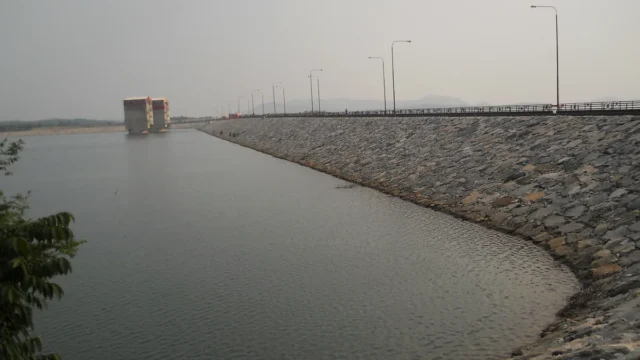
Pumped storage hydropower: India’s roadmap for 100 GW of ‘water batteries’ by 2035-36
A PIB backgrounder of 19 October 2026 explains how pumped storage projects (PSPs) will store solar and wind power for India’s grid. India runs 7.43 GW of pumped storage today, is building 15.87 GW more and has an assessed potential of 345.38 GW. A roadmap aims to add about 100 GW between 2025-26 and 2035-36.
19 Oct 2026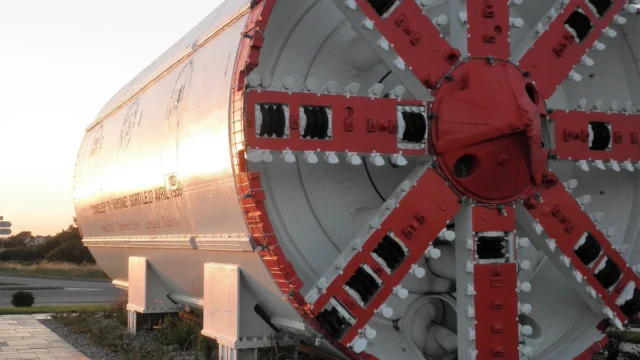
China to impose export controls on tunnel boring machines from 18 November: what it means for India
On 19 October 2026 China’s Commerce Ministry announced export controls on tunnel boring machines (TBMs) and related items from 18 November, calling them clearly dual-use. India imports TBMs for metro, rail and border tunnels and has faced customs delays on Chinese machines since 2024. China also announced controls on some drones.
19 Oct 2026
Oil companies bar sugar-based ethanol for 2026-27; maize incentive cut to ₹2.79 a litre
The oil marketing companies have kept sugar out of India’s ethanol programme for the coming year. The tender issued on 16 October 2026 seeks about 11 billion litres of ethanol for the 2026-27 supply year, but asks for none made from sugarcane juice, sugar syrup or B-heavy molasses, because the Government wants sugar diversion for ethanol cut to zero. Grain must now carry the load, and even the maize incentive has been cut. Read this as a live example of the food-versus-fuel trade-off.
18 Oct 2026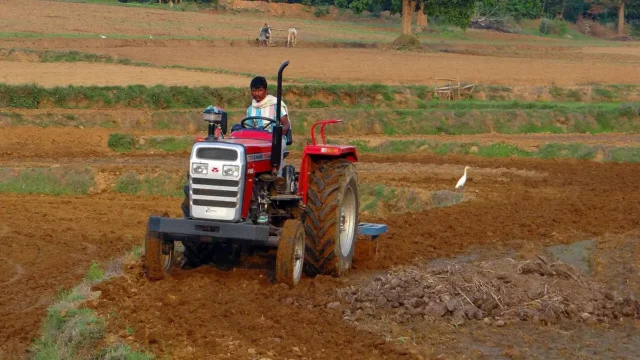
Khet Bachao Abhiyan: Centre reviews 22 October to 30 November farm campaign with States
On 17 October 2026 Union Agriculture Minister Shivraj Singh Chouhan reviewed preparations for the Khet Bachao Abhiyan with agriculture ministers of 11 States and UTs. The campaign runs from 22 October to 30 November 2026. About 4,150 teams of Krishi Vigyan Kendra and ATMA staff, with over 12,000 scientists and officials, plan around 1.5 lakh meetings with farmers on soil health, crop residue, balanced fertiliser use and key schemes.
17 Oct 2026