
UPSC Mains 2023 GS3 Q17: model answer
Comment on the National Wetland Conservation Programme initiated by the Government of India and name a few India’s wetlands of international importance included in the Ramsar Sites.
What the question wants
The programme's evolution and evaluation, plus examples of Ramsar sites.
How to structure it
Intro: wetlands importance; NWCP started 1985-86. Body: (1) Programme: NWCP (1985-86) for identification and conservation; merged with NLCP into NPCA (2015); Wetlands (Conservation and Management) Rules 2017; State Wetland Authorities; Wetlands Rejuvenation; Amrit Dharohar (2023), MISHTI; Save Wetlands campaign; (2) Assessment: gains and gaps (encroachment, pollution, weak authorities, inventory); (3) Ramsar sites: India has 80+ sites; examples Chilika (first, 1981), Keoladeo (1981), Wular, Loktak, Sambhar, Sundarbans, Vembanad-Kol, Bhitarkanika. Conclusion: community stewardship.
- 1(1) Programme: NWCP (1985-86) for identification and conservation
- 2Merged with NLCP into NPCA (2015)
- 3Wetlands (Conservation and Management) Rules 2017
- 4State Wetland Authorities
- 5Wetlands Rejuvenation
- 6Amrit Dharohar (2023), MISHTI
- 7Save Wetlands campaign
- 8(2) Assessment: gains and gaps (encroachment, pollution, weak authorities, inventory)
Model answer
Wetlands purify water, recharge groundwater, buffer floods, store carbon and support birds and fisheries. Yet India has lost a large share of its wetlands to urban growth and farming.
National Wetland Conservation Programme
- Launched in 1985-86 to identify wetlands and help States prepare management action plans.
- In 2015 it merged with the National Lake Conservation Plan to form the National Plan for Conservation of Aquatic Ecosystems (NPCA), with Centre-State cost sharing.
- Wetlands (Conservation and Management) Rules, 2017 created State Wetland Authorities and banned harmful activities in notified wetlands.
- Save Wetlands campaign and Wetland Mitras build public participation.
- Amrit Dharohar (2023) promotes eco-tourism and local livelihoods at Ramsar sites; MISHTI restores mangroves.
Assessment
- Gains: more sites notified, the number of Ramsar sites has risen sharply since 2019, and management plans exist for many.
- Gaps: encroachment, sewage and solid waste (as in Bengaluru's lakes and Deepor Beel), weak State authorities, slow notification, small budgets, and the 2017 Rules' narrower definition, which excludes some river channels and paddy areas.
Ramsar sites in India
India joined the Ramsar Convention in 1982 and has over 80 sites. Examples:
- Chilika Lake, Odisha, and Keoladeo National Park, Rajasthan (the first two, 1981 listing).
- Loktak Lake, Manipur, with its floating phumdis.
- Wular Lake, Jammu and Kashmir.
- Sambhar Lake, Rajasthan.
- Sundarban Wetland, West Bengal, the largest by area.
- Vembanad-Kol, Kerala, and Bhitarkanika mangroves, Odisha.
Keoladeo and Loktak are on the Montreux Record of threatened sites, a reminder that listing is not protection. Community-led management can make these programmes work on the ground.
Keywords, cases and data to drop in
NWCP 1985-86 NPCA Wetlands Rules 2017 Ramsar Montreux Record Amrit Dharohar
Where most answers lose marks
- Only listing Ramsar sites.
- No assessment of the programme.
Fresh examples from current affairs
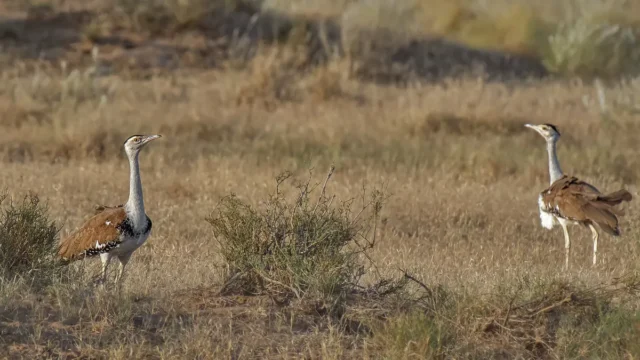
National Red List of birds: 1,211 species under assessment, 107 done in first review
India has begun a national Red List assessment of its 1,211 regularly occurring bird species using the IUCN framework. By 19 October 2026, a preliminary review of 107 species was complete, with the Great Indian Bustard proposed as Critically Endangered and the Indian Roller as Vulnerable. A final assessment is expected towards the end of 2027.
UPSC angle: Prelims: IUCN categories, species and their proposed status, lead institutions. · Mains GS-III: biodiversity conservation and data gaps.
20 Oct 2026
NBA shares Rs 1.19 crore with 29 State Biodiversity Boards from use of crop genetic resources
On 17 October 2026 the National Biodiversity Authority (NBA) said it had shared ₹1.19 crore with 29 State Biodiversity Boards and one UT Biodiversity Council. The money came from seed companies that used Indian maize, rice, pearl millet and cotton for research and commercial hybrids. As the crops were bought from markets and the original holders could not be traced, the amount was split in proportion to each State’s cultivation area. The release comes two days before the CBD COP 17 opens in Yerevan.
UPSC angle: Prelims: NBA, BD Act 2002, Nagoya Protocol, BMCs, CBD COP 17. · Mains GS-III: benefit sharing and community-led conservation.
18 Oct 2026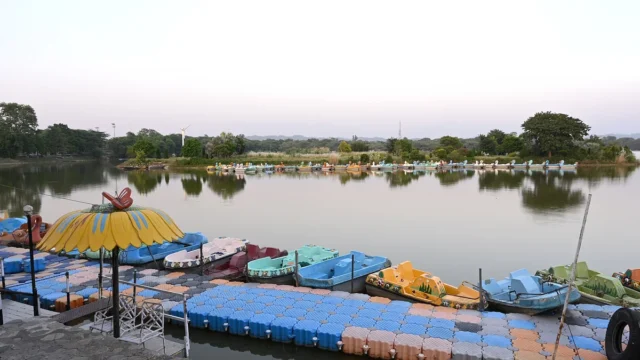
Sukhna Wetland and Sauj Jheel become Ramsar sites; India’s tally reaches 103
India added Sukhna Wetland in Chandigarh (Ramsar Site 2602) and Sauj Jheel in Mainpuri, Uttar Pradesh (Site 2603) to the List of Wetlands of International Importance on 15 October 2026. This takes India’s tally of Ramsar sites to 103. Sukhna is Chandigarh’s first Ramsar site. Sauj Jheel is UP’s 14th, and it makes Mainpuri the only district in the country with two.
UPSC angle: Prelims: Ramsar criteria, site locations, IUCN status of species. · Mains GS-III: wetland conservation and governance.
15 Oct 2026
India to accede to the Southern Indian Ocean Fisheries Agreement (SIOFA)
On 14 October 2026 the Centre approved India's accession to the Southern Indian Ocean Fisheries Agreement. India, a Cooperating Non-Contracting Party since 2022, will become a full Contracting Party. Indian vessels can then fish squids, toothfish, alfonsino and other non-migratory stocks in the SIOFA area and join its scientific and compliance bodies.
UPSC angle: Prelims: SIOFA vs IOTC, India's status, species, UNCLOS references. · Mains GS-III: blue economy and fisheries; GS-II: international agreements.
14 Oct 2026Learn the concept
Question text as printed in the official UPSC question paper: https://www.upsc.gov.in/sites/default/files/QP-CSM-23-GENERAL-STUDIES-PAPER-III-180923.pdf The model answer is original Battle IAS work; use it to learn structure, not to memorise.