
Sukhna Wetland and Sauj Jheel become Ramsar sites; India’s tally reaches 103
Next story · 15 OctPLFS September 2026: unemployment steady at 5%; urban women’s participation highest since October 2025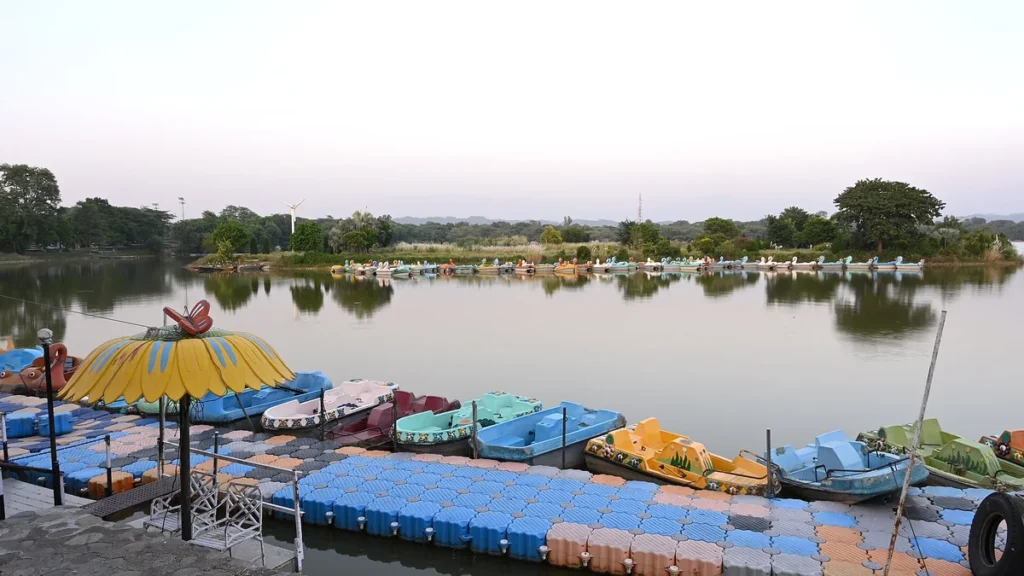
UPSC has already asked about this. Read the story with these questions in mind.
India added Sukhna Wetland in Chandigarh (Ramsar Site 2602) and Sauj Jheel in Mainpuri, Uttar Pradesh (Site 2603) to the List of Wetlands of International Importance on 15 October 2026. This takes India’s tally of Ramsar sites to 103. Sukhna is Chandigarh’s first Ramsar site. Sauj Jheel is UP’s 14th, and it makes Mainpuri the only district in the country with two.
- Sukhna Wetland
- Site no. 2602
- Sauj Jheel
- Site no. 2603
- India’s total
- 103 sites
- India joined
- 1 February 1982
Two new Ramsar sites: what happened?
A wetland works like a sponge and a nursery at the same time. It soaks up floodwater and silt, and it feeds and shelters birds that fly thousands of kilometres. This week two such sponges, one at the foot of the Shivaliks and one in the Ganga plain, joined the global list.
- 15 Oct 2026: Environment Minister Bhupender Yadav announced the two additions and congratulated Uttar Pradesh and Chandigarh (PIB).
- Sukhna is a peri-urban reservoir of about 565 acres at the edge of Chandigarh. It is an important stop on the Central Asian Flyway (Ramsar Secretariat; Indian Express).
- Sauj Jheel is a shallow lake set among farmland in the Ganga floodplain, close to Saman Bird Sanctuary. It regularly supports more than 30,000 waterbirds (Ramsar Secretariat).
- Sauj is also an Important Bird and Biodiversity Area (IBA) of BirdLife International.
What makes a wetland a Ramsar site?
- The Convention on Wetlands was signed at Ramsar, Iran, in 1971. India became a party on 1 February 1982.
- A site must meet at least one of nine criteria. Two examples are regularly supporting 20,000 or more waterbirds, or 1% of a waterbird population.
- The national government proposes a site. Sukhna’s proposal was cleared by the UT State Wetland Authority in September 2025, then by MoEFCC and the MEA (Indian Express).
- A Ramsar listing does not create a new law. It commits the country to the ‘wise use’ of the wetland.
How do the two new sites compare?
| Point | Sukhna Wetland | Sauj Jheel |
|---|---|---|
| Location | Chandigarh, base of the Outer Himalayas | Mainpuri, UP, Ganga floodplain |
| Type | Peri-urban reservoir | Shallow lake amid farmland |
| Notable species | Common pochard (VU), Pallas’s fish eagle (EN), black pond turtle (EN) | Sarus crane (VU), greater spotted eagle (VU) |
| Main pressure | Silt from the catchment, invasive plants | Fishing, fine-mesh nets, cattle |
Which laws and schemes apply?
- Wetlands (Conservation and Management) Rules, 2017 under the Environment (Protection) Act, 1986: State Wetlands Authorities, and a ban on encroachment and waste dumping.
- Article 48A (DPSP) and Article 51A(g) (Fundamental Duty) on protecting the environment.
- National Plan for Conservation of Aquatic Ecosystems (NPCA): central support for wetland and lake management.
- Amrit Dharohar (Budget 2023-24): promotes the optimal use of Ramsar sites through eco-tourism and local incomes.
What are the challenges?
- Sukhna has battled siltation for decades because the Shivalik catchment erodes easily.
- Boating and recreation can crowd out the lake’s ecological functions.
- At Sauj, fishing and grazing in a farm landscape put pressure on bird habitat.
- The Ramsar tag brings no funds of its own. Sites need management plans that are paid for and monitored.
What should be done next?
- Continue soil and moisture conservation in Sukhna’s catchment and remove invasive plants regularly, as its management plan provides.
- Bring in the proposed seasonal fishing ban, the curbs on fine-mesh nets and cattle control at Sauj.
- Monitor water quality and bird counts every year so the listing means something on the ground.
- Make local fishers and farmers partners in management, not just people the rules are applied to.
What can Prelims ask on Ramsar sites?
- Ramsar Convention: 1971, Ramsar (Iran). World Wetlands Day: 2 February.
- India: a party since 1 February 1982; 103 sites as of October 2026.
- Sukhna (Chandigarh) is Site 2602; Sauj Jheel (Mainpuri) is Site 2603.
- Saman Bird Sanctuary, also in Mainpuri, is Ramsar Site 2413.
- Common pochard: Vulnerable. Pallas’s fish eagle: Endangered.
How to write about wetland conservation in Mains
Practice question (10 marks, 150 words): ‘A Ramsar designation is necessary but not sufficient for wetland conservation in India.’ Discuss. (GS-III)
- Intro: India’s tally reaches 103 with Sukhna and Sauj, 15 Oct 2026.
- Value: flood buffering, sediment control, waterbirds, livelihoods.
- Gaps: siltation, encroachment, tourism pressure, no dedicated funds.
- Tools: Wetlands Rules 2017, NPCA, Amrit Dharohar, community management.
- Conclusion: the listing should lead to a funded plan that is monitored.
Image: Sukhna Lake, Chandigarh, at evening. Navneet Sharma, Wikimedia Commons, CC BY-SA 4.0
How to use this in Mains
If asked: Discuss the role of urban wetlands in making cities resilient. (GS-III)
Quote: “Sukhna Wetland is a peri-urban reservoir that plays an important role in regulating sediment and water flows from the surrounding catchment.”
Use it: Use Sukhna as your urban-wetland example, then bring in siltation as the challenge.
If asked: How can wetland conservation be balanced with local livelihoods? (GS-III)
Quote: “Proposed management actions include a seasonal ban on fishing, restrictions on the use of fine-mesh fishing nets, and control of the access of cattle to the Site.”
Use it: Quote it for Sauj Jheel, then argue for community-based management.
Exam angle
Prelims: Ramsar criteria, site locations, IUCN status of species. · Mains GS-III: wetland conservation and governance.
Practice MCQs
Original practice questions (not PYQs).
Consider the following pairs:
Wetland — Location
1. Sukhna Wetland — Chandigarh
2. Sauj Jheel — Mainpuri
3. Saman Bird Sanctuary — Etawah
How many of the pairs given above are correctly matched?
Answer (b) & explanation
Saman Bird Sanctuary is in Mainpuri, not Etawah. Etawah has Sarsai Nawar Lake.
Pallas’s fish eagle and the black pond turtle were cited as notable species of which wetland added to the Ramsar List in October 2026?
Answer (b) & explanation
The Ramsar Secretariat listed both species for Sukhna Wetland, Chandigarh.
Under the Ramsar criteria, a wetland qualifies if it regularly supports at least
Answer (c) & explanation
Criterion 5 covers wetlands that regularly support 20,000 or more waterbirds.
Questions students ask about this
How many Ramsar sites does India have now?
103, after Sukhna Wetland and Sauj Jheel were added on 15 October 2026.
Where is Sauj Jheel?
In Mainpuri district, Uttar Pradesh, in the Ganga floodplain near Saman Bird Sanctuary.
Is Sukhna Chandigarh’s first Ramsar site?
Yes. It is Ramsar Site No. 2602.
Does a Ramsar tag bring funds?
Not by itself. Funds come through national schemes such as NPCA and from State budgets.
Keep studying
Go deeper
Official source: PIB, 15 Oct 2026: India’s Ramsar Site tally reaches 103 with addition of Sukhna Wetland (Chandigarh) and Sauj Jheel (UP)
facts from cited sources only; faculty review pending