
UPSC Mains 2023 GS3 Q19: model answer
What are the internal security challenges being faced by India? Give out the role of Central Intelligence and Investigative Agencies tasked to counter such threats.
What the question wants
Main internal security threats and the role of IB, RAW, NIA, CBI, NCB, NTRO, MAC etc.
How to structure it
Intro: Internal security as a precondition for development. Body: (1) Challenges: cross-border terrorism (J&K), Left Wing Extremism, North-East insurgency and ethnic conflict (Manipur), radicalisation, cyber threats, organised crime, narco-terror, fake currency, drones, communal violence; (2) Agencies: IB (domestic intelligence), RAW (external), NTRO (technical), NIA (terror investigation), CBI, NCB, ED, DRI, NATGRID, MAC; (3) Gaps: coordination, police being State subject, capacity. Conclusion: intelligence-led, coordinated approach.
- 1(1) Challenges: cross-border terrorism (J&K), Left Wing Extremism, North-East insurgency and ethnic conflict (Manipur), radicalisation, cyber threats, organised crime, narco-terror, fake currency, drones, communal violence
- 2(2) Agencies: IB (domestic intelligence), RAW (external), NTRO (technical), NIA (terror investigation), CBI, NCB, ED, DRI, NATGRID, MAC
- 3(3) Gaps: coordination, police being State subject, capacity
Model answer
Internal security is the base on which development and democracy rest. India faces a wide range of threats.
| Agency | Role |
|---|---|
| IB | Domestic intelligence; Multi-Agency Centre |
| RAW | External intelligence |
| NTRO | Technical intelligence |
| NIA | Investigates terror cases |
| ED, NCB, DRI | Money laundering, drugs, smuggling |
| NATGRID | Linked databases |
Internal security challenges
- Cross-border terrorism in Jammu and Kashmir, supported from Pakistan.
- Left Wing Extremism in central India, though the number of affected districts has fallen sharply.
- Insurgency and ethnic conflict in the North-East, such as the Manipur violence since May 2023.
- Radicalisation through online propaganda.
- Cyber attacks on critical infrastructure and financial fraud.
- Organised crime and narco-terror networks; drones dropping drugs and arms in Punjab.
- Fake currency and terror financing.
- Communal violence and misinformation.
Role of central intelligence and investigative agencies
- Intelligence Bureau (IB): domestic intelligence and counter-terrorism; runs the Multi-Agency Centre (MAC) for real-time intelligence sharing with States.
- Research and Analysis Wing (RAW): external intelligence on threats from abroad.
- National Technical Research Organisation (NTRO): technical and signals intelligence.
- National Investigation Agency (NIA): set up after 26/11 (2008) to investigate terror cases across States; powers widened in 2019.
- Central Bureau of Investigation (CBI): serious crimes and corruption.
- Narcotics Control Bureau (NCB) and DRI: drugs and smuggling.
- Enforcement Directorate (ED): money laundering and terror funding.
- NATGRID: links databases for investigators.
- CERT-In and NCIIPC: cyber threats.
Gaps
- Coordination problems among agencies and with State police (police is a State subject).
- Staff shortages and limited tech capacity.
- Concerns over political misuse of some agencies.
An intelligence-led, well-coordinated approach, with modern State police and accountability, is the best defence against internal threats.
Keywords, cases and data to drop in
IB RAW NIA MAC NATGRID LWE
Where most answers lose marks
- Only listing threats.
- Confusing roles of agencies.
Fresh examples from current affairs
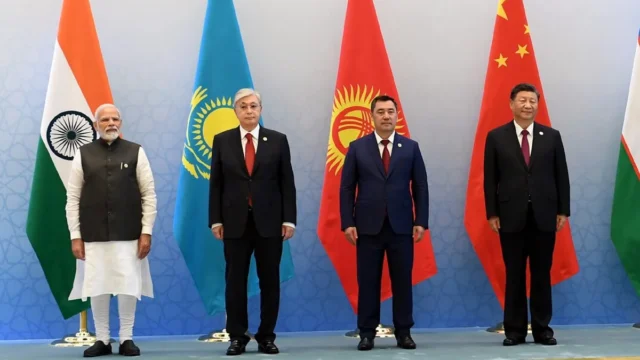
SCO Heads of Government meet in Dushanbe: Rajnath calls for dismantling the terror ecosystem
Defence Minister Rajnath Singh represented India at the 25th meeting of the SCO Council of Heads of Government in Dushanbe, Tajikistan, on 20 October 2026. With Pakistan’s Deputy Prime Minister in the room, he said there can be no justification and no double standards on terrorism. The meeting adopted the SCO budget for 2027 and a 2026–30 action plan for trade and economic cooperation.
UPSC angle: Prelims: SCO bodies and locations, new centres, INSTC. · Mains GS-II: SCO’s value for India; GS-III: terror financing.
21 Oct 2026
Open-weight AI models: why Big Tech gives them away and what it means for India
In October 2026 alone, Reflection AI, Meta, NVIDIA and Mistral released or announced open-weight AI models. The Hindu explained on 20 October why firms spend heavily and then let anyone download the weights: to win developers, set standards and earn from cloud, chips and services. For India, open weights offer a base to build Indian-language AI, but they also bring safety risks.
UPSC angle: Prelims: weights, open-weight vs open-source, IndiaAI, AI4Bharat. · Mains GS-III: AI sovereignty, safety and regulation.
21 Oct 2026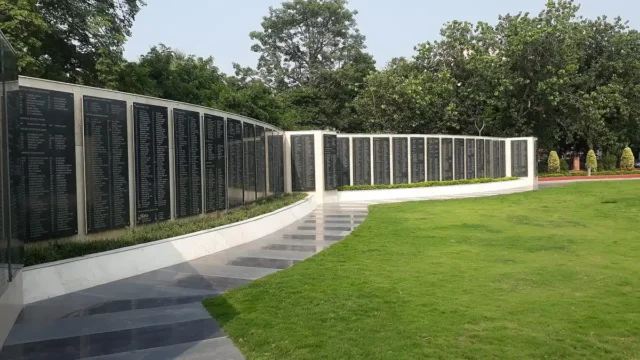
Police Commemoration Day 2026: Shah pays tribute, sets drug-free India target of 2029
On Police Commemoration Day, 21 October 2026, Union Home Minister Amit Shah paid tribute at the National Police Memorial in New Delhi to police personnel who died on duty. He recalled that India was declared free of Naxalism on 31 March 2026, asked all forces to work for a ‘Nasha Mukt Bharat’ by 31 December 2029, and flagged off a nationwide ‘Fight Against Drugs’ motorcycle rally.
UPSC angle: Prelims: Hot Springs, National Police Memorial, State List entries, NDPS Act. · Mains GS-III: police reforms and narcotics.
21 Oct 2026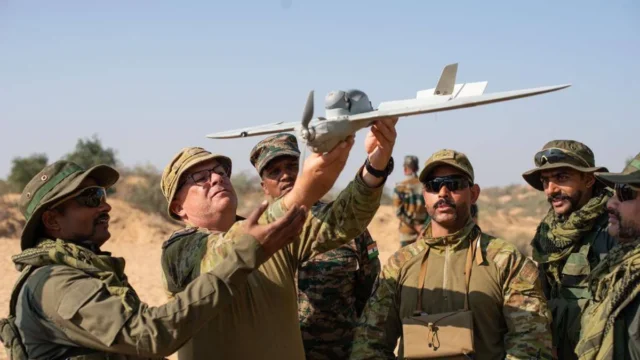
AUSTRAHIND 2026: fifth India–Australia Army exercise begins in Thiruvananthapuram
The fifth edition of the India–Australia joint military exercise AUSTRAHIND began on 19 October 2026 at the Foreign Training Node, Thiruvananthapuram, and runs till 1 November. About 120 soldiers from each army will train for sub-conventional operations in island and coastal terrain under a UN Chapter VII mandate. For the first time, New Zealand has sent observers.
UPSC angle: Prelims: exercise names, venues, partner countries, UN Chapter VII. · Mains GS-III: defence diplomacy in the Indo-Pacific.
20 Oct 2026Learn the concept
Question text as printed in the official UPSC question paper: https://www.upsc.gov.in/sites/default/files/QP-CSM-23-GENERAL-STUDIES-PAPER-III-180923.pdf The model answer is original Battle IAS work; use it to learn structure, not to memorise.