
MSMEs in India: New Definition, Share in GDP and Jobs, Udyam, Key Schemes (CGTMSE, PMEGP, TReDS), Problems and Reforms (UPSC Notes + PYQs)
UPSC has already asked about this. Read the story with these questions in mind.
- Prelims 2023Consider the following statements with reference to India: According to the 'Micro, Small and Medium Enterprises Development (MSMED) Act, 2006', the 'medium enterprises' are…Solve it below ↓
- Mains 2023 · GS3Faster economic growth requires increased share of the manufacturing sector in GDP, particularly of MSMEs. Comment on the present policies of the Government in…See model answer →
How MSMEs are defined
The MSMED Act, 2006 first split manufacturing and service firms and used only investment. In July 2020 a composite definition was notified, using both investment and turnover and treating manufacturing and services alike; exports are not counted in turnover. The Union Budget 2025-26 raised the limits again with effect from 1 April 2025:
| Category | Investment (2020) | Turnover (2020) | Investment (2025) | Turnover (2025) |
|---|---|---|---|---|
| Micro | up to ₹1 crore | up to ₹5 crore | up to ₹2.5 crore | up to ₹10 crore |
| Small | up to ₹10 crore | up to ₹50 crore | up to ₹25 crore | up to ₹100 crore |
| Medium | up to ₹50 crore | up to ₹250 crore | up to ₹125 crore | up to ₹500 crore |
Registration is through the free, paperless Udyam portal (July 2020), linked to PAN and GST. The Udyam Assist Platform (2023) brings informal micro units without GST into the formal net, so that they can get priority-sector credit.
Why MSMEs matter
- Scale: the NSS 73rd round (2015-16) counted about 6.3 crore MSMEs; about 99% of them are micro.
- Jobs: they employ over 11 crore people, often in small towns and villages.
- Output: about 30% of GDP (gross value added) and about 45% of merchandise exports.
- Equity: a large share of enterprises are owned by women, SCs, STs and OBCs; MSMEs spread industry beyond big cities.
- Supply chains: they make components for large firms in autos, textiles and electronics.
Uttar Pradesh has the largest number of MSMEs among States by the NSS count, which is why its One District One Product scheme focuses on them.
Key schemes and support
- CGTMSE (Credit Guarantee Fund Trust for Micro and Small Enterprises, 2000): collateral-free loans backed by a guarantee; the ceiling has been raised over time.
- PMEGP (2008): margin-money subsidy for new micro units, run through KVIC.
- Emergency Credit Line Guarantee Scheme (2020): guaranteed loans during COVID-19.
- TReDS (Trade Receivables Discounting System, RBI guidelines 2014): online platforms (RXIL, M1xchange, Invoicemart and others) where MSME invoices on large buyers are discounted by banks, without recourse to the MSME.
- Public Procurement Policy: central ministries and CPSEs must buy at least 25% from micro and small enterprises, including 4% from SC/ST and 3% from women entrepreneurs.
- MSME Samadhaan portal and Facilitation Councils for delayed payments; the Act requires payment within 45 days.
- Section 43B(h) of the Income-tax Act (from 1 April 2024): a buyer can claim a payment to a micro or small supplier as expense only if it is made within the legal time limit.
- RAMP (Raising and Accelerating MSME Performance, 2022): World Bank-assisted programme to strengthen States’ MSME systems.
- PM Vishwakarma (September 2023): skilling, toolkits and cheap credit for artisans in 18 traditional trades.
- Self-Reliant India Fund: equity for growing MSMEs.
- UdyamRegistration
- CGTMSECollateral-free credit
- TReDSInvoice discounting
- SamadhaanDelayed payments
- PMEGPNew micro units
- PM VishwakarmaArtisans
Problems
- Credit gap: an IFC study (2018) put the gap between demand and supply of formal credit at about ₹20-25 lakh crore; lenders lack collateral and financial records.
- Delayed payments by large buyers and government departments choke working capital.
- Informality: most micro units are unregistered and outside schemes.
- “Missing middle”: India has many tiny firms and some large ones, but few medium firms; small firms often avoid growing to stay below thresholds for labour and tax rules.
- Technology and skills: low productivity and weak quality certification limit exports.
- Shocks: demonetisation, GST compliance and COVID-19 hit them hard.
- No collateral
- Thin financial records
- Delayed payments from buyers
- High cost of small loans for banks
Way forward
Use cash-flow based lending on GST and digital payment data (the Open Credit Enablement Network and Account Aggregators help), make TReDS mandatory for more buyers, cluster development with common testing labs, simpler labour codes, export support through e-commerce, and skill programmes linked to local industry. Raising thresholds (as in 2025) also reduces the incentive to stay small.
Udyam registration and formalisation
Since July 2020, MSMEs register online on the Udyam portal using Aadhaar and PAN, with data drawn from tax records. Over five crore enterprises have registered, including informal micro units through the Udyam Assist platform. Registration opens access to priority sector loans, the credit guarantee scheme and the 45-day payment rule under the Income Tax Act.
The 2025 revision of limits
The 2025-26 Budget raised the investment and turnover limits for all three categories, by about 2.5 and 2 times respectively, so that growing firms do not lose benefits and stay small on purpose.
PYQ trend
Prelims asked the MSMED Act definition (2023), ministries of boards like the Coir Board (2025) and TReDS platforms such as M1xchange (2026). Mains GS-III 2023 asked about the policies for raising manufacturing’s share through MSMEs.
MSME: UPSC angle
For UPSC CSE
Prelims: definitions, bodies, TReDS, schemes. Mains GS-III: manufacturing, jobs, credit, inclusive growth.
MSME UPSC PYQs (Prelims)
Questions UPSC has actually asked, from the official papers. Pick an option to check yourself.
Consider the following statements with reference to India :
– 1. According to the 'Micro, Small and Medium Enterprises Development (MSMED) Act, 2006', the 'medium enterprises' are those with investments in plant and machinery between ₹15 crore and ₹25 crore.
– 2. All bank loans to the Micro, Small and Medium Enterprises qualify under the priority sector.
Which of the statements given above is/are correct?
Since 2020, a medium enterprise has investment up to ₹50 crore and turnover up to ₹250 crore (both limits were raised in 2025); the old 2006 limit was ₹5-10 crore. Neither fits ₹15-25 crore. Under the RBI’s priority sector rules, all bank loans to MSMEs that meet the MSMED definition count as priority sector lending. Answer as per the official UPSC key · Battle IAS PYQ bankAnswer (b) & why
Which of the following statements about M1xchange's role in Micro, Small & Medium Enterprises (MSMEs) financing is/are correct ?
– 1. M1xchange provides collateral based loans to MSMEs.
– 2. M1xchange facilitates discounting of invoices and Bills of Exchange for MSMEs.
– 3. M1xchange functions as a credit rating agency for MSMEs.
Select the answer using the code given below :
M1xchange is one of the RBI-licensed TReDS platforms (Trade Receivables Discounting System), along with RXIL and Invoicemart. An MSME uploads an invoice raised on a big buyer, and banks bid to discount it. The MSME gets cash quickly and without collateral, because the buyer’s credit backs the bill. The platform does not lend or rate anyone. Answer as per the official UPSC key · Battle IAS PYQ bankAnswer (b) & why
With reference to India, consider the following pairs :
| Organization | Union Ministry
| I. The National Automotive Board | Ministry of Commerce and Industry
| II. The Coir Board | Ministry of Heavy Industries
| III. The National Centre for Trade Information | Ministry of Micro, Small and Medium Enterprises
How many of the above pairs are correctly matched?
UPSC has rotated the ministries one step. The National Automotive Board is under Heavy Industries. The Coir Board is under MSME. The National Centre for Trade Information was set up by the Commerce Ministry. Every pair is off by one, so none is correct. Answer as per the official UPSC key · Battle IAS PYQ bankAnswer (d) & why
Mains PYQs on this topic
Questions from the official UPSC Mains papers (2023-2026 in the Battle IAS Mains bank), newest first. Each links to a model answer.
- UPSC Mains 2023 · GS Paper III · Q1 · 10 marks
Faster economic growth requires increased share of the manufacturing sector in GDP, particularly of MSMEs. Comment on the present policies of the Government in this regard.
Quick quiz
Under the 2025 limits, a micro enterprise can have turnover up to
Budget 2025-26 raised the micro turnover limit to ₹10 crore.Answer (b)
TReDS is mainly meant to
TReDS lets MSMEs sell receivables on large buyers.Answer (b)
Udyam registration replaced
Udyam replaced Udyog Aadhaar Memorandum from July 2020.Answer (a)
FAQs
Are exports counted in MSME turnover?
No. Export turnover is excluded when classifying a firm.
What is the “missing middle”?
The small number of medium-sized firms in India compared with very many tiny firms and a few large ones.
What is CGTMSE?
A trust set up by the Ministry of MSME and SIDBI that guarantees collateral-free loans to micro and small firms.
Within how many days must an MSE be paid?
Within the agreed time, but never more than 45 days, under the MSMED Act.
Who runs PMEGP?
KVIC at the national level, with State bodies and District Industries Centres.
Spotted an error? Tell us. We correct within 48 hours.
How to use this in Mains
If asked: UPSC Mains 2023, GS-III: Faster economic growth requires increased share of the manufacturing sector in GDP, particularly of MSMEs. Comment on the present policies of the Government in this regard.
Quote: “Credit gap: an IFC study (2018) put the gap between demand and supply of formal credit at about ₹20-25 lakh crore; lenders lack collateral and financial records.”
Use it: A hard data point for the credit problem in the body.
In the news
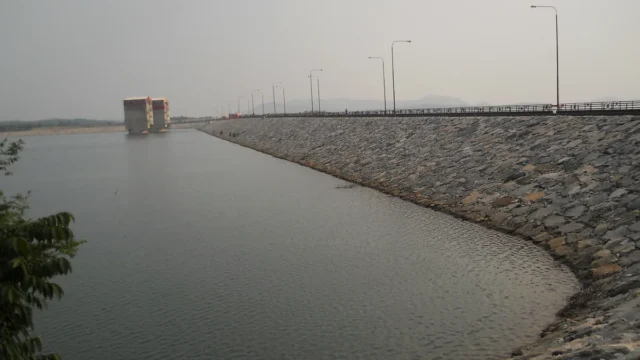
Pumped storage hydropower: India’s roadmap for 100 GW of ‘water batteries’ by 2035-36
A PIB backgrounder of 19 October 2026 explains how pumped storage projects (PSPs) will store solar and wind power for India’s grid. India runs 7.43 GW of pumped storage today, is building 15.87 GW more and has an assessed potential of 345.38 GW. A roadmap aims to add about 100 GW between 2025-26 and 2035-36.
19 Oct 2026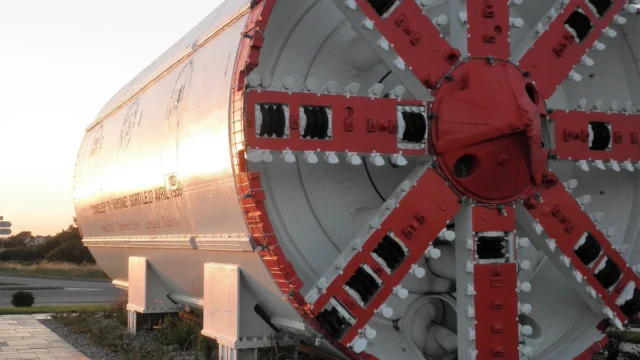
China to impose export controls on tunnel boring machines from 18 November: what it means for India
On 19 October 2026 China’s Commerce Ministry announced export controls on tunnel boring machines (TBMs) and related items from 18 November, calling them clearly dual-use. India imports TBMs for metro, rail and border tunnels and has faced customs delays on Chinese machines since 2024. China also announced controls on some drones.
19 Oct 2026
Oil companies bar sugar-based ethanol for 2026-27; maize incentive cut to ₹2.79 a litre
The oil marketing companies have kept sugar out of India’s ethanol programme for the coming year. The tender issued on 16 October 2026 seeks about 11 billion litres of ethanol for the 2026-27 supply year, but asks for none made from sugarcane juice, sugar syrup or B-heavy molasses, because the Government wants sugar diversion for ethanol cut to zero. Grain must now carry the load, and even the maize incentive has been cut. Read this as a live example of the food-versus-fuel trade-off.
18 Oct 2026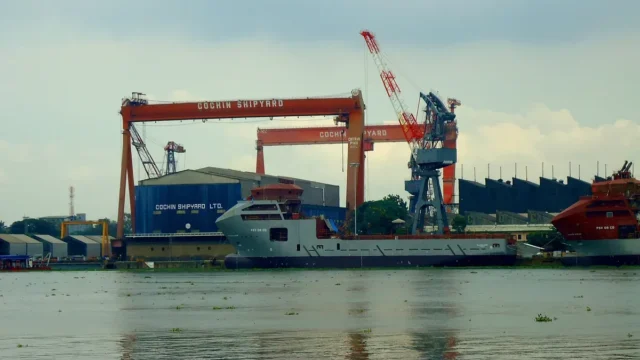
21st Maritime State Development Council: first MSDC under the Indian Ports Act, 2025
The 21st Maritime State Development Council met in Mumbai on 13 October 2026. It was the first MSDC after the Indian Ports Act, 2025 (notified 15 May 2026) made the Council a statutory body. Members adopted Vision 2030 and 2047 targets and set March 2027 deadlines for One Nation One Port Process and Maritime Single Window integration.
13 Oct 2026