
UPSC Mains 2023 GS3 Q1: model answer
Faster economic growth requires increased share of the manufacturing sector in GDP, particularly of MSMEs. Comment on the present policies of the Government in this regard.
What the question wants
Why manufacturing and MSMEs matter, current policies, and their gaps.
How to structure it
Intro: manufacturing about 15–17% of GDP; target 25%. Body: (1) Why: jobs, exports, productivity; MSMEs about 30% of GDP and 11 crore jobs; (2) Policies: Make in India, PLI schemes, revised MSME definition (2020), ECLGS, CGTMSE, Udyam registration, TReDS, 45-day payment rule, GeM, PM Vishwakarma, corporate tax cut, labour codes; (3) Gaps: credit gap, formalisation, technology, delayed payments, inverted duty. Conclusion: ease of doing business and cluster development.
- 1(1) Why: jobs, exports, productivity
- 2MSMEs about 30% of GDP and 11 crore jobs
- 3(2) Policies: Make in India, PLI schemes, revised MSME definition (2020), ECLGS, CGTMSE, Udyam registration, TReDS, 45-day payment rule, GeM, PM Vishwakarma, corporate tax cut, labour codes
- 4(3) Gaps: credit gap, formalisation, technology, delayed payments, inverted duty
Model answer
Manufacturing has stayed around 15–17% of India's GDP for decades, short of the 25% target of the National Manufacturing Policy (2011). MSMEs contribute about 30% of GDP and over 45% of exports, and employ more than 11 crore people.
Present policies
- Make in India (2014) and Production Linked Incentive schemes in 14 sectors such as mobiles, electronics and pharma.
- MSME definition revised (2020) on investment and turnover, removing the fear of growing out of benefits.
- Credit: Emergency Credit Line Guarantee Scheme during COVID, revamped CGTMSE, TReDS for invoice discounting.
- Formalisation: Udyam registration; government buying through GeM.
- Payments: the 45-day payment rule under Section 43B(h) of the Income Tax Act (2023).
- PM Vishwakarma (2023) for artisans; corporate tax cut (2019); labour codes.
Gaps
- Large credit gap for small firms.
- PLI benefits mostly reach large firms.
- Technology and skill shortages.
- Delayed payments and compliance burden.
Cluster development, cheaper credit and linking MSMEs to PLI value chains can raise manufacturing's share.
Keywords, cases and data to drop in
National Manufacturing Policy PLI Udyam TReDS Section 43B(h)
Where most answers lose marks
- Only listing schemes without evaluation.
- No data.
Fresh examples from current affairs

UDAN turns 10: 687 routes, 1.72 crore flyers and a Rs 28,840 crore next phase
The Regional Connectivity Scheme UDAN (Ude Desh ka Aam Nagrik) completes ten years on 21 October 2026. A PIB backgrounder says it has operationalised 687 routes and 95 aerodromes and carried 1.72 crore passengers. Its next phase, launched on 4 July 2026, runs from 2026-27 to 2035-36 with Rs 28,840 crore for 100 airports, 200 helipads and airline support.
UPSC angle: Prelims: UDAN dates, outlays, airport numbers. · Mains GS-III: regional connectivity and VGF design.
21 Oct 2026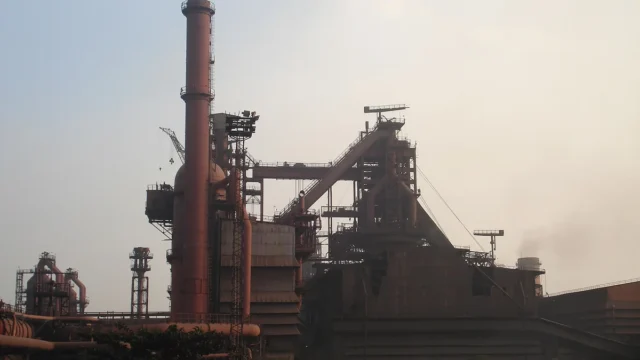
Core sector grows 7.9% in September 2026; iron ore, electricity and coal lead
The Index of Core Industries (ICI), base year 2022-23, grew 7.9% year-on-year in September 2026, up from a revised 5.9% in August, the Commerce Ministry said on 21 October 2026. Iron ore (18.4%), electricity (11.4%) and coal (10.7%) led, while fertilizers, natural gas and crude oil shrank. Growth for April–September 2026 was 5.1%, double the 2.5% of a year earlier.
UPSC angle: Prelims: ICI vs IIP, compiling agencies, base year. · Mains GS-III: industrial growth and energy security.
21 Oct 2026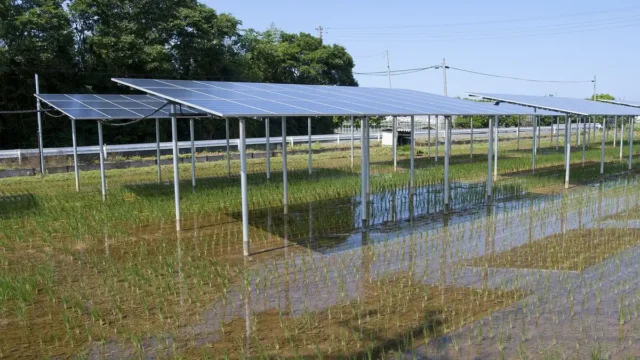
Agrivoltaics: Centre plans a scheme to push solar panels above farms; 5 GW seen in 3–4 years
MNRE Secretary Santosh Kumar Sarangi said on 19 October 2026 that the Centre is planning a central sector scheme to help States adopt agrivoltaics, either standalone or within PM-KUSUM 2.0. He expects capacity to cross 5 GW in three to four years if States notify feed-in tariffs. India hosts the 7th Agrivoltaics World Conference in New Delhi from 21 to 23 October.
UPSC angle: Prelims: agrivoltaics, PM-KUSUM components, feed-in tariffs. · Mains GS-III: energy transition and food security.
20 Oct 2026
Pumped storage hydropower: India’s roadmap for 100 GW of ‘water batteries’ by 2035-36
A PIB backgrounder of 19 October 2026 explains how pumped storage projects (PSPs) will store solar and wind power for India’s grid. India runs 7.43 GW of pumped storage today, is building 15.87 GW more and has an assessed potential of 345.38 GW. A roadmap aims to add about 100 GW between 2025-26 and 2035-36.
UPSC angle: Prelims: PSP types, CEA, ISTS waiver, IRENA ranking. · Mains GS-III: storage and the clean energy transition.
19 Oct 2026Learn the concept
Question text as printed in the official UPSC question paper: https://www.upsc.gov.in/sites/default/files/QP-CSM-23-GENERAL-STUDIES-PAPER-III-180923.pdf The model answer is original Battle IAS work; use it to learn structure, not to memorise.