
India-Bangladesh Relations: 1971, Land Boundary Agreement, Ganga and Teesta Waters, Trade and Connectivity, Border Issues and the Post-2024 Reset (UPSC Notes + PYQs)
UPSC has already asked about this. Read the story with these questions in mind.
A relationship born in 1971
In 1971 the Pakistan Army’s crackdown in East Pakistan sent about ten million refugees into India. India signed a treaty with the Soviet Union in August, trained the Mukti Bahini and went to war in December; Dhaka fell on 16 December 1971, celebrated as Vijay Diwas in India and Bijoy Dibos in Bangladesh. India was the first country to recognise Bangladesh. A 25-year Treaty of Friendship followed in 1972. Relations then swung with Dhaka’s politics: warm under the Awami League, cooler under military rule and BNP governments, when anti-India insurgent groups from the North-East found shelter in Bangladesh. The Sheikh Hasina years (2009-2024) were the closest: Dhaka handed over insurgent leaders, and many old disputes were settled.
- 1971Liberation war; India recognises Bangladesh
- 1972Treaty of Friendship; Joint Rivers Commission
- 1996Ganga Water Treaty (30 years)
- 2011Teesta deal stalls
- 2015Land Boundary Agreement in force
- 2024Political change in Dhaka
- 2026Ganga treaty due to expire (December)
Border and the Land Boundary Agreement
The border touches five Indian States: West Bengal, Assam, Meghalaya, Tripura and Mizoram. West Bengal has the longest stretch. Partition left a strange map of enclaves, pockets of one country inside the other, whose people had no schools, police or identity papers. A 1974 agreement to fix this was ratified only after the Constitution (100th Amendment) Act, 2015. India gave Bangladesh 111 enclaves and received 51, and residents chose their citizenship. A 2014 arbitration award on the maritime boundary in the Bay of Bengal, which went largely in Bangladesh’s favour, was accepted by India without protest, settling the sea border too.
| State | Notes |
|---|---|
| West Bengal | Longest stretch; most cattle smuggling cases |
| Assam | Riverine stretches; NRC debate |
| Meghalaya | Hilly; border haats |
| Tripura | Surrounded on three sides; Akhaura and Maitri Setu links |
| Mizoram | Shortest stretch |
Sharing rivers
The two countries share 54 rivers, managed through a Joint Rivers Commission set up in 1972.
- Ganga: the Farakka Barrage (1975) diverts water to the Hooghly to keep Kolkata port alive. The Ganga Water Treaty of December 1996 shares the dry-season flow for 30 years, so it expires in December 2026, and its renewal is the most important water question now.
- Teesta: a deal was ready in 2011 but stalled when the West Bengal government objected, since the river feeds north Bengal’s farms. China’s offer of a Teesta river project has raised the stakes.
- An agreement on the Kushiyara in 2022 was the first water deal since 1996.
Trade, energy and connectivity
Bangladesh is India’s largest trade partner in South Asia, with trade of about USD 13-15 billion a year, and India is among Bangladesh’s largest sources of imports. India has extended lines of credit of about USD 8 billion, its largest to any country. Power flows across the border from Indian plants, and the India-Bangladesh Friendship Pipeline (2023) carries diesel from Assam. Pre-1965 rail links have been revived, including Akhaura-Agartala (2023), and the Maitri Setu over the Feni river (2021) links Tripura with Chittagong port. Agreements allow Indian goods to use Chittagong and Mongla ports for transit to the North-East, cutting the long route through the “Chicken’s Neck” at Siliguri. Bangladesh is also a member of BIMSTEC and the BBIN motor vehicles framework.
- RailAkhaura-Agartala, Maitri Express
- BridgeMaitri Setu over Feni
- PortsChittagong, Mongla transit
- EnergyPower trade, Friendship Pipeline
Security and the border
- Illegal migration and the National Register of Citizens in Assam are sensitive in both countries.
- Border killings by the Border Security Force, often of cattle smugglers, anger Bangladeshi opinion; India has adopted a non-lethal weapons policy.
- Smuggling of cattle, drugs and fake currency; parts of the riverine border cannot be fenced.
- Radical groups and the Rohingya refugee crisis, with about a million Rohingya in camps near Cox’s Bazar.
- Defence ties include the army exercise Sampriti, the naval exercise Bongosagar and coordinated patrols. (Mitra Shakti, a common trap, is India-Sri Lanka.)
After August 2024
In August 2024 student-led protests forced Sheikh Hasina from office and she fled to India. An interim government under Nobel laureate Muhammad Yunus took charge. Ties became strained: Dhaka sought Hasina’s extradition, especially after a Bangladeshi tribunal sentenced her to death in absentia in November 2025, while India raised attacks on Hindus and other minorities. Trade frictions followed. In April 2025 India withdrew a transshipment facility for Bangladeshi exports through Indian airports and ports, and in May it restricted some imports through land ports. Bangladesh, in turn, moved closer to China and Pakistan. The episode showed the risk of tying the relationship to one party.
Way forward
India’s interests in Bangladesh do not change with governments: a secure North-East, transit and connectivity, a stable eastern flank and a large market. India should engage all political forces and the people of Bangladesh, renew the Ganga treaty on fair terms, work towards a Teesta settlement with West Bengal on board, end border killings, keep trade open, and offer development partnership that competes with China’s on speed and quality.
PYQ trend
Prelims asks about border features, rivers, bridges and joint exercises. Mains GS-II asks neighbourhood policy and its challenges.
India Bangladesh Relations: UPSC angle
For UPSC CSE
Mains GS-II: neighbourhood first, water sharing, connectivity, migration. Prelims: rivers, enclaves, bridges, exercises.
India Bangladesh Relations UPSC PYQs (Prelims)
Questions UPSC has actually asked, from the official papers. Pick an option to check yourself.
Consider the following statements about river bridges connecting India with neighbouring countries :
– 1. ‘Maitri Setu’, built over Feni river, connects Ramgarh in India with Sabroom in Bangladesh.
– 2. Jhulaghat suspension bridge connects India with Myanmar.
– 3. Mechi bridge and its approaches connect Panitanki Bypass in India with Kakarvitta in Nepal.
Which of the statements given above is/are correct ?
Maitri Setu over the Feni links Sabroom in Tripura with Ramgarh in Bangladesh, so statement 1 swaps them. The Jhulaghat bridge crosses the Kali river between Pithoragarh (Uttarakhand) and Nepal. The Mechi bridge does link Panitanki in West Bengal with Kakarvitta in Nepal. Answer as per the official UPSC key · Battle IAS PYQ bankAnswer (d) & why
Which of the following statements about ‘Exercise Mitra Shakti-2023’ are correct ?
– 1. This was a joint military exercise between India and Bangladesh.
– 2. It commenced in Aundh (Pune).
– 3. Joint response during counter-terrorism operations was a goal of this operation.
– 4. Indian Air Force was a part of this exercise.
Select the answer using the code given below :
Mitra Shakti is the India–Sri Lanka Army exercise. The 2023 edition at Aundh, Pune practised counter-terrorism under a UN mandate, and the IAF took part. India and Bangladesh hold Sampriti. Answer as per the official UPSC key · Battle IAS PYQ bankAnswer (d) & why
Consider the following statements in respect of BIMSTEC :
– I. It is a regional organization consisting of seven member States till January 2025.
– II. It came into existence with the signing of the Dhaka Declaration, 1999.
– III. Bangladesh, India, Sri Lanka, Thailand and Nepal are founding member States of BIMSTEC.
– IV. In BIMSTEC, the subsector of ‘tourism’ is being led by India.
Which of the statements given above is/are correct?
BIMSTEC has seven members. It was founded by the Bangkok Declaration of 1997 by Bangladesh, India, Sri Lanka and Thailand. Myanmar joined later that year, and Nepal and Bhutan in 2004. Since its sectors were regrouped, India leads the security pillar, so in UPSC’s key statement 4 is also wrong. Answer as per the official UPSC key · Battle IAS PYQ bankAnswer (d) & why
Mains PYQs on this topic
No UPSC Mains question from 2023-2026 is directly on this topic. Older papers (2013-2022) will be added as the Mains bank grows.
Quick quiz
Which Constitutional Amendment gave effect to the Land Boundary Agreement with Bangladesh?
The 100th Amendment, 2015.Answer (b)
Which Indian State does NOT border Bangladesh?
Manipur borders Myanmar, not Bangladesh.Answer (c)
The Ganga Water Treaty of 1996 was signed for
It runs 30 years, to December 2026.Answer (c)
FAQs
How long is the India-Bangladesh border?
About 4,096 km, India’s longest land border with any country.
What did the Land Boundary Agreement do?
It exchanged 111 Indian enclaves in Bangladesh for 51 Bangladeshi enclaves in India and settled the land border, through the 100th Amendment in 2015.
Why is the Teesta dispute unresolved?
A 2011 deal stalled over the West Bengal government’s objection that it would hurt farmers in north Bengal.
When does the Ganga Water Treaty expire?
In December 2026, thirty years after it was signed.
Why did ties weaken after 2024?
The fall of the Hasina government, her stay in India, concern over minorities, and trade restrictions on both sides.
Spotted an error? Tell us. We correct within 48 hours.
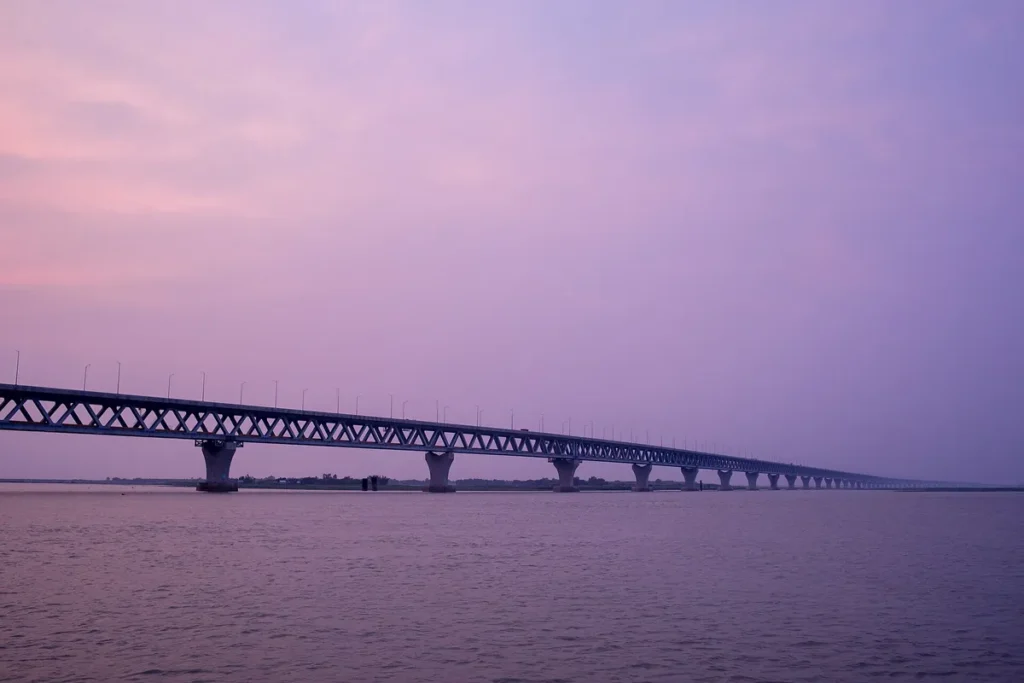
Image: Jubair Bin Iqbal, Wikimedia Commons, CC BY-SA 4.0
How to use this in Mains
If asked: India's interests in Bangladesh do not change with governments. Discuss. (GS-II)
Quote: “India’s interests in Bangladesh do not change with governments: a secure North-East, transit and connectivity, a stable eastern flank and a large market.”
Use it: Perfect thesis line for the introduction.
In the news
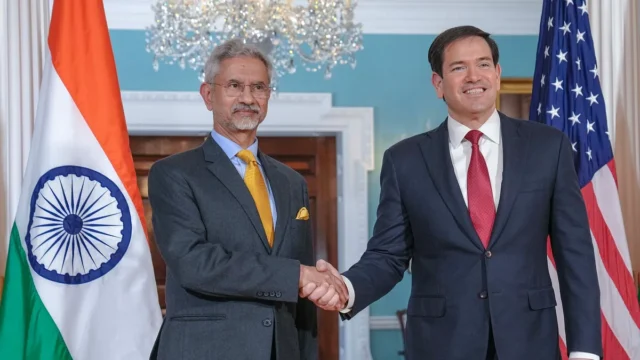
Rubio in Mumbai: India–US trade deal ‘very, very close’; energy and defence on the table
US Secretary of State Marco Rubio began his second India visit of the year in Mumbai on 20 October 2026 and met External Affairs Minister S. Jaishankar on trade, energy, technology and defence. Rubio said the two sides are ‘very, very close’ to a trade deal with ‘a small number of items left’, and praised India’s progress in diversifying energy supplies.
20 Oct 2026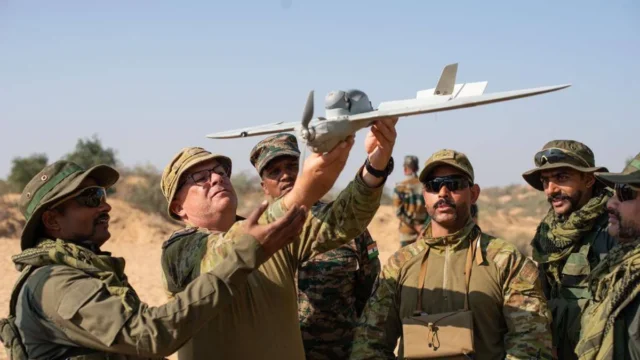
AUSTRAHIND 2026: fifth India–Australia Army exercise begins in Thiruvananthapuram
The fifth edition of the India–Australia joint military exercise AUSTRAHIND began on 19 October 2026 at the Foreign Training Node, Thiruvananthapuram, and runs till 1 November. About 120 soldiers from each army will train for sub-conventional operations in island and coastal terrain under a UN Chapter VII mandate. For the first time, New Zealand has sent observers.
20 Oct 2026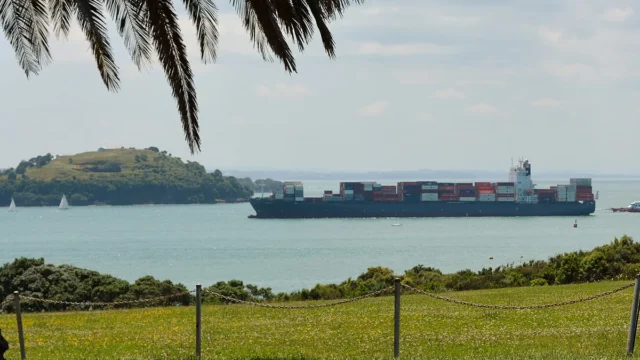
India–New Zealand FTA enters into force: zero duty on all Indian exports from day one
The India–New Zealand Free Trade Agreement came into force on 20 October 2026. From day one, New Zealand charges no customs duty on any Indian export, the first time India has got full duty-free access on all tariff lines at entry into force. New Zealand has also committed to facilitate USD 20 billion of investment into India, while dairy, sugar and edible oils stay protected.
20 Oct 2026
India to host 61st CIML meeting on legal metrology in New Delhi, 26–28 October
India will host the 61st meeting of the International Committee of Legal Metrology (CIML) for the first time, in New Delhi from 26 to 28 October 2026. The Department of Consumer Affairs is organising it with the International Organization of Legal Metrology (OIML), and more than 100 delegates are expected, PIB said on 19 October.
19 Oct 2026