
India-Nepal Relations: Open Border, the 1950 Treaty, River and Power Cooperation, Kalapani Dispute, the China Factor and Recent Political Change (UPSC Notes + PYQs)
UPSC has already asked about this. Read the story with these questions in mind.
Roots of a special relationship
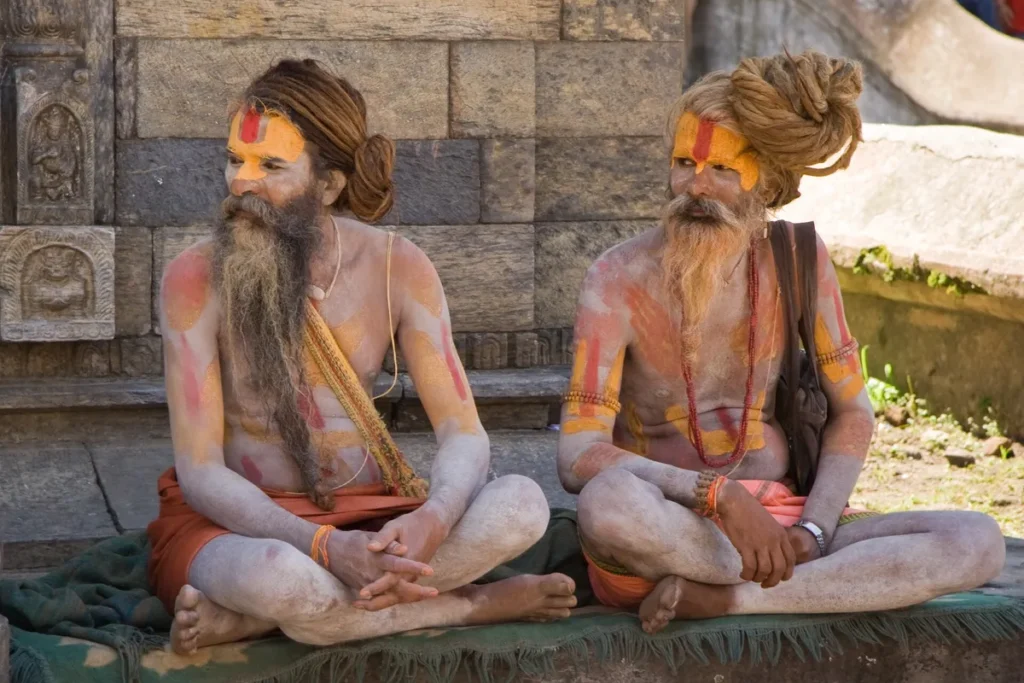
Few borders in the world are as open as this one. Citizens of both countries cross without passports or visas, and Nepalis can live and work in India. Hindu and Buddhist pilgrim routes link Pashupatinath, Janakpur and Lumbini with Varanasi, Ayodhya and Bodh Gaya; families on both sides of the Terai intermarry, a bond often called roti-beti ka rishta. Gorkha soldiers have served in the Indian Army since 1947, and about 32,000 Nepali citizens serve in its Gorkha regiments, while many more draw Indian pensions.
- 1816Sugauli Treaty
- 1950Treaty of Peace and Friendship
- 1954Kosi Agreement
- 1996Mahakali Treaty
- 2015New Constitution; border blockade
- 2019Motihari-Amlekhgunj pipeline
- 2020Nepal's new map row
- 202410,000 MW power deal
The 1950 Treaty
The Treaty of Peace and Friendship of July 1950 gives citizens of each country national treatment in the other for residence, property, trade and work, and asks the two governments to consult on security threats. Many in Nepal see it as unequal, a relic of an India that feared Chinese expansion after Tibet. Since 2016 an Eminent Persons Group has prepared a report on revising it, but India has not yet formally received it.
Border and the Kalapani dispute
The border touches five Indian States: Uttarakhand, Uttar Pradesh, Bihar, West Bengal and Sikkim. The Sugauli Treaty of 1816 made the Kali (Mahakali) river the western boundary, but the two sides disagree on where the river begins. In May 2020, after India opened a road to the Lipulekh pass for the Kailash Mansarovar route, Nepal issued a new map claiming Kalapani, Lipulekh and Limpiyadhura and amended its Constitution to adopt it. India called the claim untenable. The open border also brings concerns about smuggling, trafficking and misuse by criminal and terror networks.
Rivers and hydropower
Nepal’s rivers feed the Ganga and have huge hydropower potential, but past treaties left a legacy of mistrust in Nepal.
| Agreement | Year | Point to note |
|---|---|---|
| Kosi Agreement | 1954 | Barrage and flood control; Kosi is called the “Sorrow of Bihar” |
| Gandak Agreement | 1959 | Irrigation and power |
| Mahakali Treaty | 1996 | Integrated development including the Pancheshwar multipurpose project, still not built |
Power trade has changed the story in recent years. Nepal now sells surplus monsoon electricity to India and, through Indian lines, to Bangladesh. A 2024 agreement aims for India to import 10,000 MW from Nepal within ten years. Indian firms are building projects such as Arun-III, and cross-border transmission lines are being added.
- 1Monsoon surplus from Nepal's hydropower plants
- 2Cross-border lines to Indian grid
- 3Sale in Indian power exchanges
- 4Onward sale to Bangladesh via India
Trade and connectivity
Nepal is landlocked, so most of its trade passes through India, and India is its largest trade partner by far. The Motihari-Amlekhgunj petroleum pipeline (2019) was South Asia’s first cross-border oil pipeline. The Jaynagar-Kurtha railway (2022) and integrated check posts at Birgunj and Biratnagar ease movement, and the Mechi bridge links Panitanki with Kakarvitta. India funded rebuilding after the 2015 earthquake.
Strains: 2015 and after
When Nepal adopted its new Constitution in 2015, Madhesi groups of the Terai protested that it ignored them, and an “unofficial blockade” at border points cut fuel and medicine for months. Many Nepalis blamed India, and the episode pushed Kathmandu towards China. Since then Nepal has joined the Belt and Road Initiative (2017), signed transit protocols with China and accepted Chinese projects, though few have been built. The Agnipath scheme of 2022 led Nepal to pause Gorkha recruitment into the Indian Army. In September 2025 youth-led “Gen Z” protests brought down the government, and former Chief Justice Sushila Karki led an interim administration that called fresh elections.
- Open border, shared culture
- Main transit and trade route
- Power buyer and grid link
- Delivered pipeline and rail
- BRI partner since 2017
- Transit protocol through Tibet
- Large grants and loans
- Projects slow to materialise
Way forward
- Settle the 1950 treaty review through dialogue, and handle Kalapani through the boundary working group, not public rhetoric.
- Deliver projects on time: Pancheshwar, power lines and railways, so India’s word carries weight against Chinese promises.
- Expand power trade into a South Asian grid with Bangladesh and Bhutan.
- Respect Nepal’s sovereignty in domestic politics; engage across parties.
- Use shared Buddhist and Ramayana circuits for tourism and people-to-people ties.
Culture and pilgrim circuits
India’s Ramayana circuit links Ayodhya with Janakpur, Sita’s birthplace, and a Janakpur-Ayodhya bus service began in 2018. The Buddhist circuit links Lumbini with Bodh Gaya, Sarnath and Kushinagar, whose international airport opened in 2021. These shared sites give India soft power that China cannot easily match.
Uttar Pradesh and the border
Sonauli in Maharajganj district is the busiest crossing on the UP border and a key route to Lumbini. The Sashastra Seema Bal guards the open border with Nepal and Bhutan.
PYQ trend
Prelims tests border features, bridges, communities and BIMSTEC. Mains GS-II asks neighbourhood policy and China’s rise in South Asia.
India Nepal Relations: UPSC angle
For UPSC CSE
Mains GS-II: neighbourhood first, China factor, water and energy. Prelims: rivers, passes, bridges, treaties.
India Nepal Relations UPSC PYQs (Prelims)
Questions UPSC has actually asked, from the official papers. Pick an option to check yourself.
Consider the following statements about river bridges connecting India with neighbouring countries :
– 1. ‘Maitri Setu’, built over Feni river, connects Ramgarh in India with Sabroom in Bangladesh.
– 2. Jhulaghat suspension bridge connects India with Myanmar.
– 3. Mechi bridge and its approaches connect Panitanki Bypass in India with Kakarvitta in Nepal.
Which of the statements given above is/are correct ?
Maitri Setu over the Feni links Sabroom in Tripura with Ramgarh in Bangladesh, so statement 1 swaps them. The Jhulaghat bridge crosses the Kali river between Pithoragarh (Uttarakhand) and Nepal. The Mechi bridge does link Panitanki in West Bengal with Kakarvitta in Nepal. Answer as per the official UPSC key · Battle IAS PYQ bankAnswer (d) & why
Consider the following pairs :
| Community sometimes mentioned in the news | In the affairs of
| 1. Kurd | Bangladesh
| 2. Madhesi | Nepal
| 3. Rohingya | Myanmar
Which of the pairs given above is/are correctly matched?
The Madhesis of Nepal’s Terai protested the 2015 constitution, which led to the border blockade. The Rohingya are a Muslim minority denied citizenship in Myanmar’s Rakhine State. The Kurds live across Turkey, Iraq, Syria and Iran, not Bangladesh. Answer as per the official UPSC key · Battle IAS PYQ bankAnswer (c) & why
Consider the following statements in respect of BIMSTEC :
– I. It is a regional organization consisting of seven member States till January 2025.
– II. It came into existence with the signing of the Dhaka Declaration, 1999.
– III. Bangladesh, India, Sri Lanka, Thailand and Nepal are founding member States of BIMSTEC.
– IV. In BIMSTEC, the subsector of ‘tourism’ is being led by India.
Which of the statements given above is/are correct?
BIMSTEC has seven members. It was founded by the Bangkok Declaration of 1997 by Bangladesh, India, Sri Lanka and Thailand. Myanmar joined later that year, and Nepal and Bhutan in 2004. Since its sectors were regrouped, India leads the security pillar, so in UPSC’s key statement 4 is also wrong. Answer as per the official UPSC key · Battle IAS PYQ bankAnswer (d) & why
Mains PYQs on this topic
No UPSC Mains question from 2023-2026 is directly on this topic. Older papers (2013-2022) will be added as the Mains bank grows.
Quick quiz
Which treaty made the Kali river the western boundary of Nepal?
The Treaty of Sugauli, 1816.Answer (a)
The Motihari-Amlekhgunj pipeline carries
It carries petroleum products from Bihar to Nepal.Answer (c)
Which of these Indian States does NOT border Nepal?
Himachal Pradesh does not touch Nepal.Answer (c)
FAQs
How long is the India-Nepal border?
About 1,751 km, touching Uttarakhand, Uttar Pradesh, Bihar, West Bengal and Sikkim.
What is the Kalapani dispute?
A disagreement over the source of the Kali river; Nepal’s 2020 map claims Kalapani, Lipulekh and Limpiyadhura, which India holds.
Why does Nepal want the 1950 treaty revised?
Many Nepalis see it as unequal and outdated; an Eminent Persons Group has prepared recommendations.
What is the 10,000 MW agreement?
A 2024 understanding for India to import 10,000 MW of power from Nepal within ten years.
Do Indians need a visa for Nepal?
No. Citizens of both countries cross the open border without a passport or visa.
Spotted an error? Tell us. We correct within 48 hours.
Image: Luca Galuzzi (Lucag), Wikimedia Commons, CC BY-SA 2.5
How to use this in Mains
If asked: India-Nepal ties need to move beyond rhetoric to delivery. Discuss. (GS-II)
Quote: “Deliver projects on time: Pancheshwar, power lines and railways, so India’s word carries weight against Chinese promises.”
Use it: Ideal concluding line: delivery is how India counters China in Nepal.
In the news
India to host 61st CIML meeting on legal metrology in New Delhi, 26–28 October
India will host the 61st meeting of the International Committee of Legal Metrology (CIML) for the first time, in New Delhi from 26 to 28 October 2026. The Department of Consumer Affairs is organising it with the International Organization of Legal Metrology (OIML), and more than 100 delegates are expected, PIB said on 19 October.
19 Oct 2026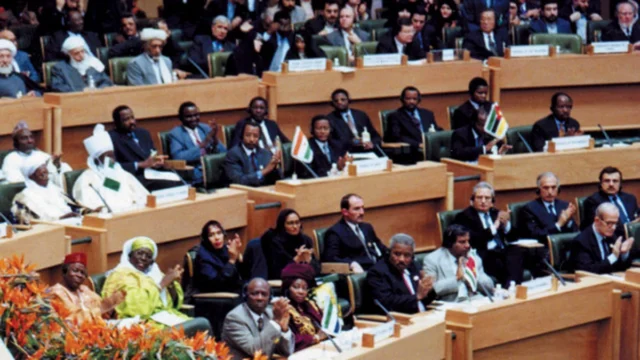
India rejects OIC’s Baghdad resolutions on Jammu and Kashmir as ‘malicious, biased and false’
On 19 October 2026 the Ministry of External Affairs rejected references to India in resolutions adopted at the Organisation of Islamic Cooperation (OIC) Council of Foreign Ministers in Baghdad on 17–18 October. It called them ‘malicious, biased and false’, said Pakistan orchestrated them, and said the OIC has no locus standi on India’s internal matters.
19 Oct 2026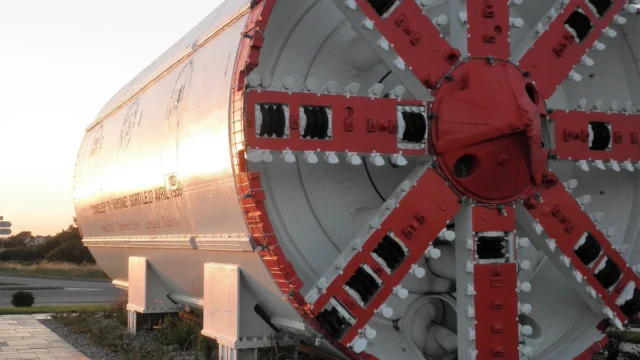
China to impose export controls on tunnel boring machines from 18 November: what it means for India
On 19 October 2026 China’s Commerce Ministry announced export controls on tunnel boring machines (TBMs) and related items from 18 November, calling them clearly dual-use. India imports TBMs for metro, rail and border tunnels and has faced customs delays on Chinese machines since 2024. China also announced controls on some drones.
19 Oct 2026
SCO Heads of Government meet in Dushanbe on 19–20 October: Rajnath Singh to represent India
Defence Minister Rajnath Singh will represent India at the 25th meeting of the SCO Council of Heads of Government (CHG) in Dushanbe, Tajikistan, on 19–20 October 2026. This is the SCO’s second-highest body, and it looks after trade, economy, connectivity and the Organisation’s budget. The last CHG met in Moscow on 18 November 2025, where External Affairs Minister S. Jaishankar spoke for India.
18 Oct 2026